





Skeleton Clock Dome
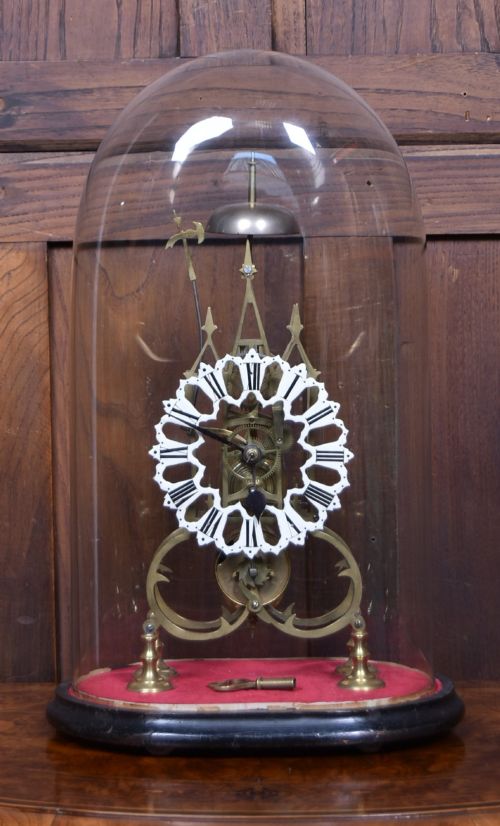
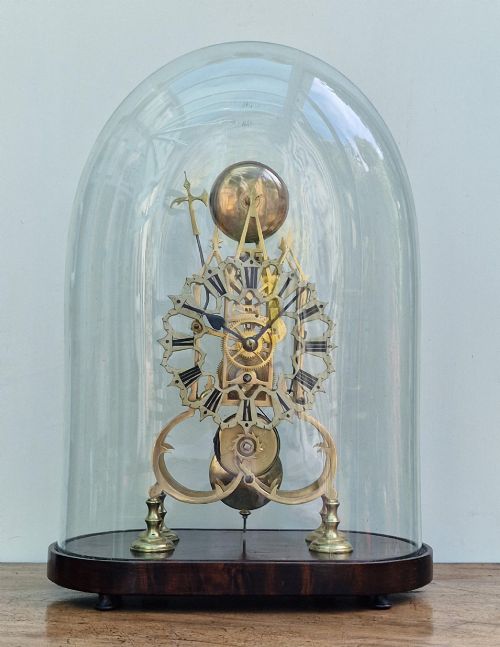
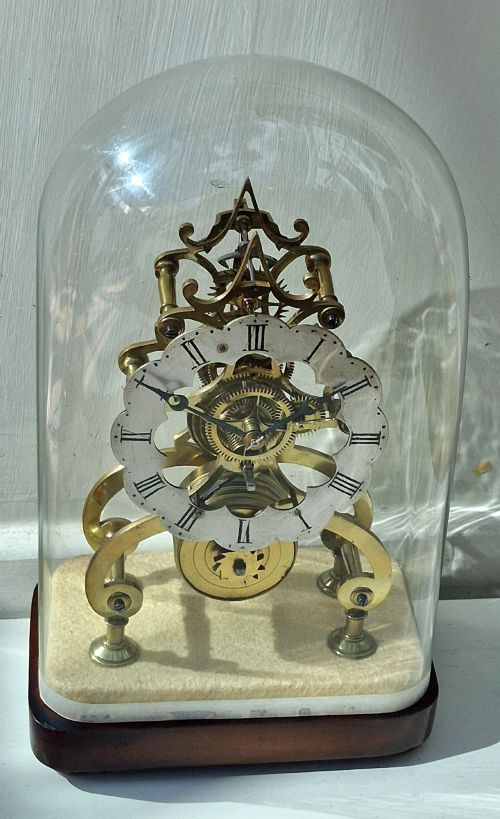
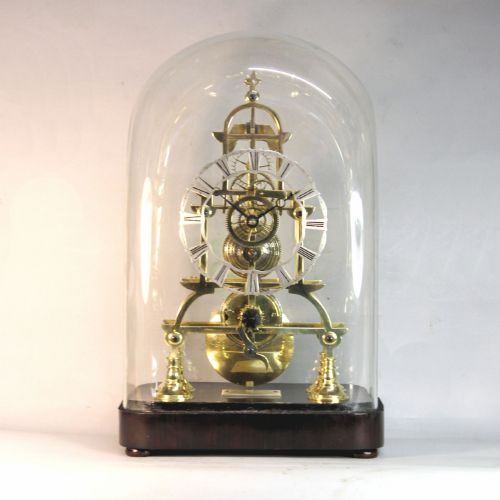
A skeleton clock dome protects delicate exposed brass wheel work while framing the mechanical movement for display.
Skeleton Clock Dome
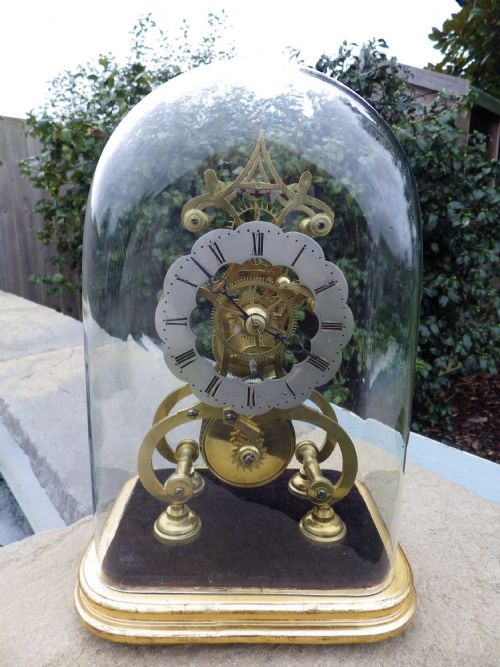
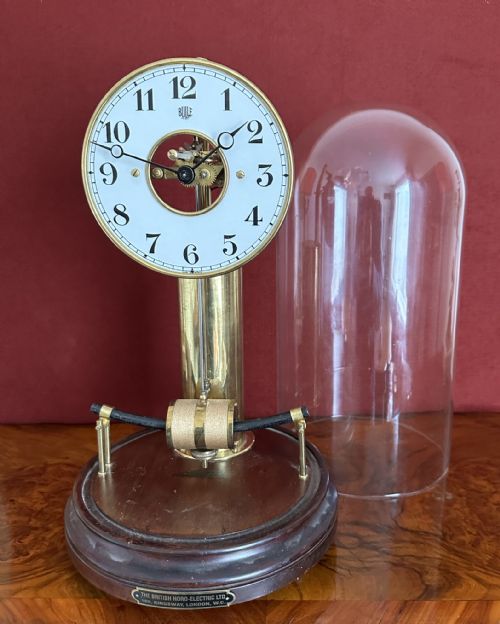
When you examine a skeleton clock dome, you are looking at an exposed mechanical movement housed beneath protective clear glass. These pieces range from 19th Century and Victorian fusee designs to later electric models from the 1920s.
The most common versions met on this page combine brass movements with a fitted glass cover resting on a wooden or marble base. These setups shelter intricate wheel work from dust while keeping the ticking mechanism fully visible.
Examples appear in various forms including Gothic Revival styles, miniature formats, and cathedral garnitures. English and French workshops produced these mantel clocks across multiple decades to showcase horological skill.
Materials and construction methods
Maker construction relies on brass and steel for the gear trains and plates, forming the rigid skeleton structure of the timepiece. Glass creates the protective cover, traditionally blown or formed to sit squarely over the dial.
Bases utilise timber such as mahogany or ebonised wood, alongside marble and velvet linings to cushion the heavy glass shade. Fusee movements connect to brass wire and chains to regulate the power delivered through the wheel work.
Some electric models hum quietly beneath their glass caps, proving that even Victorian descendants wanted to plug things in.
Distinctions in quality and execution
Quality separates through the complexity of the wheel work, such as six-spoke designs and lyre plates, compared to simpler standard movements. The precision of the brass cutting and the crispness of the Gothic or Victorian stylistic details dictate the level of craftsmanship.
The survival of original components also shifts value, particularly when the glass dome and its matching wooden or marble base remain intact alongside the signed movement by makers such as Thwaites or Richard Winter.
Richard Winter of Chieveley·Maurice & Marcel Moulin Favre-Bulle·Thwaites of London·Allen Colyer
The Skeleton Clock Dome Glossary
- Fusee
- A conical pulley used on 19th Century clocks to maintain even power as the mainspring unwinds. This mechanism ensures consistent force reaches the wheel work.
- Skeleton clock
- A timepiece designed with open brass plates so the internal gear train is entirely visible. These movements sit under glass domes for protection.
- Garniture
- A set consisting of a central clock flanked by matching decorative objects. Cathedral styles often follow this ornamental arrangement.
- Torsion clock
- A timepiece regulated by a suspended spring that rotates back and forth rather than using a traditional pendulum. These often run for long periods between windings.
Skeleton Clock Dome: Frequently Asked Questions
How do I clean a skeleton clock dome?
Lift the glass cover very carefully using both hands and place it on a stable surface away from the edge of the table. Dust the brass movement gently with a soft dry brush without touching the delicate wheel work or hairspring.
Wipe the glass dome with a mild cleaner and a lint-free cloth before lowering it back over the clock. Ensure the base sits level so the glass rests evenly without pinching.
Are these glass covers original?
Many surviving pieces retain their original blown or drawn glass domes resting on matching wooden or marble bases. Slight bubbles and minor imperfections in the glass often indicate period manufacture.
Replacement domes appear frequently because fragile glass covers broke easily over the decades. Inspect the rim of the glass and the matching groove in the base to check for period alignment.
How do fusee movements work?
A fusee movement uses a conical pulley connected to the mainspring by a fine chain or gut line. As the spring unwinds and loses tension, the chain moves to a wider part of the cone to maintain constant leverage.
This clever mechanical design helps the clock keep accurate time throughout its running cycle. English makers utilised fusee mechanisms widely across Victorian mantel and skeleton clocks.
Where should I place my clock?
Position the piece on a heavy, stable mantelpiece or shelf away from direct sunlight, drafts, and sources of heat. Vibrations from heavy footsteps can disrupt the delicate pendulum or torsion balance.
Ensure the surface is completely level so the escapement beats evenly. The glass dome will then protect the moving parts from ambient household dust.