
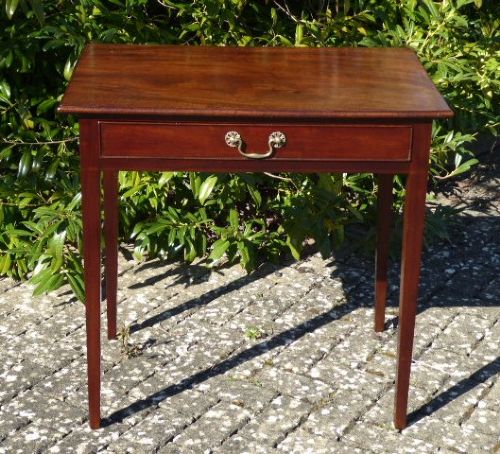
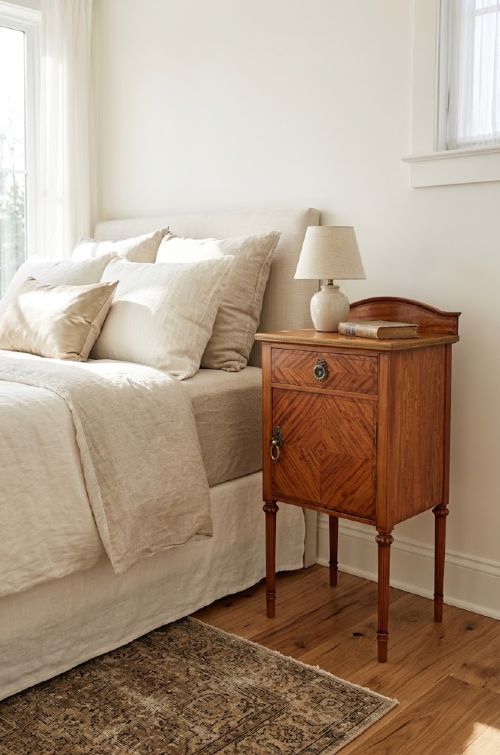
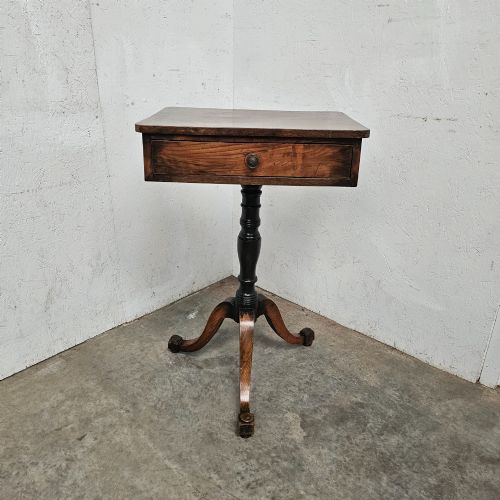
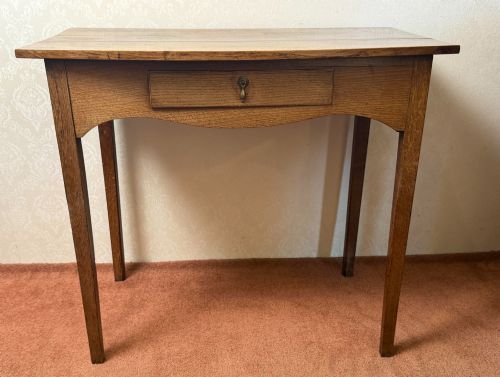
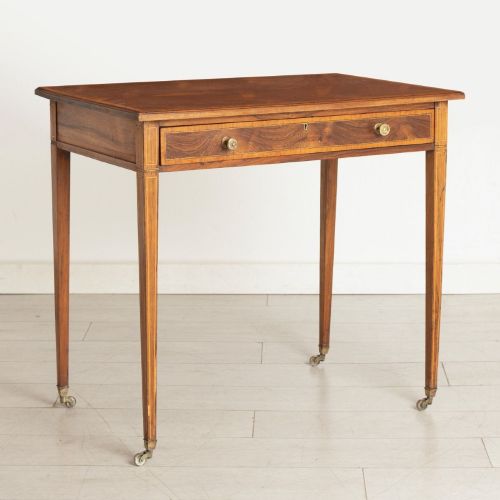
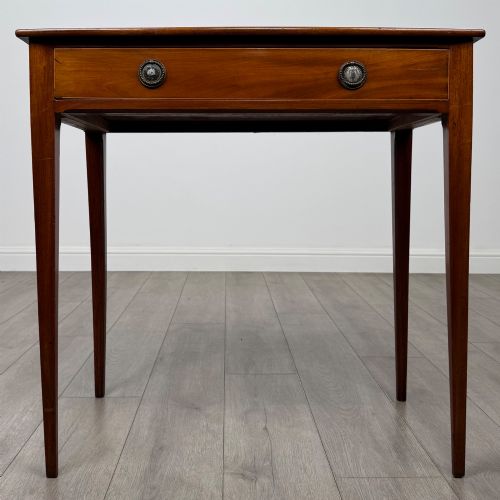
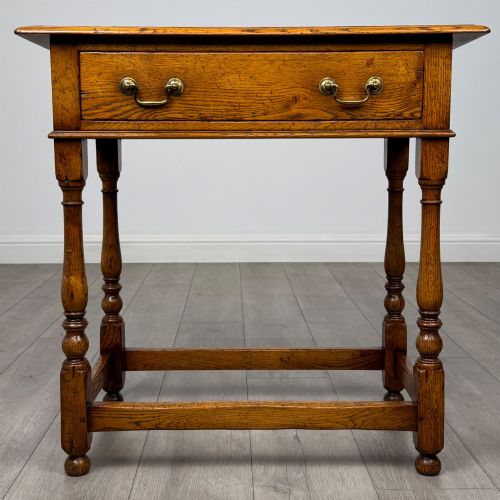
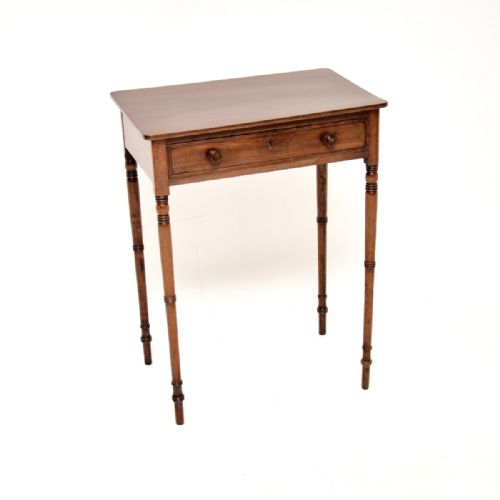
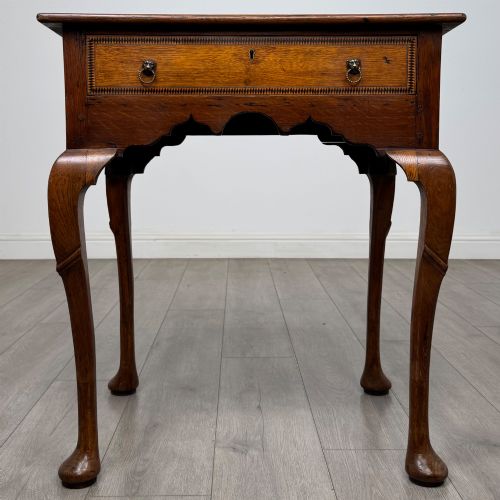
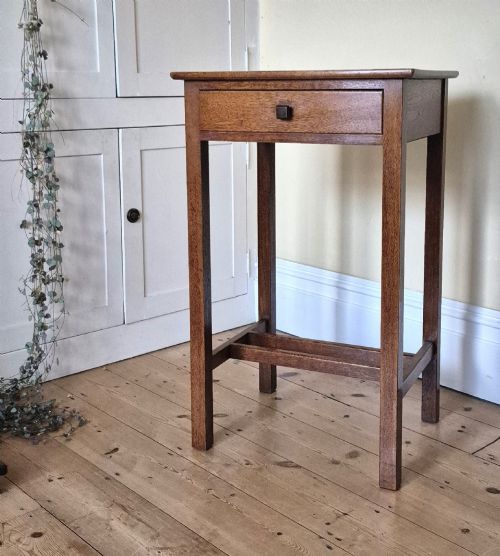
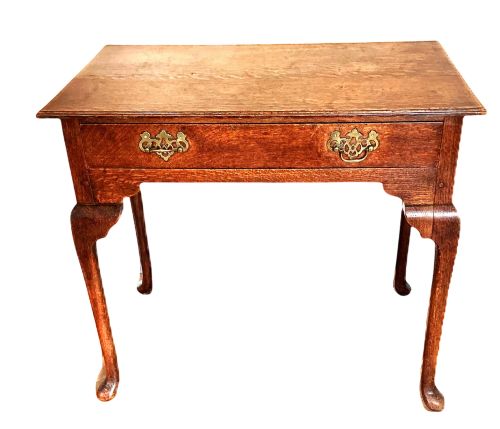
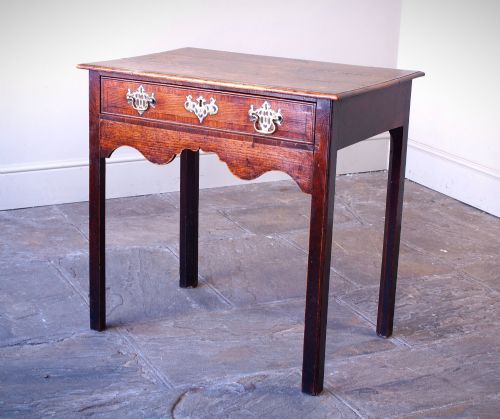
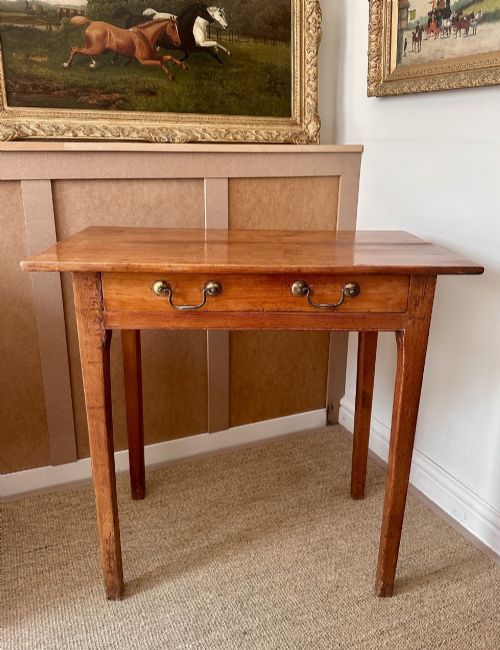
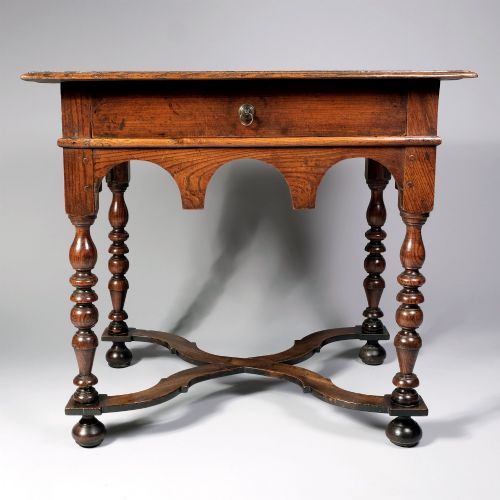
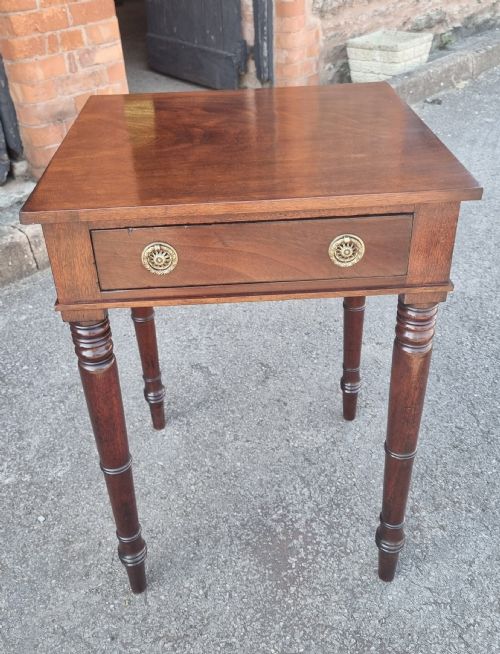
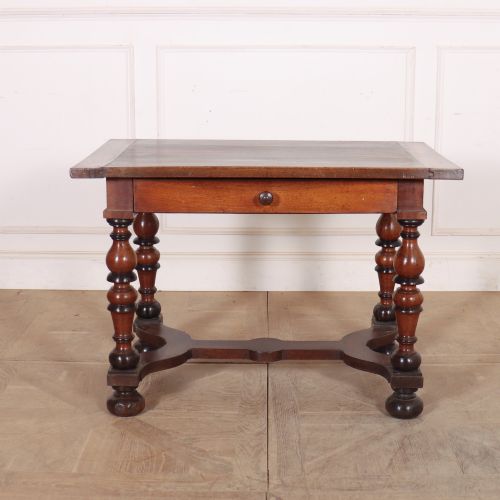
Single Drawer Occasional Table
A single drawer occasional table is a compact surface providing neat storage, prized for placing beside a chair or in a hallway.
Single Drawer Occasional Table
A single drawer occasional table serves as a versatile piece of furniture designed for placement beside seating or in smaller spaces. These items provide a practical surface alongside a concealed compartment for small items, fulfilling a similar role to side tables, nightstands, and lowboys.
The selections available here span from the seventeenth century through the Victorian era, encompassing Georgian, Regency, and William IV periods. Pieces appear in forms such as lamp tables, hall tables, writing desks, and tavern tables, reflecting diverse domestic uses over several centuries.
Mahogany and oak dominate the selection, accompanied by elm, fruitwood, yew, walnut, and pine. Dimensions range from small bedside examples to grander Georgian and Regency formats, offering varied proportions suited to contemporary rooms.
How they were made
Cabinetmakers utilised solid timbers such as mahogany, oak, and elm, often selecting figured veneers like rosewood, satinwood, and burr birch for decorative surfaces. Joinery relied on traditional methods, while individual pieces incorporate brass handles, string inlay, and painted finishes.
Construction methods evolved from seventeenth-century joined oak and elm frameworks to sophisticated eighteenth-century mahogany designs with dovetailed drawer boxes. Later nineteenth-century examples combine native and exotic woods, sometimes featuring turned pedestals or delicate stringing.
One persistent seventeenth-century oak table apparently spent centuries observing tavern debates before reaching the modern marketplace.
What varies in quality
The standard of timber selection and figure sets superior examples apart, particularly in mahogany, rosewood, and burr birch surfaces. Finer items display meticulous attention to proportion, crispness of mouldings, and balanced grain patterns across the top and drawer front.
Construction integrity defines the upper tier, visible in the precision of dovetailed drawer linings and the survival of original brass hardware. Pieces retaining their early or primary surface finishes command greater respect than those altered by heavy restoration.
Hubert Simpson of Kendal
The Single Drawer Occasional Table Glossary
- Lowboy
- A small eighteenth-century dressing or side table featuring one or more rows of drawers beneath the working surface. These low tables typically stand on slender legs.
- Lowboy
- A small eighteenth-century dressing or side table featuring one or more rows of drawers beneath the working surface. These low tables typically stand on slender legs.
- Lowboy
- A small eighteenth-century dressing or side table featuring one or more rows of drawers beneath the working surface. These low tables typically stand on slender legs.
- Lowboy
- A small eighteenth-century dressing or side table featuring one or more rows of drawers beneath the working surface. These low tables typically stand on slender legs.
Single Drawer Occasional Table: Frequently Asked Questions
Where should I place this table?
These compact tables fit readily beside a sofa or armchair to hold a lamp and a book. They also function well as bedside stands or slim hallway surfaces.
The single drawer provides convenient storage for keys, stationery, or reading glasses, keeping everyday items out of sight while maintaining a neat surface.
How do I identify a Georgian piece?
Georgian examples often feature dense mahogany or native oak, classical proportions, and clean lines. Drawer construction typically employs hand-cut dovetails and timber linings.
Details like brass swan neck handles, bracket feet, or subtle string inlay help distinguish pieces made during the reigns of the Georges from later Victorian revivals.
Can I use an antique table daily?
Most antique occasional tables withstand normal daily use when treated with reasonable care. Solid hardwoods like oak and mahogany offer robust durability.
Protecting the polish from excessive moisture and direct heat ensures the timber and historical finish remain stable over years of domestic service.
What woods were commonly used?
Mahogany and oak appear most frequently across seventeenth, eighteenth, and nineteenth-century examples. Cabinetmakers also turned to elm, fruitwood, yew, and pine for regional or vernacular forms.
Finer decorative pieces incorporate veneers such as satinwood, rosewood, and burr birch, often highlighted with contrasting stringing or inlaid borders.