
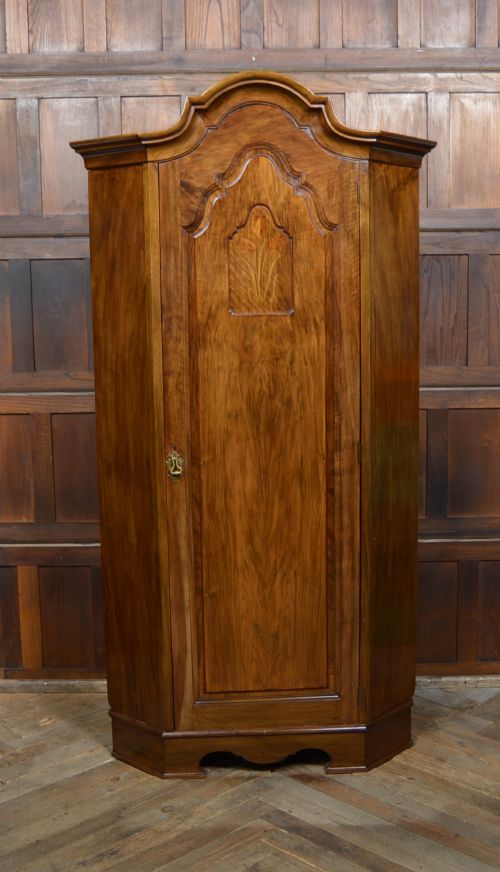
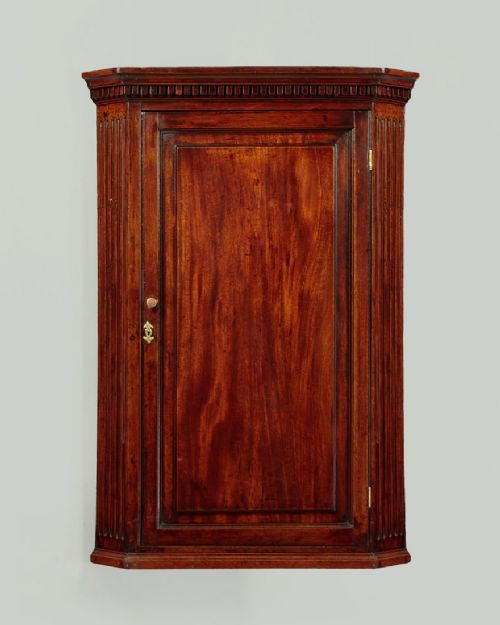
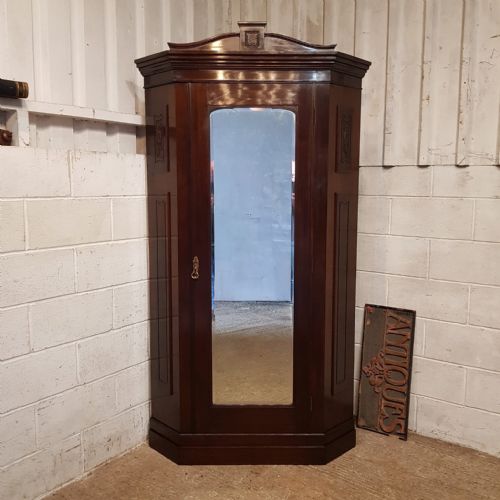


Single Door Corner Cupboard
A single door corner cupboard solves a room's dead space while putting rich period timber on display.
Single Door Corner Cupboard
A single door corner cupboard fits neatly into the angle of a room, making efficient use of awkward wall space while providing practical interior shelving. These pieces range from compact hanging versions designed to mount on walls to taller standing and floor-standing cabinets that anchor a room.
The selections span significant historical periods, with Georgian and eighteenth-century examples appearing frequently alongside Victorian and later nineteenth-century pieces. Buyers encounter various regional expressions, from English oak country furniture to German provincial work and walnut styles.
Forms include wall cabinets, hanging corner cupboards, and standing models on bases or stands. Many feature simple single doors, while others incorporate glass panels, marquetry, or display shelving to showcase contents.
Materials and construction methods
Timbers dictate the character of these cabinets, with oak, mahogany, and walnut dominating the selection alongside pine, fruitwood, and decorative marquetry veneers. Cabinetmakers selected these woods for their grain patterns and durability, utilising solid planks for country pieces and figured veneers for more formal urban furniture.
Brass hardware, including hinges and escutcheons, provides functional fastening and subtle contrast against the timber surfaces. Iron and glass also appear where doors incorporate viewing panes or internal hanging mechanisms require sturdy reinforcement.
Single Door Corner Cupboard Retail Price Guide 2026
Typical asking prices for single door corner cupboard among the pieces listed under this phrase on Sellingantiques today, from the lower quarter to the upper quarter. They describe what is for sale here now, not the wider market.
Listings feature oak, walnut, and mahogany across Georgian, Victorian, and nineteenth-century periods.
What distinguishes quality
The choice of timber creates the primary distinction between utility pieces and fine furniture. Figured walnut, rich mahogany, and well-figured oak with strong grain patterns elevate a piece above standard pine or plain provincial timber.
Joinery execution separates superior examples from simpler ones. Well-fitted doors, clean interior shelving configurations, and thoughtful proportions mark out the work of skilled cabinetmakers from basic regional production.
The Single Door Corner Cupboard Glossary
- Hanging corner cupboard
- A cabinet designed to be mounted directly onto walls rather than standing on the floor. These typically feature solid timber doors and internal shelving.
- Standing corner cupboard
- A floor-resting cabinet that occupies a room corner from base to top. Some examples include separate upper and lower sections or sit upon raised stands.
- Marquetry
- The art of applying decorative pieces of veneer to a structure to form geometric or pictorial designs. This technique appears on high-status walnut and mahogany surfaces.
- Escutcheon
- A flat plate of brass or other metal placed around a keyhole to protect the surrounding wood. They often provide decorative detail on the single door.
- Figured walnut
- Timber cut from walnut trees displaying distinctive, highly decorative grain patterns such as ripples or swirls. Cabinetmakers prized this for formal eighteenth and nineteenth century furniture.
Single Door Corner Cupboard: Frequently Asked Questions
How do I hang a wall cabinet?
Hanging corner cupboards require secure fixing to solid wall studs or masonry using appropriate brackets. Due to the weight of period timber, professional installation ensures the piece remains safely supported.
Once mounted, check that the single door swings freely and latches correctly into the brass or iron hardware without binding against the frame.
Where should I place a corner cupboard?
These cabinets suit empty room angles in living rooms, dining spaces, or hallways where standard rectangular furniture wastes space. They draw the eye upward and soften sharp architectural angles.
Ensure the chosen corner allows the single door to open fully so you can access the shelved interior without obstruction from nearby furniture.
How do I clean period timber?
Dust regularly with a dry, soft cloth and feed the wood occasionally with a quality beeswax to maintain the finish. Avoid modern silicone sprays that can damage historic polish.
Keep cupboards away from direct heat sources and strong sunlight to prevent the oak, mahogany, or walnut from drying out and splitting over time.
How do I date a corner cupboard?
Examine the timber species, construction joints, and hardware style to determine the period. Eighteenth-century pieces often show hand-cut dovetails and pegged frames, while Victorian examples use machine-sawn elements.
Stylistic cues like Queen Anne proportions, Georgian bracket feet, or Art Nouveau details help narrow the manufacturing era further.