


Silver Whistle Rattle
A silver whistle rattle is a multi-functional nursery toy combining a noisemaker, a whistle and a teether, prized for its craftsmanship and social history.
What they are
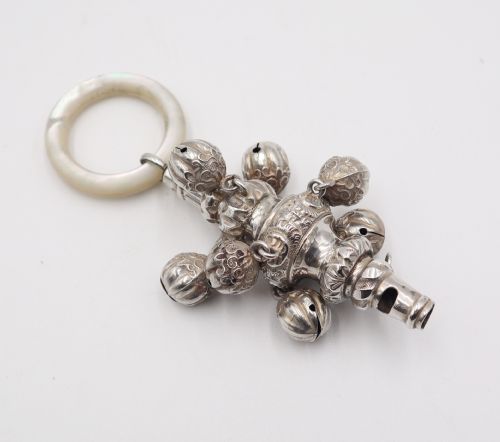
A silver whistle rattle is a historic nursery object designed to amuse infants, sound a whistle, and provide a handle for teething. When you search for a silver whistle rattle, you find multi-functional pieces intended for babies from the Georgian, Victorian, and later periods.
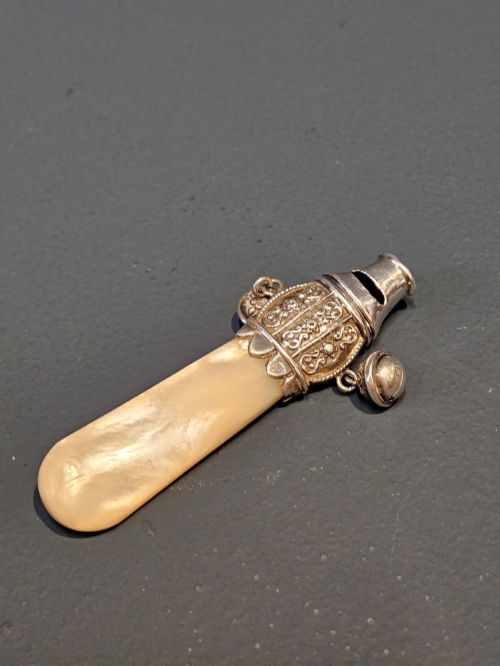
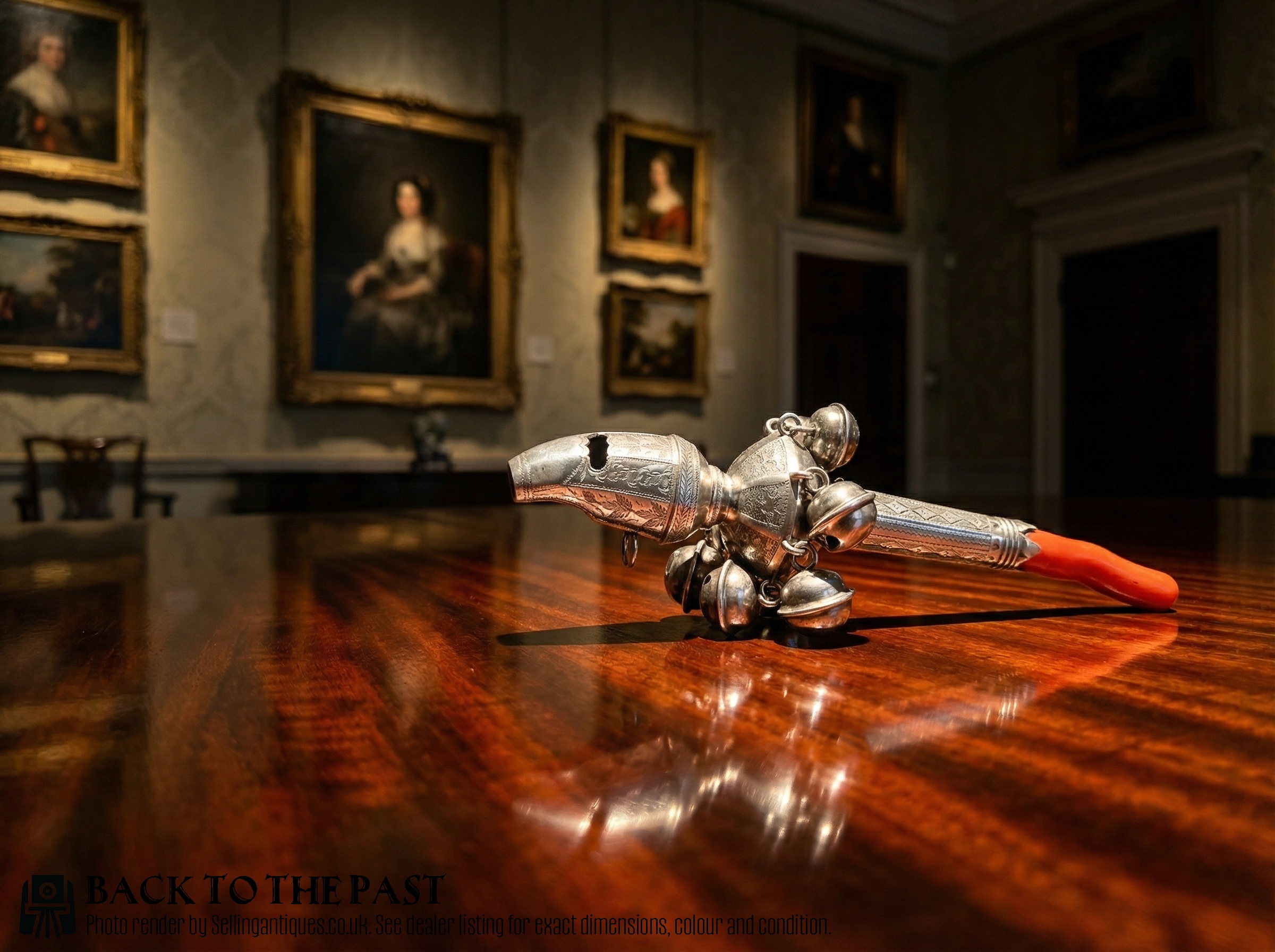
The objects combine several elements into a single form, typically uniting a whistle mouthpiece with hanging bells and a handle made of coral, mother-of-pearl, or solid sterling silver. Surviving examples reflect domestic life across the eighteenth, nineteenth, and early twentieth centuries.
The version most commonly encountered on this page is the Victorian or Georgian baby rattle featuring a whistle at one end and a natural coral or mother-of-pearl handle at the other. Many surviving pieces also include small dangling bells that chime when shaken.
How they were made
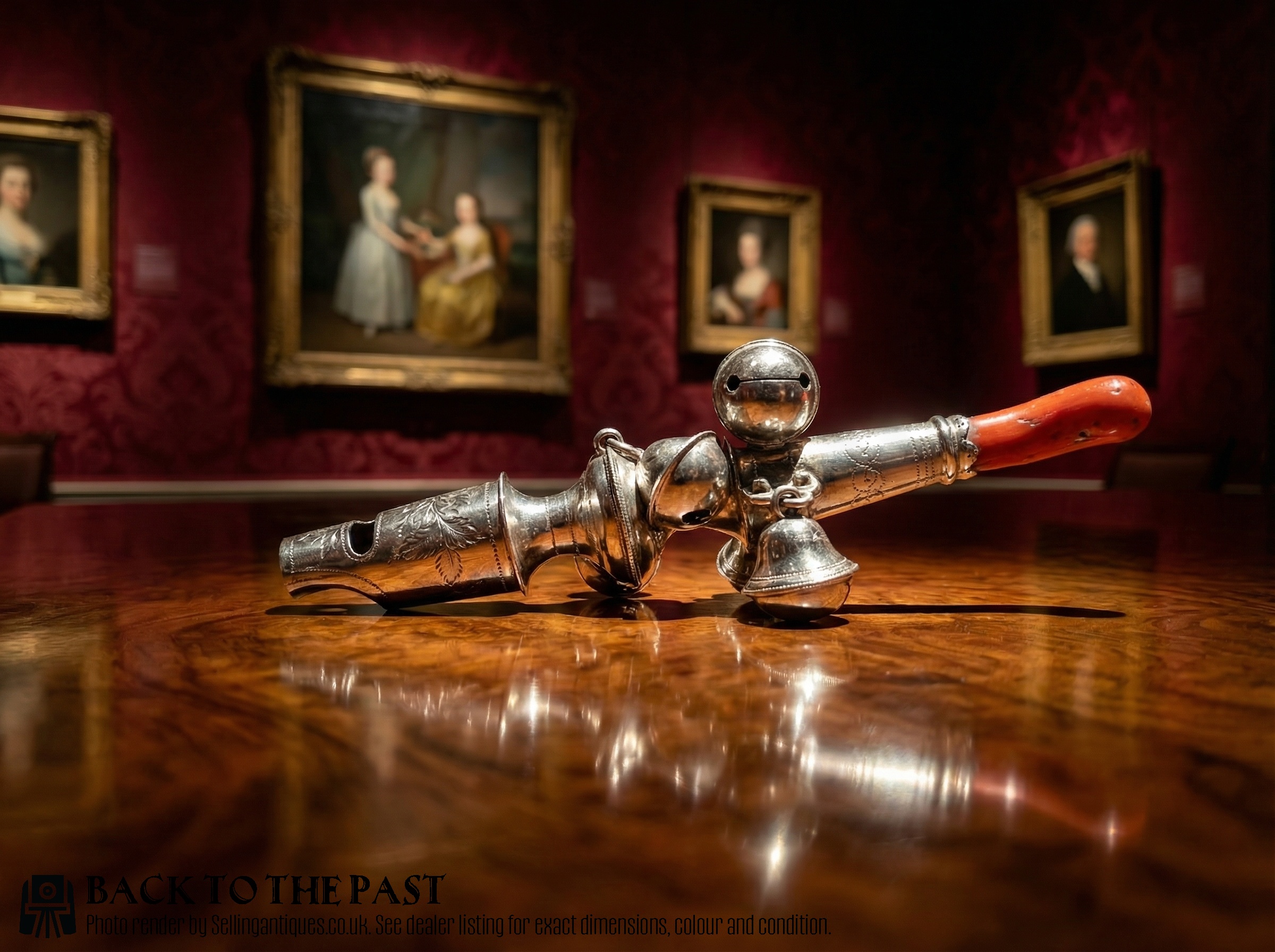
Silversmiths constructed these pieces using sterling silver, shaping the hollow whistle bodies and decorative elements through sheet metalworking and chasing. Handles were fashioned from natural materials such as coral branches or smooth mother-of-pearl panels.
Makers integrated functional sound components, attaching small tuned bells and internal whistle mechanisms to the silver body. Natural handles were securely fitted into silver mounts using pins or adhesive bonds suited to organic materials.
Retail Price Guide 2026
Typical UK retail prices for silver whistle rattle, calculated from the Sellingantiques database of over a million retail prices indexed since 2003. This retail price guide relies exclusively on Sellingantiques data; no external sources or auction records are used, so the figures do not describe the wider market.
Listings feature silver, coral, and mother-of-pearl pieces spanning the Georgian, Victorian, and 1920 eras.
What varies in quality
The distinction between standard items and superior examples lies in the complexity of the silversmithing, such as figural ornamentation representing characters like Mr Punch. High-end pieces exhibit crisp chasing, complete sets of original bells, and substantial gauge silver.
The choice of handle material contributes to the distinction between pieces, with well-carved mother-of-pearl or substantial unbroken branch coral representing higher tiers of production. Maker marks from established silversmiths further elevate the standing of an individual piece.
Joseph Taylor·Bateman London·Adie & Lovekin
The Silver Whistle Rattle Glossary
- Sterling silver
- A silver alloy containing 92.5 percent pure silver and 7.5 percent other metals, usually copper, chosen for durability.
- Coral
- A natural organic material sourced from marine polyps, utilised historically as a teething handle for its perceived protective and soothing properties.
- Mother of pearl
- The iridescent internal layer of pearl oyster shells, cut and polished into smooth flat panels for knife handles and rattle grips.
- Chasing
- A metalsmithing technique where the silver is worked from the front with hammers and punches to push the metal and raise a design in relief.
- Hallmark
- A system of official marks stamped on precious metals in Britain to guarantee the metal standard and trace the maker and assay office.
Frequently Asked Questions
What is a silver whistle rattle?
A silver whistle rattle is a historic nursery accessory that combines a musical whistle, sounding bells, and a teething handle into one object.
These pieces were given to infants as christening gifts or wealthy toys, designed to amuse the child and soothe sore gums.
Why do some rattles have coral handles?
Natural coral was traditionally believed to possess protective and medicinal properties that would safeguard infants from harm.
In addition to these superstitions, the hard organic material provided a smooth, durable surface for babies to chew upon during teething.
How do I date a silver rattle?
Dating is primarily achieved by examining the stamped hallmarks on the silver body, which indicate the specific assay office and year of production.
Stylistic indicators, such as the shape of the whistle or the form of the figural decoration, also provide evidence of the period.
Were these rattles actually used by babies?
Yes, the presence of wear marks and the use of teething handles indicate that many of these objects served a practical function in the nursery.
However, due to their precious materials and fine craftsmanship, numerous examples were also preserved as sentimental keepsakes rather than everyday toys.