



Silver Watch Chain Accessory
A silver watch chain accessory brings the mechanical gear of a Victorian waistcoat to life, offering pocket watch chains, sovereign cases and fobs in solid sterling silver.
Silver Watch Chain Accessory
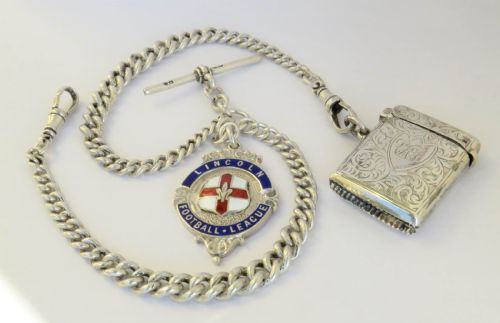
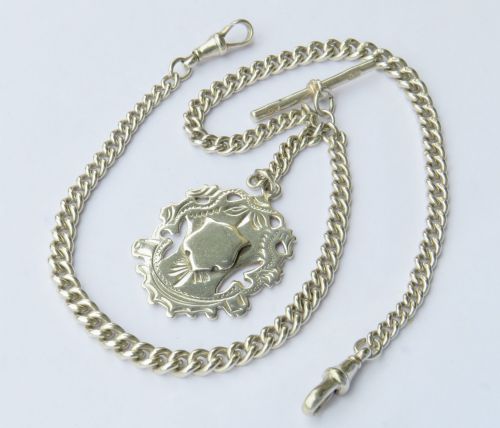
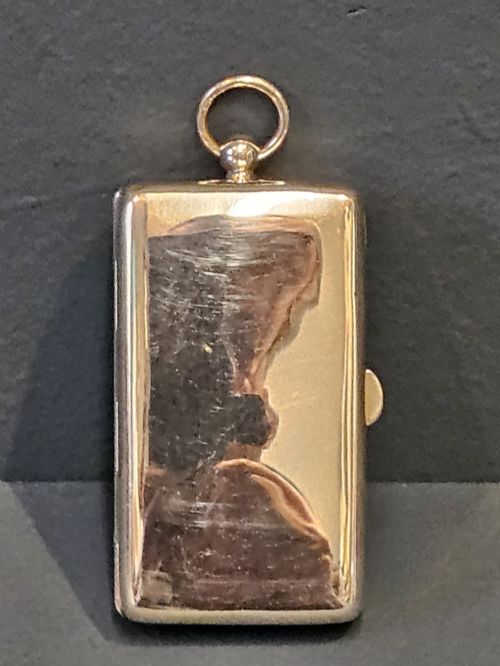
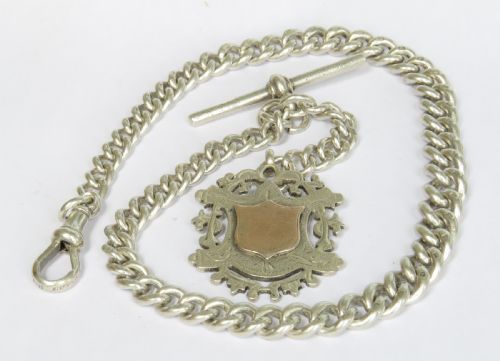
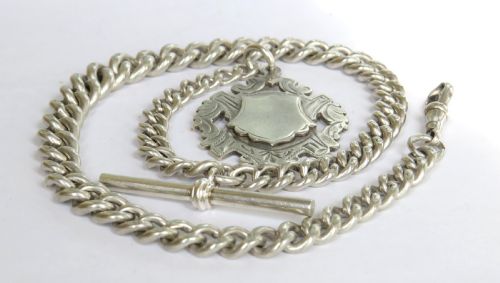
When you search for a silver watch chain accessory, you encounter the essential accompaniments that secured pocket watches and carried currency in the nineteenth and early twentieth centuries. These pieces encompass sturdy pocket watch albert chains, sovereign cases, stamp cases and ornamental fobs designed to hang from waistcoats.
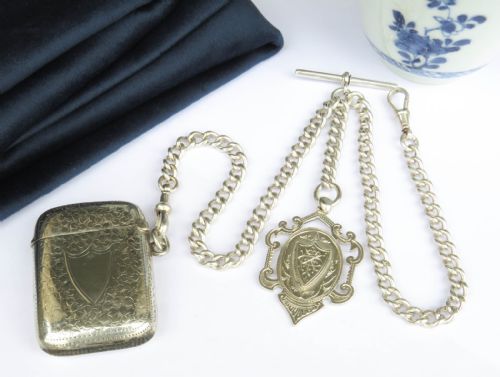
The versions most commonly met on this page span the late Victorian, Edwardian and George V periods, reflecting the heavy reliance on pocket timepieces before wristwatches took over. Forms range from double albert chains paired with matching vestas to hinged silver book stamp cases and sovereign holders bearing Birmingham hallmarks.
Materials and construction
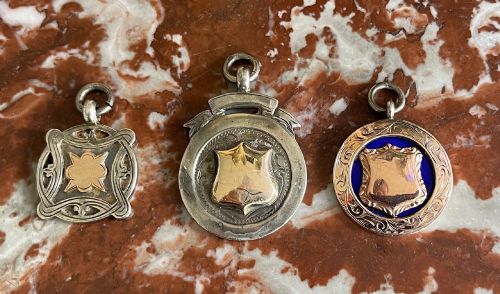
Items in this category are fashioned predominantly from sterling silver, occasionally augmented by gold or rose gold highlights, and detailed with enamel. Smiths constructed chains from individual interlocking links while stamping or casting cases for coins and stamps from sheet silver.
Assay office hallmarks stamped directly onto the metal provide definitive records of origin and date, linking these accessories to regional silversmithing hubs such as Birmingham.
Silver Watch Chain Accessory Retail Price Guide 2026
Typical asking prices for silver watch chain accessory among the pieces listed under this phrase on Sellingantiques today, from the lower quarter to the upper quarter. They describe what is for sale here now, not the wider market.
Some sovereign cases double as miniature books, proving the Victorians loved hiding utility inside charmingly literal literary shapes.
Assessing quality and merit
The distinction between standard examples and superior specimens rests on the integrity of the links, the crispness of the chased decoration, and the clarity of the hallmarking. Weight plays a significant role, as heavier chains and robust sovereign cases demonstrate a more substantial use of metal.
Furthermore, the presence of matching elements, such as an integrated vesta case or an original fob bearing legible inscriptions, elevates the cohesiveness and historical interest of the ensemble.
Crisford and Norris
The Silver Watch Chain Accessory Glossary
- Sovereign case
- A small, round, hinged container engineered to hold British gold sovereign coins securely. These cases typically attach directly to a watch chain for easy access.
- Vesta case
- A pocket-sized matchsafe used for holding and striking matches. Many examples incorporate spring-loaded lids and match the metal of the accompanying watch chain.
Silver Watch Chain Accessory: Frequently Asked Questions
What is a silver albert chain?
An albert chain is a traditional watch chain worn across the front of a waistcoat, secured by a T-bar through a buttonhole. One end held a pocket watch while the other dangling end displayed a decorative fob.
These chains came in single or double strand configurations depending on the wearer's preference and the weight required to balance the garments.
How were sovereign cases used?
Sovereign cases served as secure, portable pocket containers for high-value gold coins during the nineteenth and early twentieth centuries. Gentlemen relied on them to carry currency safely while dressed in formal attire.
The hinged lids kept the coins firmly in place until needed for transactions.
What is a stamp case?
A stamp case is a miniature silver container shaped like an envelope or a tiny book designed to keep postage stamps flat and dry. They hung from watch chains or chatelaines as practical daily accessories.
Victorian examples often featured intricate repoussé decoration or enamel fronts.
How do I date a silver chain?
Dating these pieces relies heavily on the assay office hallmarks stamped directly onto the links, mounts, or bezels. These tiny marks record the specific year letter, city of assay, and sterling standard.
Stylistic cues such as late Victorian chased patterns or Edwardian proportions also help narrow down the period.