



Silver Topped Wine Jug
A silver topped wine jug brings heft and sparkle to the dining table, combining tactile glassware with bright metalwork.
Silver Topped Wine Jug
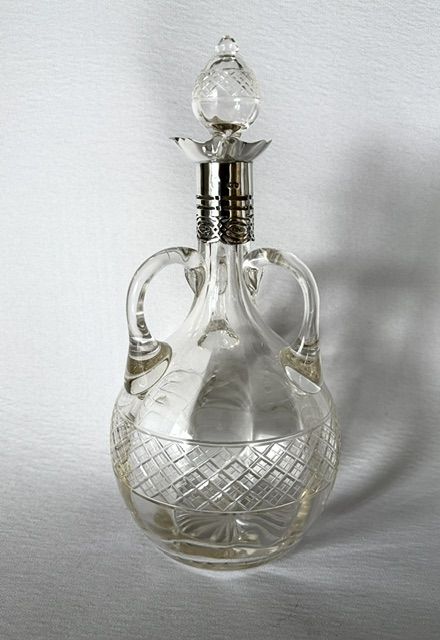
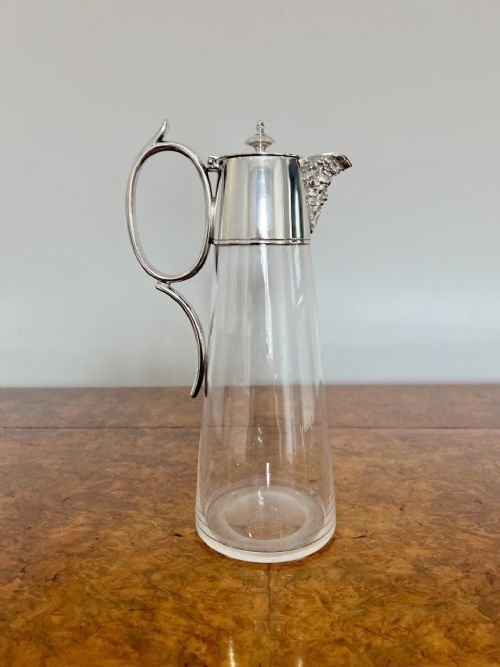
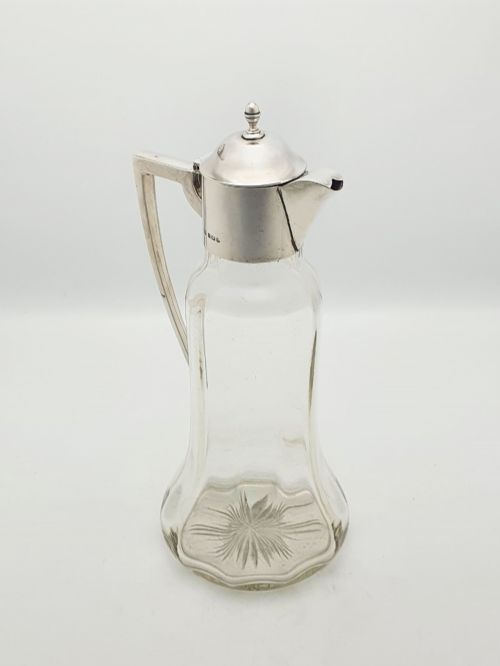
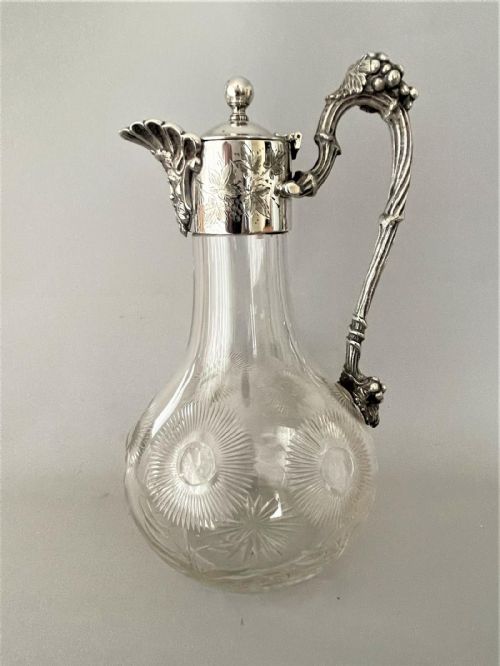
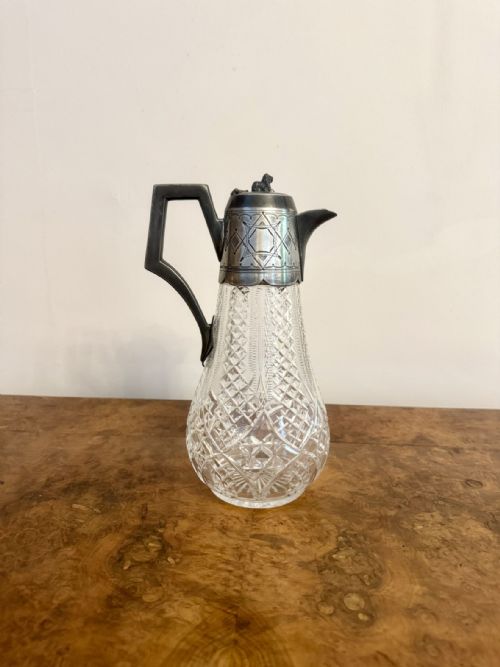
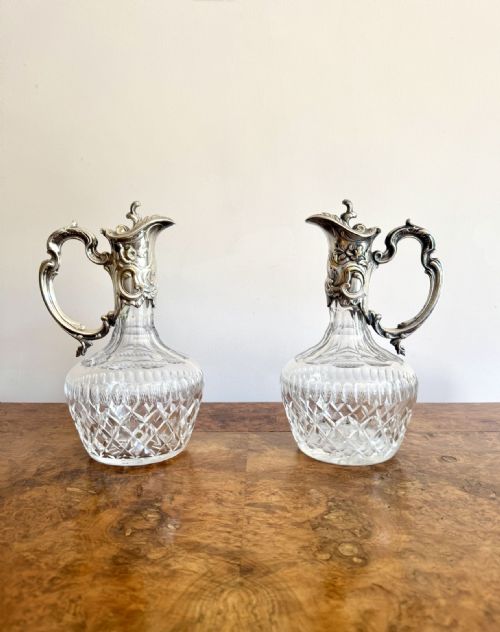
A silver topped wine jug combines a glass body with metal mounts, hinges, and lids designed for serving table drinks. These vessels appear most frequently from the Victorian and Edwardian periods, alongside examples from the Arts and Crafts movement and mid-century modern era.
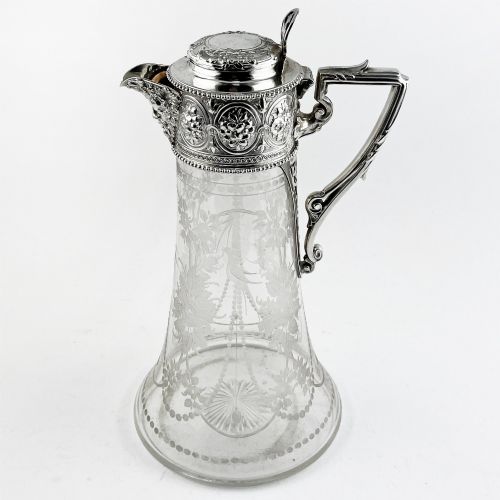
The glass bodies take various forms including claret jugs, ewers, and decanters. Cut glass, cut crystal, and etched glass dominate the body materials, paired with either sterling silver or silver plate mounts.
Materials and construction
Glass bodies are shaped by blowing and heavy cutting, often featuring deep geometric patterns or delicate floral engraving. Cranberry glass also appears among the Edwardian selections, adding colour to the table.
Metal mounts are cast, chased, or plated, then secured to the glass neck with hinged lids and detailed handles. Makers utilise sterling silver or durable silver plate for these collars and spouts, sometimes incorporating figural elements like Bacchus masks.
Listings feature periods spanning from the Victorian era through the Edwardian years up to mid-century modern design.
Factors that distinguish quality
Quality rests in the depth and clarity of the glass cutting combined with the weight of the metal mount. Thick crystal with crisp facets contrasts with simpler moulded glass bodies.
The artistry of the silver work dictates the tier of the piece. Hand-chased floral details, figural spouts, and robust cast handles separate standard plated items from finer sterling silver examples.
Asprey and Co. Ltd·Hukin and Heath
The Silver Topped Wine Jug Glossary
- Claret jug
- A specialised vessel designed for serving red wine at the table. These typically feature a pouring spout and a hinged lid.
- Mount
- The metal collar, handle, and lid fitted to the neck of a glass jug. This component is usually fabricated from sterling silver or silver plate.
- Cranberry glass
- A rich red glass popular during the Edwardian era. It derives its distinctive tone from the addition of gold chloride during manufacture.
- Ewer
- A large jug with a wide spout and a decorative handle. This form borrows its silhouette from classical pottery vessels.
Silver Topped Wine Jug: Frequently Asked Questions
What is a silver topped wine jug used for?
These vessels serve table wines, particularly claret, allowing hosts to decant and pour drinks with ceremony. The hinged lid keeps contents protected while resting on the dining table.
Beyond functional use, they serve as decorative centrepieces. Their reflective silver mounts and cut glass bodies catch candlelight effectively.
How do I date a silver mounted jug?
Hallmarks stamped on the silver mounts provide the most reliable dating evidence, indicating assay offices and active years for the maker. Stylistic clues also help narrow down the period.
Heavy floral engraving and Rococo revival curves point towards Victorian origins. Cleaner lines and cranberry glass often indicate Edwardian production.
What is the difference between silver plate and sterling silver?
Sterling silver contains a high purity standard of silver throughout the metal. Silver plate consists of a thin layer of silver bonded to a base metal core.
Both materials appear on these jugs across different periods. Hallmarks on the mounts clarify whether the metal is solid sterling or plated.
How should I clean the glass and silver?
Wash the glass body gently in warm soapy water using a soft brush for cut patterns. Avoid harsh abrasives that might scratch the surface.
Polish the silver mounts with a specialised cloth while avoiding contact with the glass. This preserves both the metal shine and the glass clarity.