

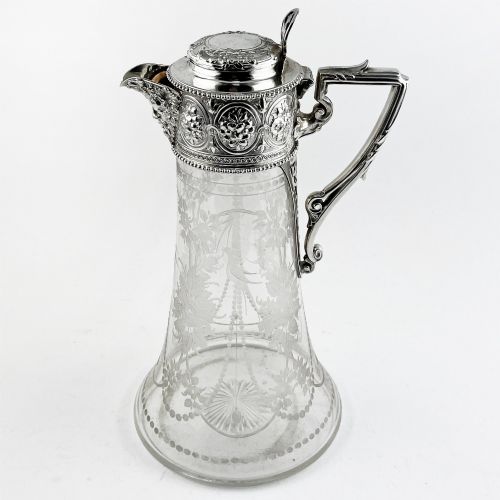
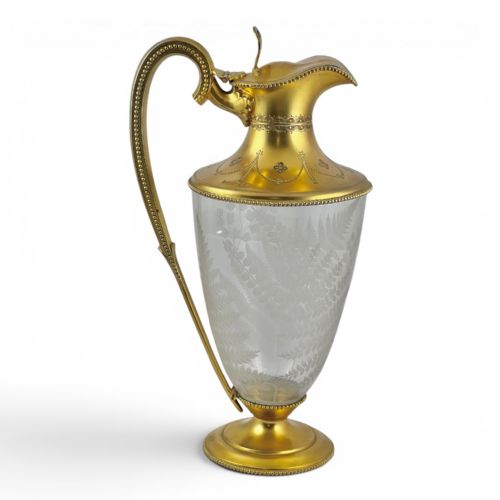


Etched Glass Claret Pitcher
An etched glass claret pitcher is a serving vessel that combines a glass body with metal mounts, prized for bringing Victorian elegance to the dining table.
Etched Glass Claret Pitcher
An etched glass claret pitcher brings together vessels designed to pour wine, commonly found in forms described as claret jugs, ewers, and wine decanters. These pieces appear frequently from the nineteenth century, including specific decades such as the eighteen sixties, eighteen seventies, eighteen eighties, and eighteen nineties, alongside Edwardian and mid twentieth century examples.
The body of the vessel is typically formed from clear glass, cut glass, lead crystal, or overlaid glass in colours like green and cranberry. Metal elements in silver, silver plate, sterling silver, or silver gilt form mounts, handles, and hinged lids, often featuring figural details like Bacchus masks.
Makers and origins span British, French, German, and Bohemian workshops, reflecting styles from Victorian Rococo Revival and French Rococo Revival to Art Nouveau and Neoclassical Revival. Collectors encounter these vessels performing their original function of serving red wine or functioning as decorative mantle and sideboard ornaments.
Materials and construction
Glass bodies are shaped through blowing and moulding, then decorated using cutting techniques or acid etching to produce floral and grape vine motifs. Coloured glass effects are achieved by overlaying layers of different hues onto clear vessels.
Metal mounts are cast and soldered to fit the glass neck and handle securely, incorporating hinged lids and thumbpieces. Silversmiths and electroplaters apply sterling silver, silver gilt, or silver plate to brass and other base metals, sometimes incorporating detailed cast masks.
Several pitchers incorporate watchful Bacchus masks peering from the handle, ensuring Dionysian oversight of every dinner party pour.
Factors of quality
Quality rests in the crispness of the glass cutting and the depth of the etching, where finer pieces display sharp botanical details and smooth surfaces. The weight and clarity of the lead crystal or clear glass also indicate superior production.
The substance and detailing of the metal mounts separate standard items from exceptional ones. Cast silver or heavy silver plate with finely chiselled masks and secure hinges demonstrate higher craftsmanship than light, plain mounts.
Asprey and Co. Ltd·Elkington·Amphora
The Etched Glass Claret Pitcher Glossary
- Claret jug
- A vessel specifically intended for serving claret, a British term for red Bordeaux wine. These typically feature a pouring spout and a hinged lid.
- Ewer
- A large pitcher with a wide spout and a curved handle, derived in form from classical water jugs. They are frequently utilised interchangeably with wine jugs in nineteenth century cataloguing.
- Silver plate
- A manufacturing technique where a thin layer of silver is fused or electroplated onto a base metal core. This method allowed makers to produce elaborate mounts at a lower cost than solid silver.
- Acid etching
- A decorative process using acid to eat away exposed areas of glass, leaving a frosted design. This technique creates detailed patterns such as grapes and vines without mechanical cutting.
Etched Glass Claret Pitcher: Frequently Asked Questions
What is a claret pitcher used for?
These vessels were created to serve red wine at the formal dining table during the Victorian era and subsequent periods. They allowed hosts to decant wine from bottles before pouring into glasses.
Today, they function as both decorative display objects and working tableware for serving drinks at dinner parties.
How do I date an etched glass claret pitcher?
Dating relies on examining the style of the metal mounts, the glass cutting techniques, and any hallmarks stamped onto the silver or silver plate. Victorian pieces often display distinct revival styles and registration marks.
Comparing the decorative motifs, such as Art Nouveau curves or Neoclassical symmetry, provides further clues to the decade of manufacture.
Are these pitchers made of solid silver?
The metal components vary between solid sterling silver, silver gilt, and silver plate over a base metal. Hallmarks on the mounts indicate the exact metal standard and the assay office.
The glass body remains the primary material, combined with these metal collars, handles, and hinged lids.
How should I clean my antique claret jug?
Glass bodies require gentle washing with warm water and mild detergent, avoiding harsh abrasives that could scratch the etched or cut surface. Metal mounts need specific care depending on whether they are solid silver or silver plated.
Keeping moisture away from the interior of glued or sealed mounts prevents damage to any internal adhesives or cork linings.