


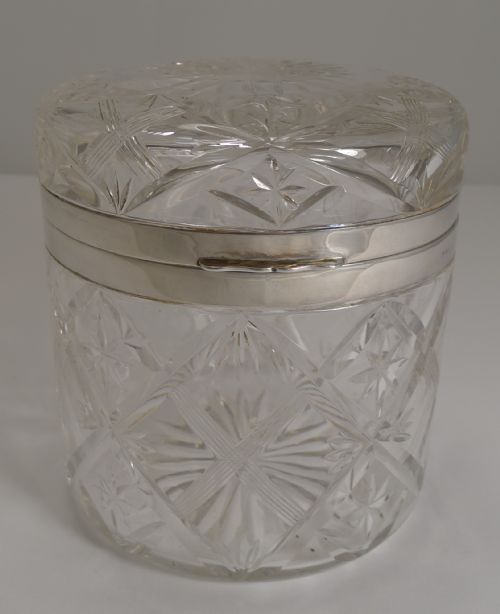


Silver Topped Powder Jar
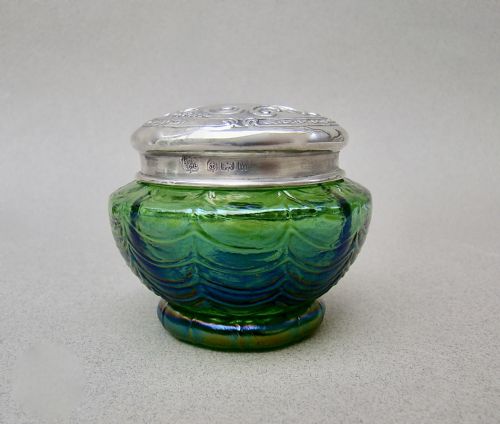
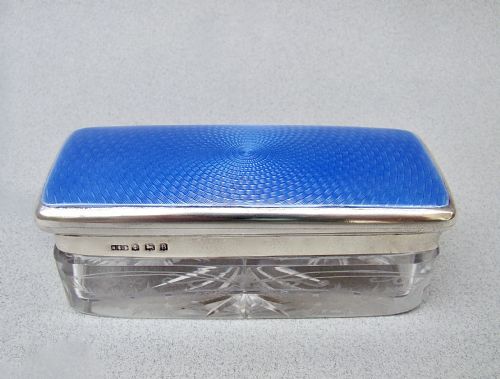
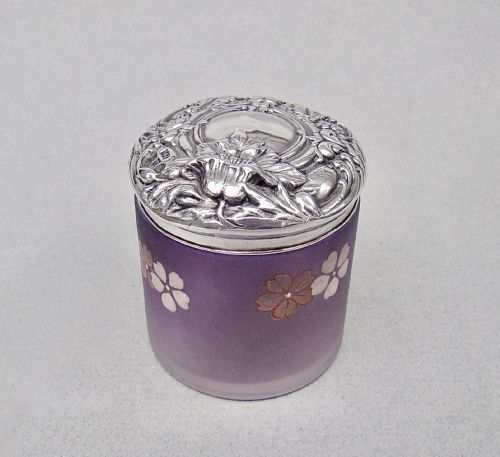
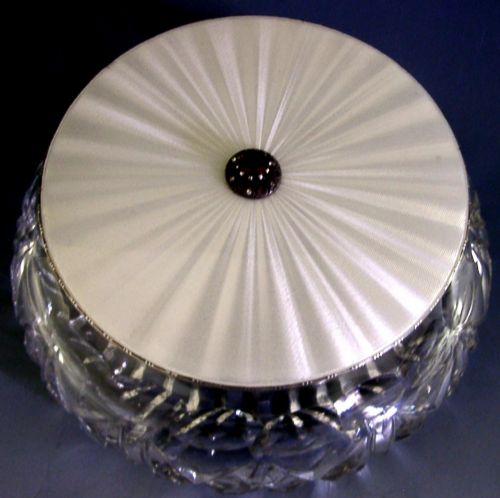
These silver topped powder jar examples bring dressing table elegance home, pairing lustrous metal with heavy crystal and coloured glass.
Silver Topped Powder Jar
A silver topped powder jar sits upon dressing tables and vanity surfaces, holding powders and small trinkets within vessels of cut glass, crystal, or coloured glass. These vanity jars and trinket boxes appear across periods from the nineteenth century through the Edwardian era and into the Art Deco and Mid-Century Modern years.
Origins span English provincial assay offices such as Birmingham and Chester, alongside London and nineteenth century French workshops. Collectors find examples featuring guilloche enamel, blue enamel, tortoiseshell, and Kralik glass alongside standard sterling lids.
How they were made
Silversmiths formed the lids from sterling silver, often adding guilloche enamel, polychrome enamel, or inset panels of tortoiseshell. These metal tops were hallmarked at assay offices to certify the metal purity and the year of production.
The lower vessels rely on heavy glass, cut crystal, or moulded frosted glass, sometimes featuring cranberry glass or Clichy glass. Artisans cut geometric and floral patterns into the crystal or shaped the glass into round and heart-shaped receptacles to match the fitted silver lids.
Some Edwardian jars secreted bright butterfly wings beneath glass panels, creating miniature permanent specimens on the dressing table.
What varies in quality
Quality rests in the depth of the crystal cutting and the intricacy applied to the silver lid. Pieces with heavy cut crystal and undamaged guilloche enamel stand apart from simpler pressed glass vessels.
The presence of named silversmiths and clear hallmarks from assay offices like Birmingham and Chester elevates a piece. Intricate enamel work, such as butterfly motifs or multicoloured geometric Art Deco designs, marks the finer end of the range.
A. J. Pepper & Co·Henry Clifford Davis
The Silver Topped Powder Jar Glossary
- Guilloche enamel
- Enamel applied over engine-turned metalwork, creating repeating geometric patterns beneath a translucent coloured coating. This technique was widely utilised during the Edwardian and Art Deco periods.
- Assay mark
- A stamped symbol on silver indicating the standard of metal purity, the assay office location, and the year of manufacture. Birmingham and Chester are common English assay locations found on these jars.
- Cut crystal
- High-clarity glass containing lead oxide, shaped with deep facets and geometric patterns. It provides weight and brilliance to the base of a vanity jar.
- Kralik glass
- Art glass produced by the Bohemian firm Wilhelm Kralik Sohn, known for iridescent and organic finishes. Pieces incorporating this glass provide a distinct coloured body beneath the silver lid.
- Tortoiseshell
- The mottled shell material of certain turtle species used as an inlay panel set into silver lids. It appears on vanity jars from the early twentieth century.
Silver Topped Powder Jar: Frequently Asked Questions
How do I date a silver topped powder jar?
Check the hallmarks stamped onto the silver lid for city marks, standard marks, and date letters. Comparing these against assay office records reveals the exact year of manufacture.
Style also indicates the period, as geometric lines suggest Art Deco manufacture while flowing floral motifs point to Art Nouveau or Edwardian production.
What is the difference between crystal and glass jars?
Crystal contains lead oxide, which increases the weight, refractive index, and clarity of the vessel compared to standard soda-lime glass. This high lead content allows for deeper and sharper facet cutting on the body.
Plain glass vessels tend to be lighter and may feature moulded patterns rather than hand-cut facets.
How should I clean the enamel on my jar?
Wipe the enamelled silver lid gently with a damp cloth and mild soap, avoiding harsh silver dips that can damage the glass coating. Dry immediately with a soft microfiber cloth to protect the surface.
Keep moisture away from any interior liners or adhesive areas beneath the silver mount.
Can I use these jars for modern cosmetics?
These vessels suit dry face powders, cotton balls, and small vanity items just as they did on historic dressing tables. Avoid storing loose liquids or moist creams inside, as historic seals and linings may not withstand modern cosmetics.
Line the interior with a small tissue if storing delicate items to protect the original glass base.