

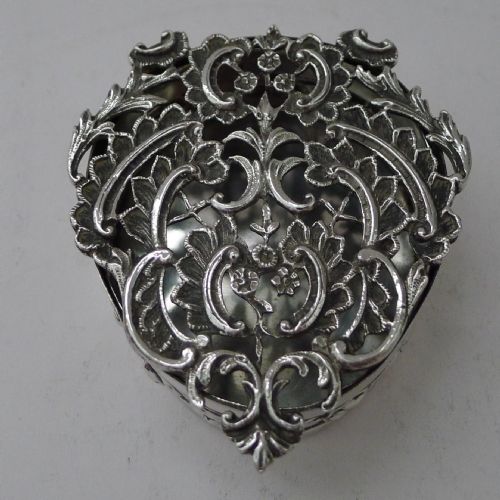


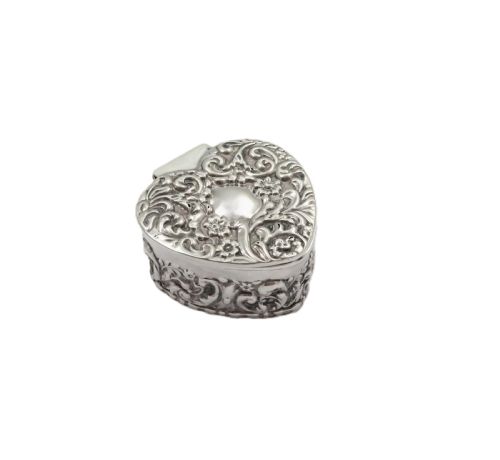


Heart Shaped Trinket Dish
These heart shaped trinket dish examples are small vessels for keepsakes, combining silver, glass and ceramic forms from the eighteenth to the early twentieth century.
How they were made
Silversmiths shaped sterling silver and silver plate through pressing, piercing and embossing, often working in London or Birmingham to create hinged boxes and open dishes. Master craftsmen such as William Comyns produced pierced designs with intricate openwork borders.
Ceramic variants utilise tin-glazed earthenware and stoneware, including dark blue jasperware from manufacturers like Wedgwood, alongside continental glazed ceramic ware from Germany. Cut glass components paired with silver lids combine heavy pressed glass bases with hallmarked metal mounts.
What varies in quality
Quality rests upon the crispness of the metalwork, the depth of the embossing and the integrity of any hinged mechanisms. Pierced silver dishes demonstrate superior skill when the cutouts show clean edges and balanced symmetry.
Ceramic and glass versions depend on the clarity of the glaze, the sharpness of applied reliefs on jasperware, and the thickness of the cut glass. Maker marks and clear hallmarks provide definite indicators of origin and standard.
Heart Shaped Trinket Dish Retail Price Guide 2026
Typical asking prices for heart shaped trinket dish among the pieces listed under this phrase on Sellingantiques today, from the lower quarter to the upper quarter. They describe what is for sale here now, not the wider market.
Some Victorian silver dishes feature double heart configurations, presumably designed for twice the sentiment on a dressing table.
William Comyns·Goldsmiths And Silversmiths Co·Wedgwood
The Heart Shaped Trinket Dish Glossary
- Sterling silver
- A silver alloy containing 92.5 percent pure silver and 7.5 percent other metals, typically copper. This standard alloy provides durability whilst maintaining a bright metallic lustre.
- Jasperware
- A type of stoneware developed by Wedgwood, characterised by a fine-grained unglazed matte surface. It is most commonly found in dark blue with applied white stoneware reliefs.
- Tin-glazed earthenware
- Pottery covered with a glaze containing tin oxide, which produces a white and opaque surface. This technique allows for painted decoration applied directly onto the unfired glaze.
- Hallmark
- An official stamp applied by an assay office to precious metals, indicating purity, origin and year of manufacture. British silver hallmarks typically include a maker mark, standard mark and town mark.
- Pierced work
- Metalworking technique where patterns are cut through the sheet metal to create openwork designs. This method lightens the weight of silver dishes whilst adding decorative border detail.
Heart Shaped Trinket Dish: Frequently Asked Questions
What were heart shaped dishes used for?
These small dishes and boxes held rings, pins, and personal tokens on dressing tables and boudoirs.
Victorians and Edwardians favoured them as sentimental gifts and decorative accessories for small valuables.
How do I date a silver heart dish?
Assay office marks and date letters stamped onto the silver provide the exact year of manufacture.
Stylistic details like Edwardian pierced work or Victorian embossed scrolls also point to specific decades.
Are these pieces made of solid silver?
Many examples consist of sterling silver, whilst others utilise silver plate, cut glass, or ceramic bodies.
Hallmarks on the metal elements confirm whether the piece is solid sterling silver or plated.
How do I care for antique silver dishes?
Gentle dusting and occasional cleaning with a specialist silver cloth preserve the metal finish without removing detail.
Avoiding harsh chemical dips protects any fitted glass components or delicate ceramic glazes.