
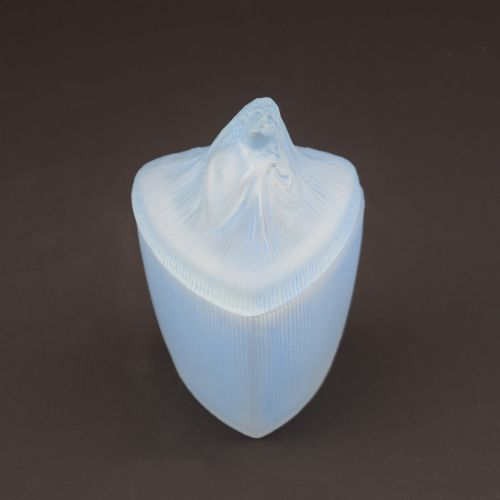
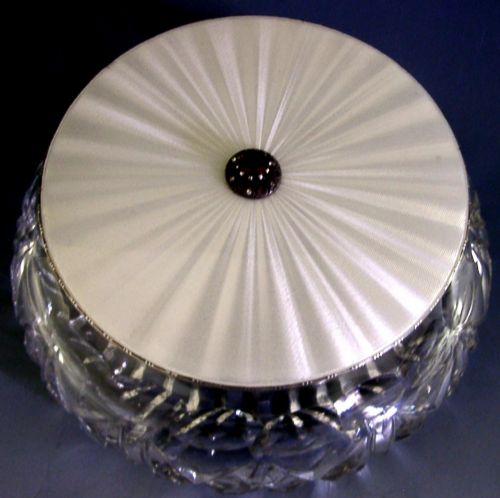


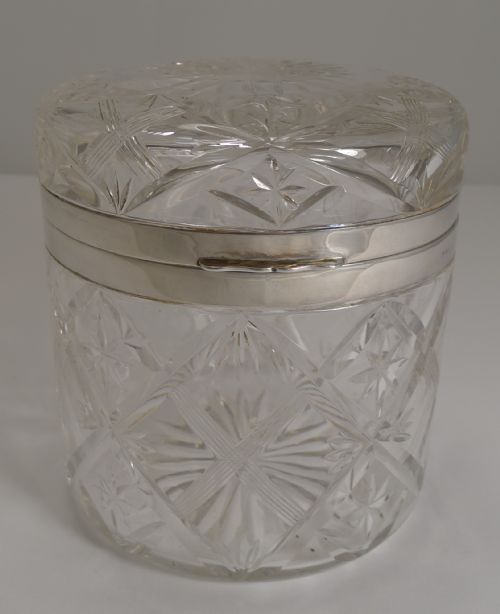
Vintage Glass Trinket Pot
A vintage glass trinket pot holds dressing table essentials with style, offering small-scale storage in cut glass and enamel.
Vintage Glass Trinket Pot
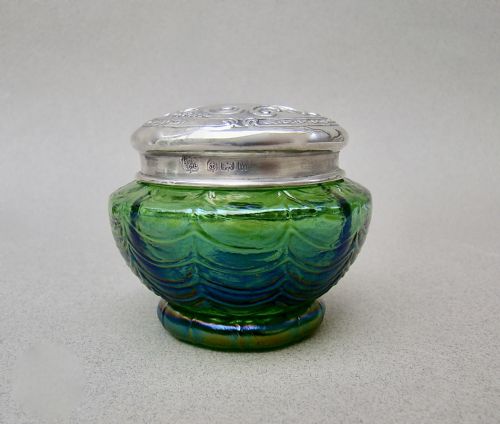
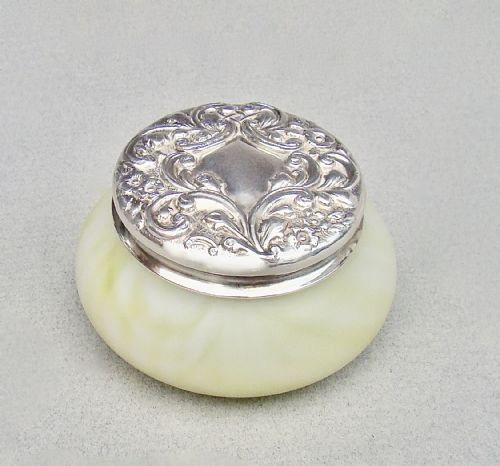
A vintage glass trinket pot serves as a dressing table accessory for pins, powder, and small valuables, appearing across Edwardian, Art Deco, and Mid-Century Modern periods. These pieces combine glass bodies with fitted metal lids, functioning as vanity jars, powder boxes, and lidded bowls.
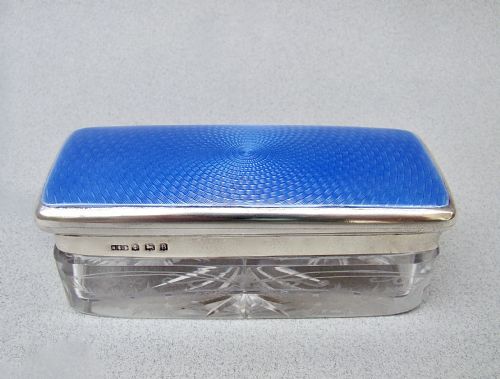
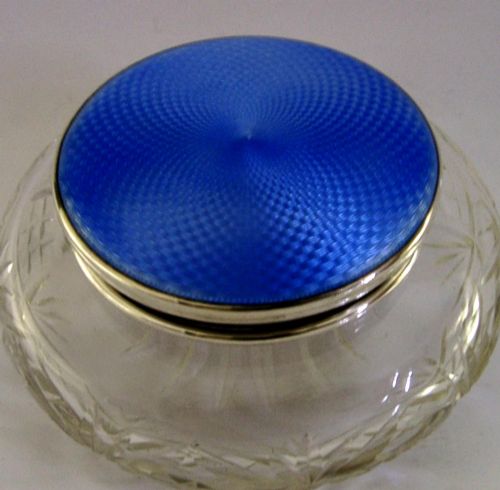
The most common examples on this page pair cut glass or cut crystal bases with sterling silver mounts and coloured enamel tops. Makers fashioned these containers in various shapes, from heart-shaped boxes to cylindrical jars produced during the early twentieth century.
Originating from periods spanning 1900 to the 1960s, these dressing table jars reflect changing tastes in vanity accessories. Buyers encounter straightforward glass vessels alongside ornamented specimens featuring guilloche enamel and tortoiseshell details.
Assessing quality and finish
Quality rests on the weight and clarity of the glass base, where deep hand-cutting and crisp faceting distinguish finer crystal from simpler pressed vessels. The crispness of the glass pattern dictates the initial visual impact of the container.
Metalwork and enamel finish separate standard production from superior pieces, with engine-turned guilloche patterns and flawless enamel adding distinction to the silver lid. Maker attribution, such as signed René Lalique glass or marked Birmingham silver smiths, elevates the standing of an individual pot.
Listings feature periods spanning from Edwardian and Art Deco to Mid-Century Modern, alongside materials like sterling silver, satin glass, and guilloche enamel.
A. J. Pepper & Co·Henry Clifford Davis·A. Bromet & Co·Rene Lalique
The Vintage Glass Trinket Pot Glossary
- Guilloche enamel
- A decorative technique where translucent enamel is layered over engine-turned metal. This method produces intricate geometric patterns visible beneath coloured glass coatings.
- Satin glass
- Glass treated to achieve a velvety, frosted texture rather than a high gloss. It provides a soft surface finish popular in early pieces.
- Cut crystal
- High-clarity glass containing lead oxide, shaped by precise wheel-cutting. The cuts refract light and create sharp geometric facets.
- Overlay
- A manufacturing method involving layers of different coloured glasses. The outer layer is partially cut away to reveal the contrasting colour beneath.
- Vanity jar
- A lidded container designed for a dressing table. These vessels held cosmetics, pins, or small jewellery items.
Vintage Glass Trinket Pot: Frequently Asked Questions
What did people keep in a trinket pot?
These lidded containers held dressing table items such as hairpins, rings, small brooches, and face powder. Owners placed them on vanity tables for daily use.
They also served as decorative accents in bedrooms and boudoirs, keeping small valuables contained and tidy.
How do I date a silver and glass jar?
Dating relies heavily on hallmarks stamped onto the sterling silver mounts and lids. Birmingham assay marks and maker initials often provide specific years of manufacture.
Stylistic cues such as Edwardian floral motifs or Art Deco geometric enamel also help place the piece within a specific decade.
Are these pots made of crystal or glass?
The selection includes both standard glass and heavy cut crystal bodies. Crystal offers greater clarity and weight due to its lead content.
Many listings feature deep hand-cut facets that catch the light, distinguishing finer crystal vessels from simpler pressed glass containers.
How do I clean an enamelled silver lid?
Enamel and silver require gentle care to avoid scratching the surface or damaging the metal mounts. Soft cloths and mild cleaning solutions preserve the finish.
Harsh chemical dips must be kept away from enamelled areas and tortoiseshell inserts to prevent permanent staining or loss of material.