


Silver Topped Crystal Bottle
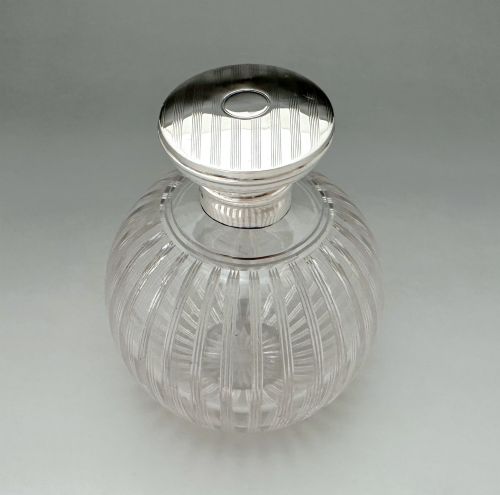
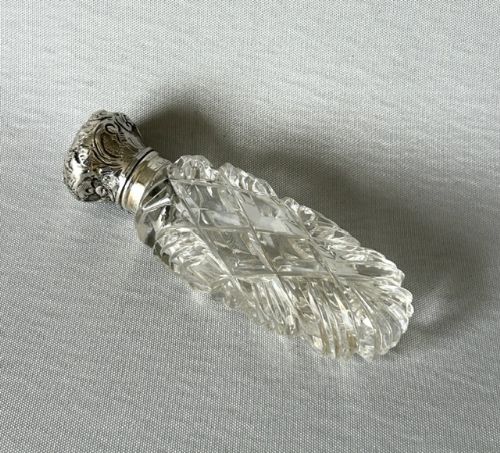
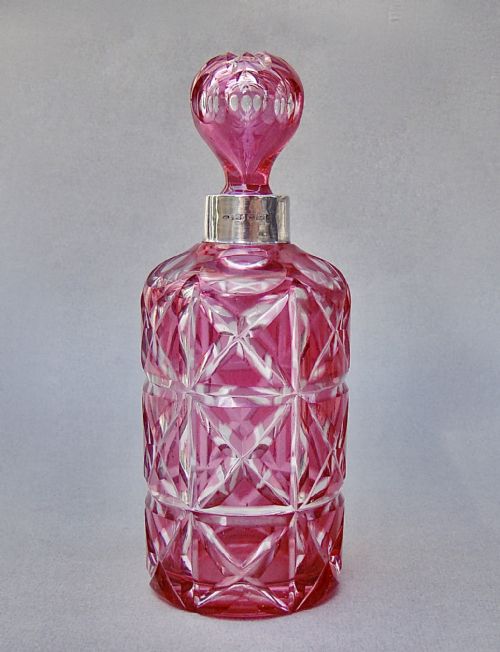
A silver topped crystal bottle brings together brilliant cut glass and sterling silver mountings for your dressing table or bureau.
Silver Topped Crystal Bottle
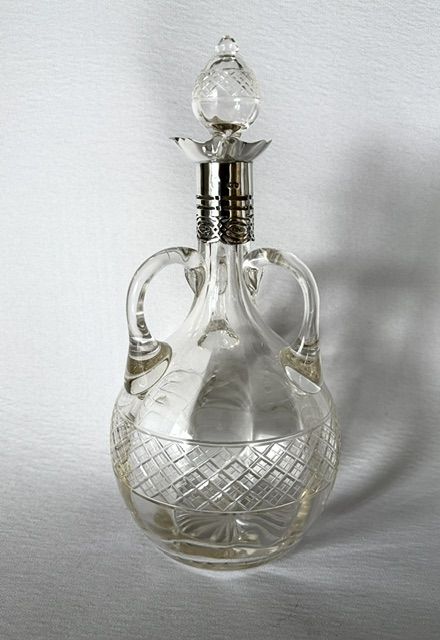
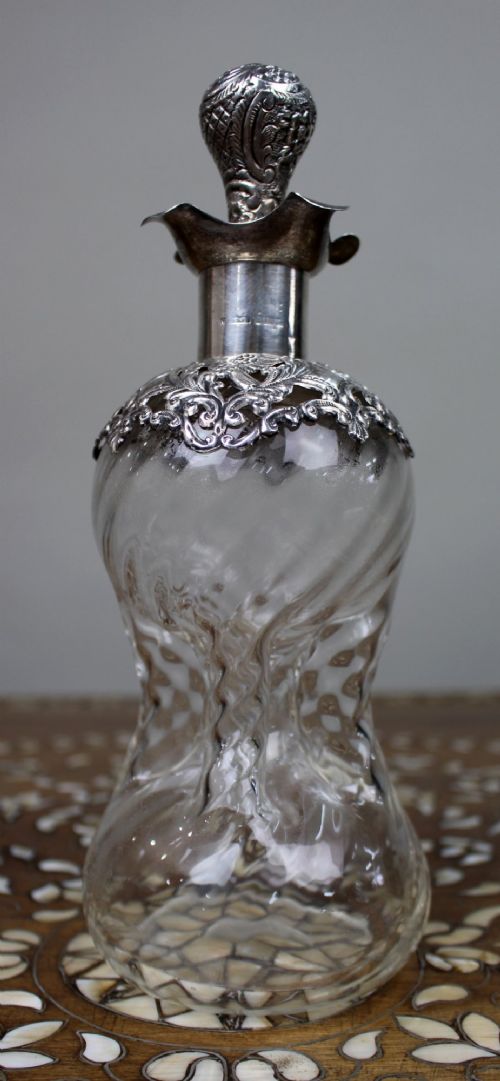
A silver topped crystal bottle is typically encountered as a scent or perfume container, though decanters, inkwells and vanity jars also appear in this category. These pieces span the Georgian, Victorian, Edwardian and Art Deco periods, alongside productions from the 1900s, 1910s, 1920s and 1930s. The selection on this page relies heavily on Edwardian and Victorian forms, drawing from English workshops as well as French Belle Epoque and Bohemian makers.
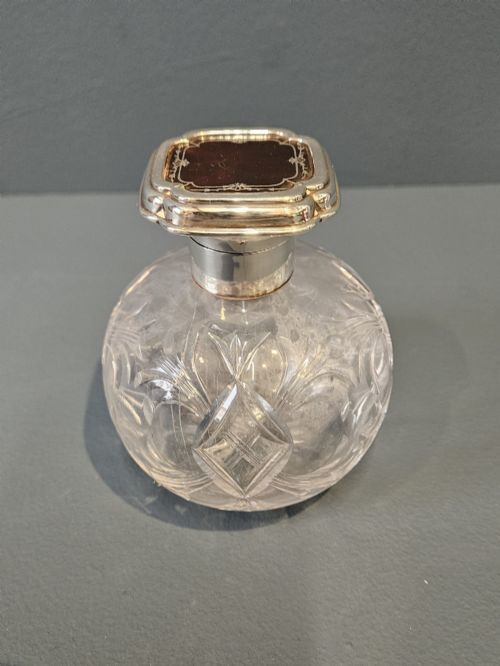
Buyers will find these items rendered in clear cut crystal and glass, alongside coloured variants such as cranberry, ruby and emerald flashed glass. Many feature fitted lids in sterling silver, sometimes embellished with tortoiseshell, blue or yellow enamel, and guilloche decoration. Scent bottles and decanters dominate the forms, accompanied by occasional inkwells and dressing table sets.
Materials and Technique
Makers shaped the glass and crystal bodies through heavy cutting and moulding to create deep facets that catch the light. Vessels of cranberry, ruby and emerald glass utilised flash techniques or solid coloured metal to achieve their rich hues.
The silver tops and collars were fashioned from sterling silver, often carrying hallmarks from silversmiths operating in Birmingham and other centres. Artisans integrated organic materials such as tortoiseshell and applied vitreous enamel, including guilloche patterns, directly onto the silver lids.
The selection includes scent bottles, decanters, inkwells, and full dressing table sets spanning the Georgian period to the 1930s.
Quality Variations
The distinction between standard examples and finer pieces rests on the depth and crispness of the glass cutting. Superior crystal bodies exhibit sharp, clean facets and substantial weight, while lesser items show softer moulding lines.
Workmanship on the metal mounts also dictates standard, with precise engine-turning, uncompromised enamel work and robust silver collars marking out superior workshops. The integration of auxiliary materials like tortoiseshell requires exact fitting to the silver lid to achieve a cohesive finish.
Harold Bushell and Co·Hukin and Heath Ltd·Jonathan Douglas·Barnsley and Co·Charles May
The Silver Topped Crystal Bottle Glossary
- Crystal
- A type of glass containing lead oxide, which increases brilliance, weight and clarity. This material allows for deep, sharp facets when cut.
- Guilloche
- A decorative technique where a precise, intricate pattern is mechanically engraved into metal beneath a translucent layer of enamel. It appears frequently on twentieth-century vanity items.
- Sterling silver
- An alloy consisting of silver and other metals, predominantly copper, standardly containing a specific high proportion of pure silver. It forms the primary metal for the lids and collars on these vessels.
- Cranberry glass
- A rich red-pink glass created by adding gold to the molten batch during manufacture. It is often seen combined with silver mounts in Victorian pieces.
- Hallmark
- An official stamp applied to precious metals indicating the standard of purity, the assay office, and the date letter. These marks help verify the period and origin of the silver top.
Silver Topped Crystal Bottle: Frequently Asked Questions
Were these bottles used for perfume?
These vessels served primarily as scent and cologne bottles for dressing tables and travel use. Their secure silver collars and stoppers prevented precious fragrances from evaporating.
Larger variants functioned as decanters for spirits, while related forms accommodated ink for writing desks. Their dual role as utilitarian items and decorative accessories made them staples of period dressing table sets.
How do I identify the date of the silver top?
Look for hallmarks stamped directly onto the silver collar or the interior of the lid. These small marks typically indicate the assay office, the maker's mark, and a specific date letter.
Matching the silver hallmarks with the style of the cut glass helps confirm whether the entire piece is contemporaneous. Maker signatures or registered design numbers can also narrow down the year of production.
Can I use antique scent bottles for daily wear?
Many of these pieces remain robust enough for regular use, provided the stoppers seal effectively and the hinges function without strain. Tortoiseshell and enamel lids require extra care to prevent scratching or moisture damage.
Testing the stopper fit and checking the interior for cleanliness ensures the vessel is safe to hold modern scents. Storing them upright on a secure tray protects both the glass base and the silver mount.