



Silver Top Wine Carafe
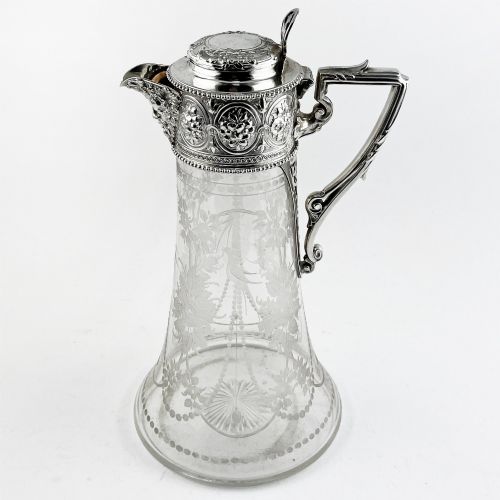
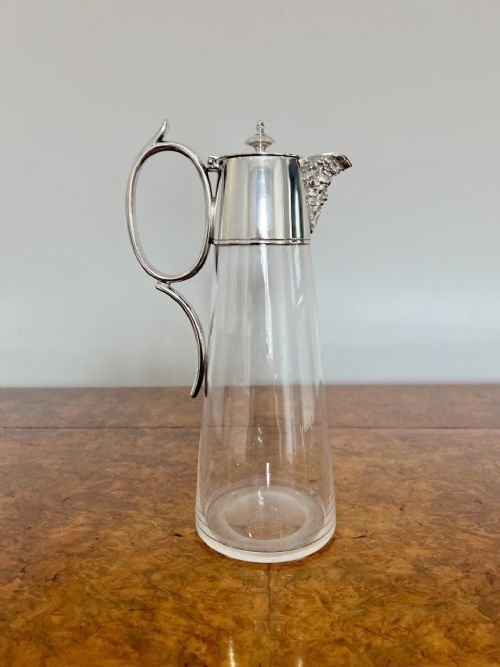
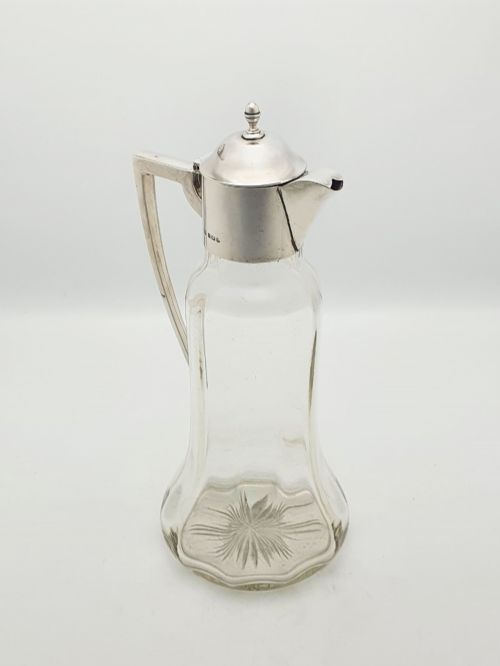
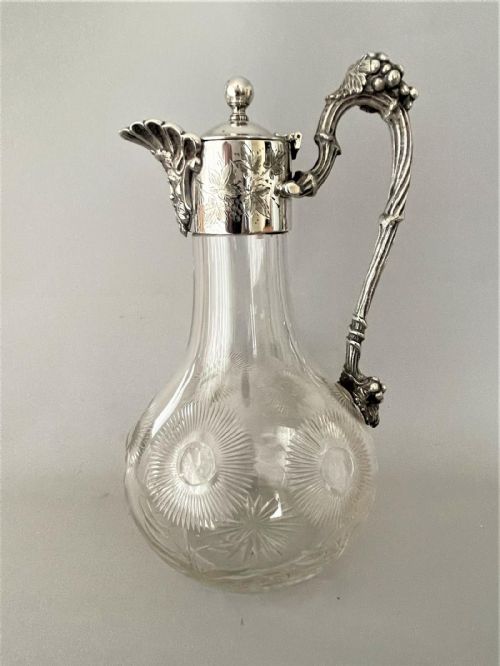
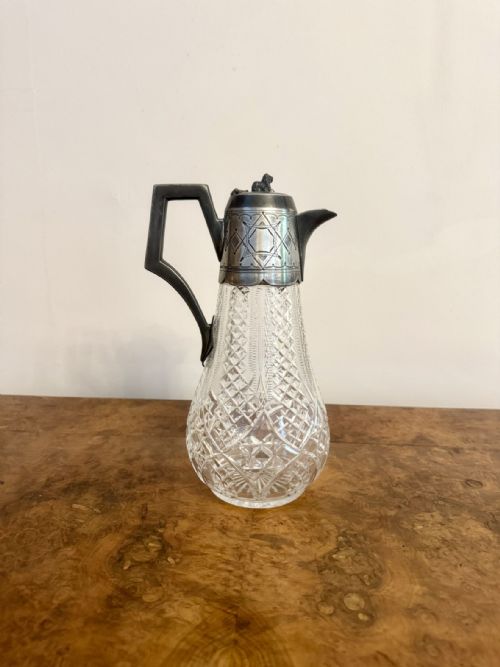
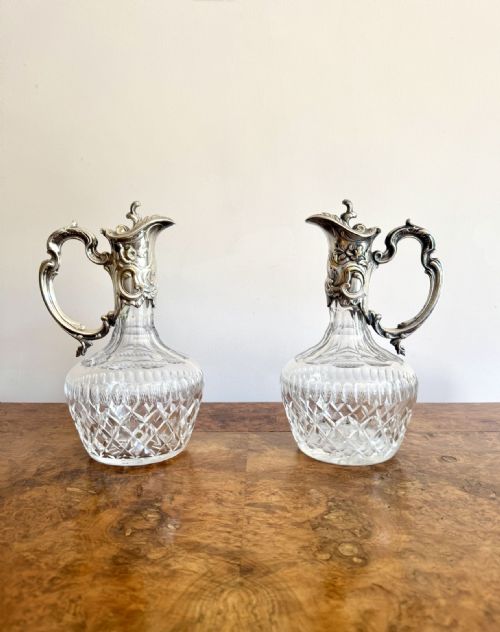
These silver top wine carafe examples bring together cut glass and gleaming mounts for the dining table.
Silver Top Wine Carafe
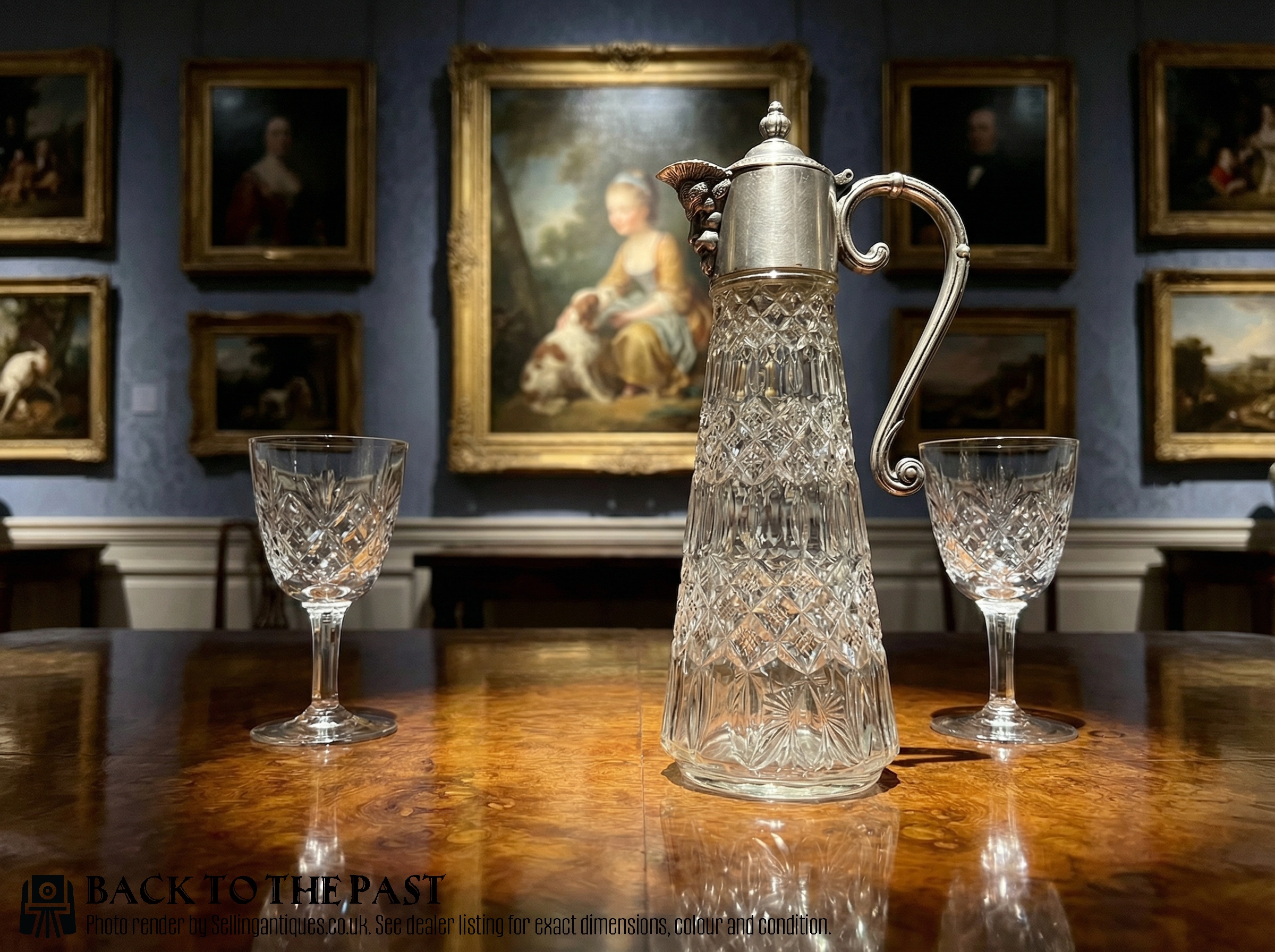
A silver top wine carafe combines a glass vessel with a metal mount, often taking the form of a claret jug or decanter. These serving pieces appear frequently from the Victorian and Edwardian periods, alongside examples from later decades such as the nineteen sixties.
The body of the vessel is typically shaped from cut glass, crystal, or coloured glass such as cranberry and blue, paired with silver plate or sterling silver mounts. Makers frequently applied handles, hinged covers, and collars to complete the serving form.
Collectors encounter various related vessel types within this category, including ewers, whisky noggins, and pitchers. Each variation shares the characteristic metal top paired with a glass body intended for serving wine.
How they were made
Craftsmen shaped the glass bodies using blowing and cutting techniques to produce faceted, etched, or smooth surfaces. Coloured glass varieties received their hues during the initial melting process before being blown into moulds or free-formed.
Silversmiths formed the mounts from sterling silver or applied silver plate over base metals, often incorporating cast decorative elements like masks or floral engravings. The metal collar was then securely fitted around the neck of the glass vessel, frequently accompanied by a hinged lid and thumbpiece.
Some Edwardian examples feature an unusual face spout moulded directly into the metal mount.
What varies in quality
The weight and clarity of the glass vessel set the foundation for quality, with heavy cut crystal and deeply etched designs sitting above simpler moulded glass bodies. Precision in the glasscutting creates crisp facets that catch the light effectively.
The standard of the metalwork also divides the range, distinguishing solid sterling silver mounts and detailed silver plating from plainer, lighter metal covers. Better pieces exhibit crisp chasing, secure hinge mechanisms, and well-balanced handles.
Asprey and Co. Ltd·Hukin and Heath
The Silver Top Wine Carafe Glossary
- Claret jug
- A specialised pouring vessel designed specifically for serving red wine, typically featuring a handle and a hinged metal cover.
- Sterling silver
- A silver alloy containing a high proportion of pure silver, often stamped with hallmarks indicating its standard and origin.
- Silver plate
- A layer of silver fused to a base metal substrate, commonly utilised on Victorian and Edwardian serving vessels.
- Cranberry glass
- A rich red or pink transparent glass produced by the addition of gold chloride to the molten batch.
- Whisky noggin
- A small drinking vessel or decanter with a single handle and a metal top, sometimes configured in smaller portable sizes.
Silver Top Wine Carafe: Frequently Asked Questions
What is a silver top wine carafe used for?
These vessels were designed to hold and serve wine at the dining table, allowing hosts to decant vintages before pouring.
The metal top and hinged lid kept the contents protected while adding a decorative element to the table setting.
How do I clean a silver top wine carafe?
Careful hand washing with warm water and mild soap preserves both the glass body and the delicate metal mounts.
Harsh abrasives should be avoided to protect silver plating and prevent scratching the glass surfaces.
How do I date a silver top wine carafe?
Hallmarks stamped on the metal mounts provide clear dates and assay office locations for sterling silver examples.
Stylistic cues such as the cut of the glass, the shape of the handle, and the presence of Victorian or Edwardian design motifs help narrow down unhallmarked pieces.
Are these carafes safe for serving wine today?
Most antique examples remain functional for serving wine provided the interior is thoroughly cleaned and inspected.
Care must be taken with older silver plate to ensure the underlying metal is not exposed through excessive polishing.