

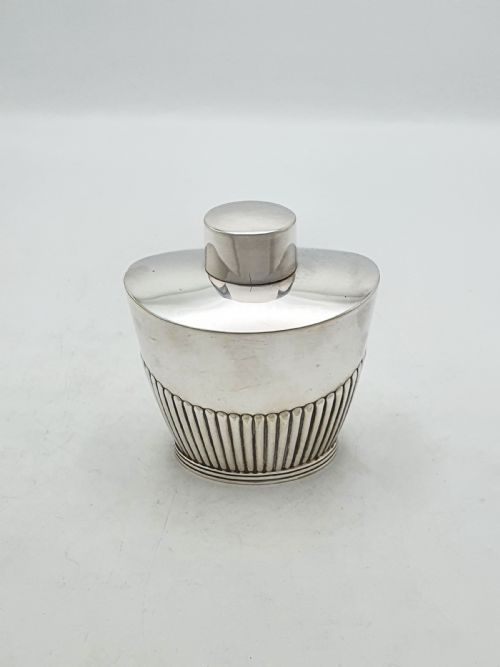
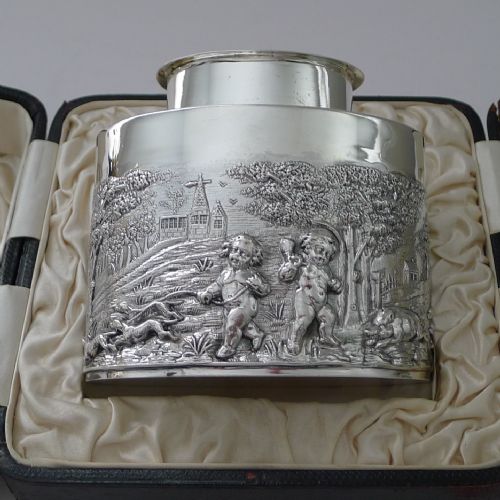


Silver Tea Storage
Silver tea storage pieces secure precious dry leaves in style, bringing period craftsmanship straight to the table.
Silver Tea Storage
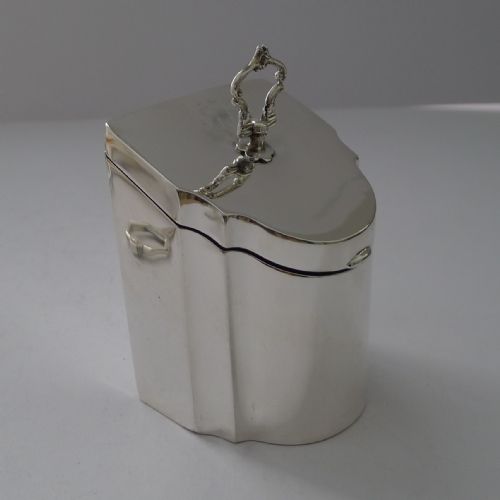
Silver tea storage brings together traditional forms like tea caddies, canisters, and biscuit barrels designed to keep dry leaves and provisions fresh. These domestic containers range from compact Georgian chests to larger Victorian boxes and Edwardian vessels.
The pieces on this page span the eighteenth, nineteenth, and early twentieth centuries, capturing shifts in domestic life and social entertaining. Buyers encounter both solid sterling silver constructions and silver plated alternatives alongside organic materials.
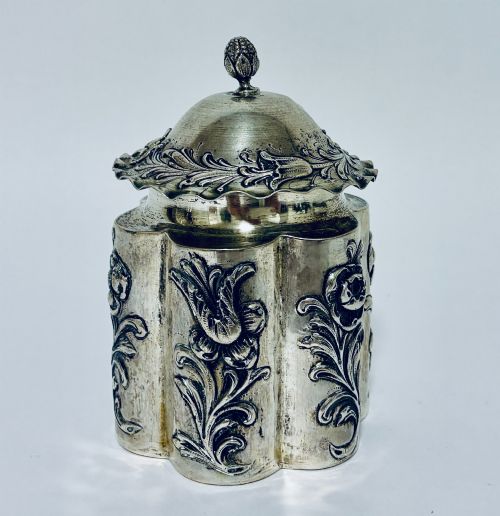
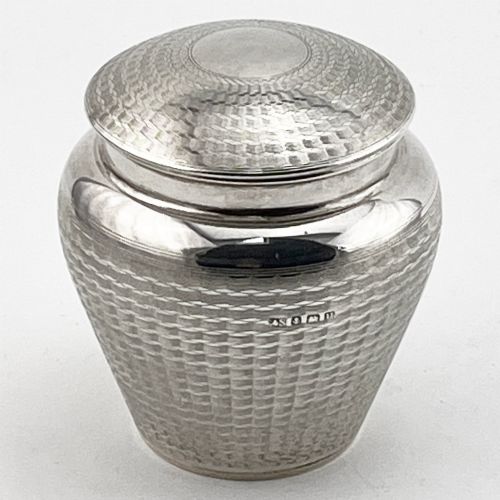
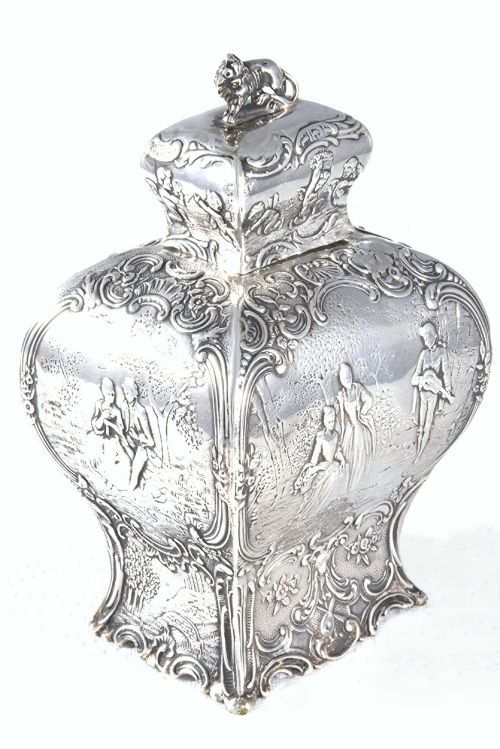
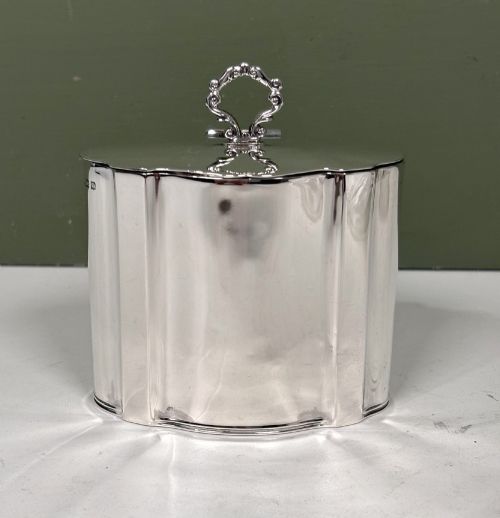
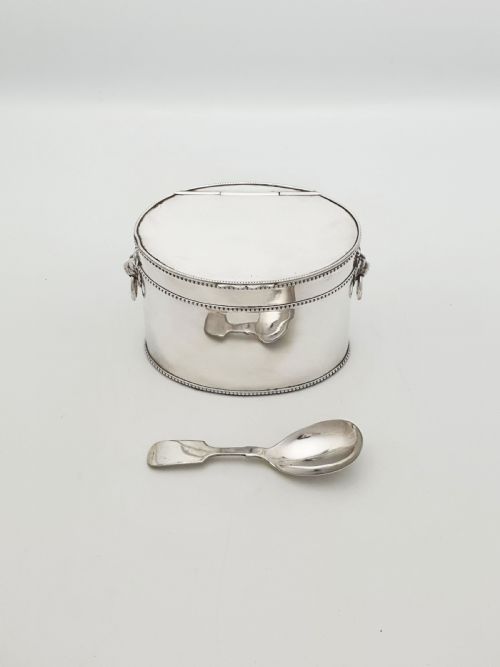
Tea caddies form the majority of the selection, appearing in varied shapes from knife box forms to bombe profiles and novelty paint tins. Biscuit barrels and boxes also feature, offering larger compartments for dry goods.
Materials and construction
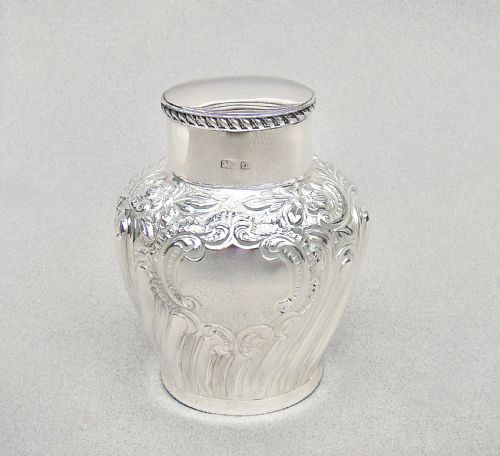
Makers utilised sterling silver and silver plate alongside organic substances such as tortoiseshell and burr maple wood, sometimes mounting ceramic elements within the design. Metal bodies were shaped through hammering, casting, and repousse work, creating textured surface details like lion mask handles.
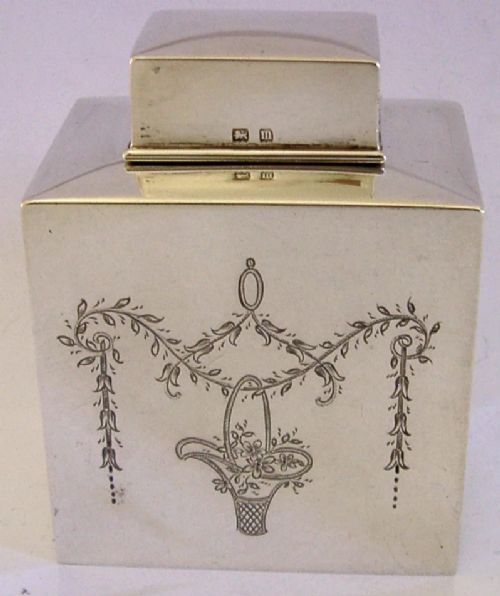
Wooden and tortoiseshell examples relied on specialist cabinetry techniques, incorporating fine veneers and protective linings to preserve the contents. Metal pieces frequently feature hallmarks stamped into the silver, recording the assay office, year, and maker.
Materials represented include solid silver, silver plate, tortoiseshell, ceramic, and wood.
Assessing quality
Quality rests upon the crispness of decorative elements, such as repousse foliage or cast mounts, and the integrity of the structural joints. Pieces by notable makers or those retaining original internal elements display superior craftsmanship.
The weight of the silver and the precision of the closure mechanisms distinguish finer vessels from standard production items. Preservation of surface detail and legible hallmarks also elevate the standing of a piece.
Zimmermann·Thomas Hayes·William Hutton & Sons Ltd·Mappin & Webb·Ernest Druiff & Co·Asprey & Co·Atkin Brothers·Elkington & Co
The Silver Tea Storage Glossary
- Tea caddy
- A small vessel designed for storing loose tea leaves securely. Early versions often included internal compartments with locking lids.
- Repousse
- A metalworking technique where the artisan hammers the design from the reverse side to form raised patterns. This creates tactile surface relief on Victorian and Georgian silver.
- Hallmark
- A series of official marks stamped onto precious metals indicating purity, origin date, and maker. These symbols provide a reliable record of a piece's provenance.
- Old Sheffield plate
- A composite material made by fusing a thin sheet of silver to a thicker copper base. It was widely utilised before the invention of electroplating.
Silver Tea Storage: Frequently Asked Questions
What is a silver tea caddy?
A silver tea caddy is a dedicated container built to protect dry tea leaves from light and air.
Historically, tea was an expensive commodity, so these boxes often featured lockable lids to guard the contents.
How do I clean silver tea storage?
Cleaning requires a soft cloth and a gentle silver polish formulated to remove tarnish without harming the metal.
Avoid abrasive materials that can wear away delicate repousse details or damage nineteenth century plating.
Are biscuit barrels used for tea?
Biscuit barrels serve as lidded storage vessels for dry baked goods rather than loose tea leaves.
They share similar silver plated and ceramic construction methods with tea caddies from the same eras.
How do I date an antique silver caddy?
Dating relies primarily on the stamped hallmarks which indicate the specific assay office and year of production.
Stylistic markers such as Georgian proportions or Edwardian motifs also help narrow down the period.