
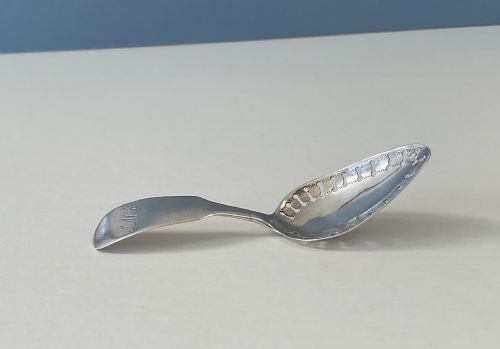


Silver Tea Scoop Spoon
These silver tea scoop spoon examples bring functional elegance to the tea table, offering small bowls designed for measuring loose leaves.
Silver Tea Scoop Spoon
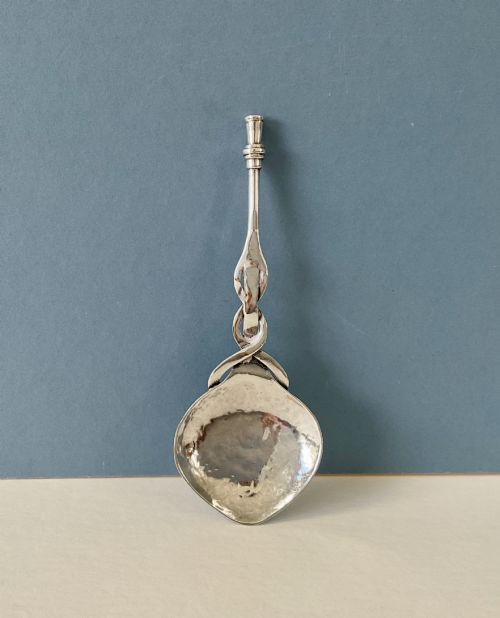
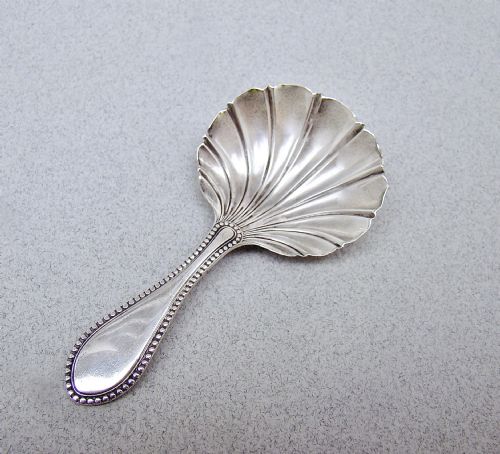
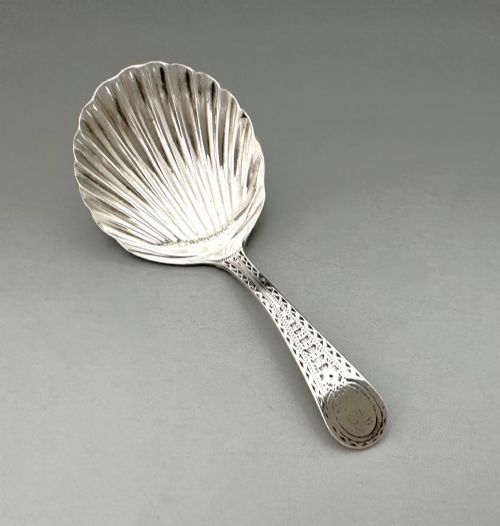
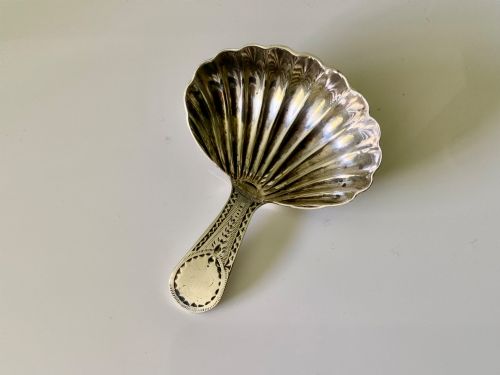
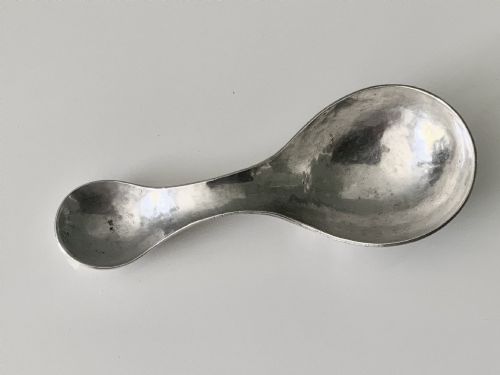
When you search for a silver tea scoop spoon, you are looking at small utensils designed specifically for measuring loose leaf tea from a caddy into a pot. The items on this page span the Georgian, Victorian, and Edwardian periods, alongside later twentieth-century modernist designs from makers such as Georg Jensen and David Andersen.
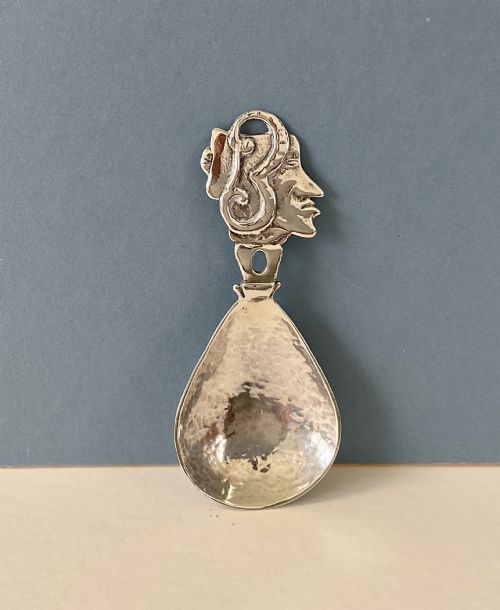
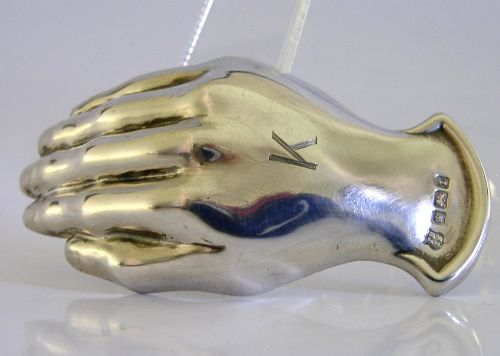
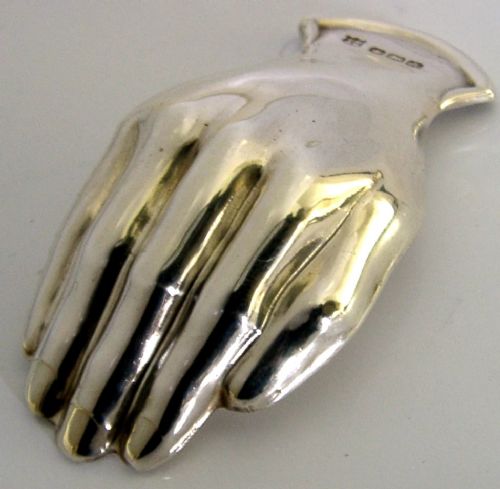
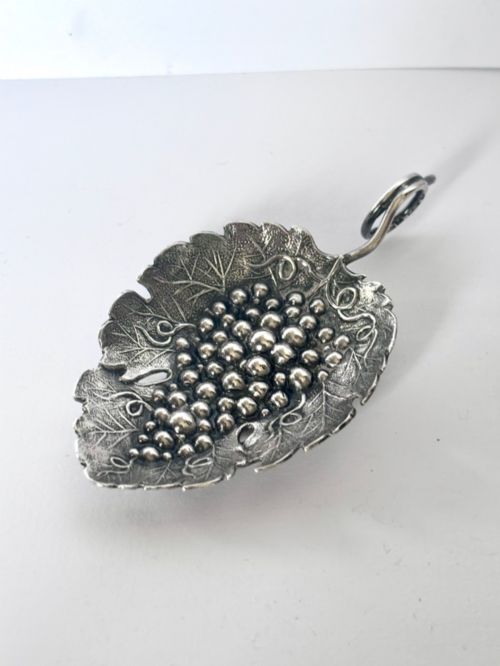
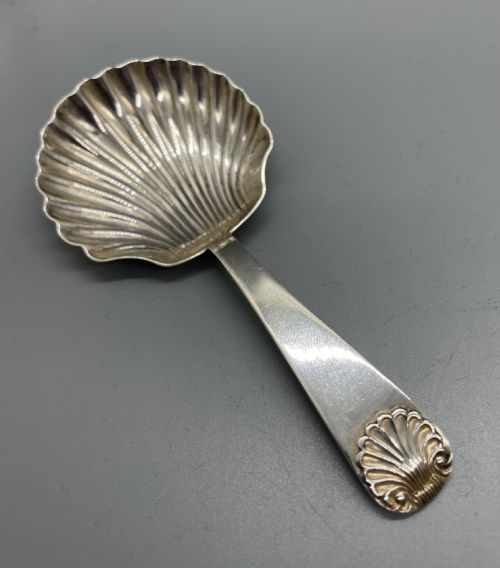
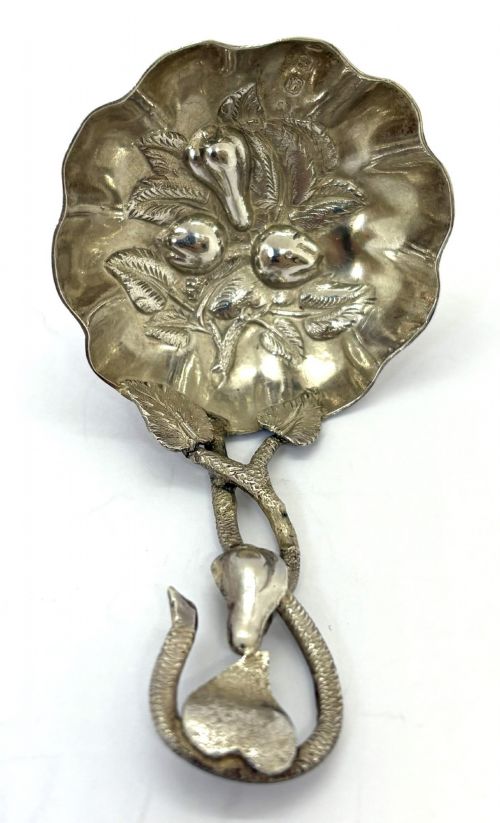
The most common forms you will meet here are traditional shovel-shaped bowls and novelty items modelled as hands, jockey caps, or leaves like vine and grape motifs. These pieces originate from English, Irish, and continental workshops, reflecting shifts in dining habits and silver design across multiple centuries.
How they were made
These items are constructed primarily from sterling silver, with variations including parcel-gilt and full silver-gilt finishes to protect the metal from the corrosive oils found in tea leaves. Certain twentieth-century examples incorporate enamel work to add colour and decorative contrast to the bowl or handle.
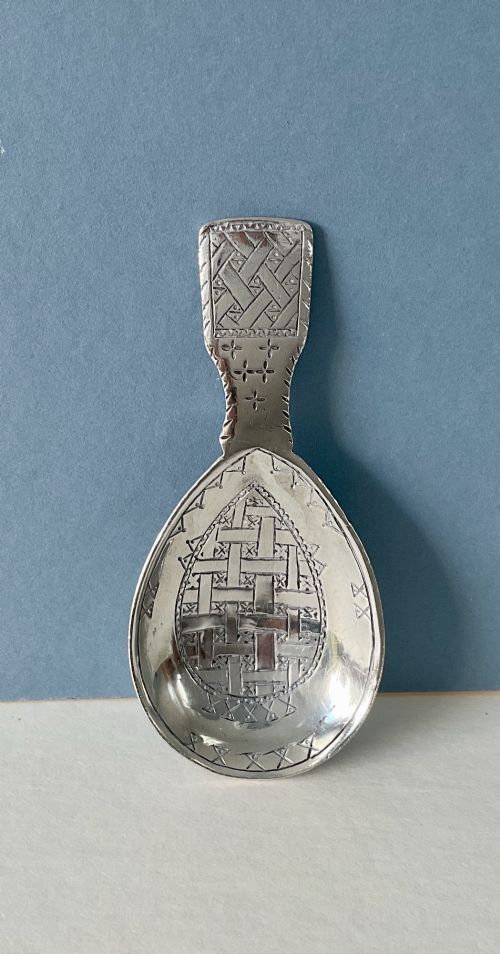
Makers employed techniques such as hammering, casting, and hand engraving to shape the bowls and decorate the handles. Details like engraved stems or applied leaf motifs demonstrate traditional silversmithing methods used in Birmingham, Sheffield, London, and Glasgow.
Materials recorded across the selection include standard sterling silver alongside parcel-gilt finishes and colourful enamel accents.
What varies in quality
The distinction between standard items and superior examples lies in the crispness of the chasing, the depth of the engraving, and the originality of the form. Novelty shapes like jockey caps or articulated hands require precise craftsmanship to elevate them above simple utility.
Makership heavily influences desirability, with marked pieces from known silversmiths or established firms carrying distinct marks that verify their origin and period. The preservation of original parcel-gilt surfaces and clear hallmarks also contributes significantly to the standing of an individual piece.
Judy·Liberty·Martin Hall And Co·Joseph Willmore·William Neale·David Andersen·Georg Jensen·Mappin And Webb·George Unite
The Silver Tea Scoop Spoon Glossary
- Caddy spoon
- A small spoon specifically designed for measuring tea from a caddy.
- Parcel-gilt
- Silver objects that are partially gilded with gold, often on the interior of the bowl.
- Hallmark
- An official stamp indicating the purity of the silver, the maker, and the year of assay.
- Novelty spoon
- A spoon shaped to resemble an unrelated object, such as a cap or a hand.
- Silver-gilt
- Solid silver that has been coated with a thin layer of gold.
Silver Tea Scoop Spoon: Frequently Asked Questions
What is a silver tea scoop spoon used for?
These pieces were created to scoop dry tea leaves from a caddy into a teapot during tea preparation. Their compact size allowed them to fit neatly inside traditional ceramic or metal tea containers.
Over time, collectors began gathering them for their diverse decorative styles rather than daily brewing use. They remain small display items that highlight historical silversmithing techniques.
How do I identify a Georgian silver tea scoop spoon?
Georgian examples often feature hand-engraved handles, bright-cut detailing, or shell-shaped bowls dating from the late eighteenth or early nineteenth century. Examining the stamped hallmarks on the reverse will reveal assay office symbols and date letters corresponding to this era.
Stylistic cues such as vine leaves or acorn motifs are also common among pieces from this period. The absence of modern machine marks points further toward traditional Georgian hand fabrication.
Why are some bowls gilded inside?
Silver-gilt or parcel-gilt interiors were applied to protect the underlying silver from tarnishing when in contact with acidic tea leaves. This gold wash also added a decorative contrast to the polished exterior of the bowl.
Many period examples retain portions of this original gilding inside the scoop. It serves as an indicator of a well-preserved piece designed for functional longevity.
What makes novelty spoons collectible?
Novelty designs take whimsical forms such as jockey caps, human hands, or natural leaves, moving beyond standard shovel bowls. Silversmiths used these playful shapes to showcase their technical skill and cater to Victorian and Edwardian tastes.
Collectors prize these unusual silhouettes for their scarcity and inventive detailing. They represent a distinct departure from utilitarian kitchenware into miniature sculpture.