

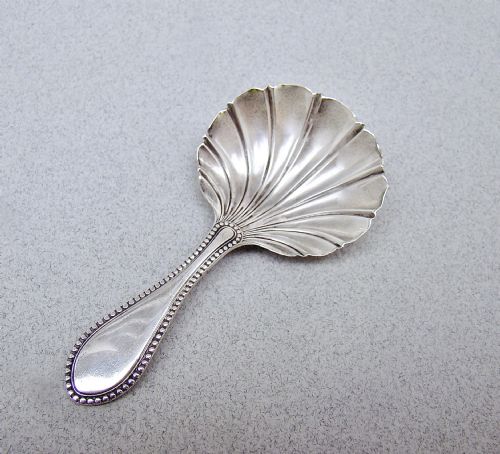


Silver Shell Scoop
These silver shell scoop pieces are miniature implements designed for dry leaf tea, combining utility with fine metalwork.
Silver Shell Scoop
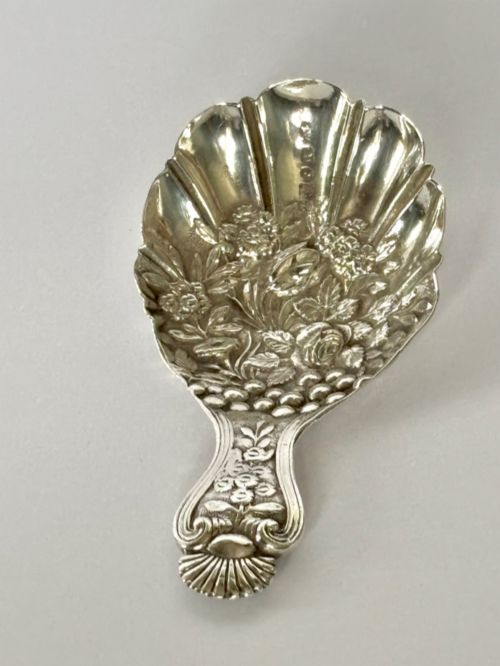
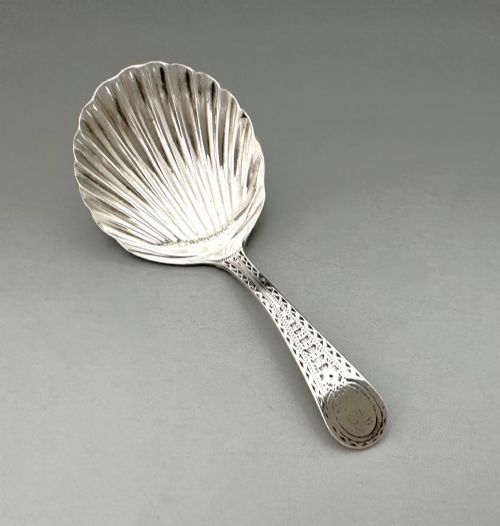
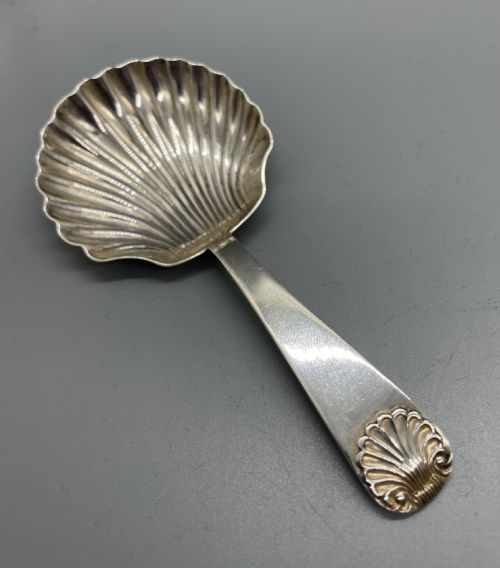
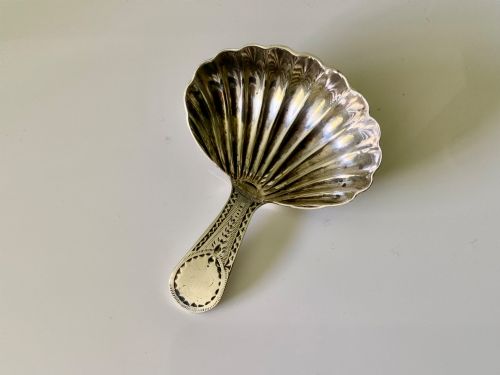
When you search for a silver shell scoop, you are examining small utensils intended for measuring loose tea from caddies into pots. The examples seen here belong primarily to the caddy spoons category, taking the form of a shallow bowl fashioned like a marine bivalve shell.
The range spans the Georgian, Victorian, and Edwardian periods, alongside specific years such as 1780, 1788, 1799, 1800, 1824, 1841, 1861, 1896, 1903, and 1908. You will also encounter related serveware such as ice cream servers and sugar spoons, though the shell-bowled caddy spoon remains the standard form.
Origins cluster around English assay centres, with specific items recorded from Sheffield and London. Makers such as Martin Hall & Co and Mappin & Webb appear among the Victorian and Edwardian pieces, providing firm attribution for later dates.
Materials and construction
These items are constructed predominantly from sterling silver, with select pieces featuring parcel-gilt surfaces that add a contrasting golden sheen to the interior bowl. The metal is worked into the characteristic ribbed and fluted contours of a shell.
Handles display chased or engraved decoration, executed by hand to complement the sculptural form of the bowl. Assay office hallmarks stamped directly onto the silver provide precise indicators of the year of manufacture and the city of origin.
Silver Shell Scoop Retail Price Guide 2026
Typical asking prices for silver shell scoop among the pieces listed under this phrase on Sellingantiques today, from the lower quarter to the upper quarter. They describe what is for sale here now, not the wider market.
Tea lovers in the Georgian era trusted these tiny shell bowls to portion out leaves worth more than gold per ounce.
Evaluating workmanship
Quality rests in the crispness of the shell repoussé work and the depth of the handle engraving. Finer examples maintain sharp ribbing on the bowl without thinning of the silver from excessive polishing over the centuries.
Maker marks and clear provincial or London hallmarks contribute significantly to the standing of a piece. The integration between the bowl and the handle demonstrates the competence of the silversmith who shaped the metal.
Martin Hall & Co·Mappin & Webb
The Silver Shell Scoop Glossary
- Sterling silver
- A standard alloy consisting of ninety-two point five percent silver by mass, with the remainder being copper or other metals. This composition provides the durability required for daily service use.
- Parcel-gilt
- A decorative treatment where specific areas of a silver object, usually the interior bowl, are coated with a thin layer of gold. This technique protects the silver from tea tannins and creates a striking visual contrast.
- Repoussé
- A metalworking technique where the silver is hammered from the reverse side to form a raised design in relief. On these pieces, it defines the ridges of the shell bowl.
- Hallmark
- An official stamp applied by an assay office to guarantee the fineness of the precious metal. These marks identify the maker, the town of assay, and the year of production.
- Caddy spoon
- A specialised small spoon designed specifically for measuring tea leaves from a storage caddy. They are typically fashioned in decorative shapes like shells, hands, or jockey caps.
Silver Shell Scoop: Frequently Asked Questions
What was a silver shell scoop used for?
These implements were utilised in domestic parlours to transfer dry tea leaves from a caddy into the teapot. The small bowl size allowed for precise measurement of expensive imported leaves.
Over time, their decorative qualities led to them being displayed alongside tea services rather than kept strictly in storage containers.
What is parcel-gilt on a spoon?
Parcel-gilt refers to silver objects that have been selectively coated with a thin layer of gold on the interior of the bowl. This finish was practical as well as decorative, protecting the silver from tarnishing when exposed to acidic or tannin-rich tea leaves.
In collections, the contrast between the white sterling exterior and the warm golden interior remains a desirable feature.
How should I display these in my home?
Because of their small scale, these spoons are suited for placement inside glass cabinets alongside other Georgian and Victorian silverware. Their detailed shell bowls and engraved handles are best appreciated when laid flat or mounted on small bespoke stands.
Avoid enclosed spaces with high humidity to prevent natural tarnishing of the sterling silver.