




Silver Tableware Piece
A silver tableware piece brings the quiet gleam of sterling, silver plate, and glass to the table through centuries of dining tradition.
Silver Tableware Piece
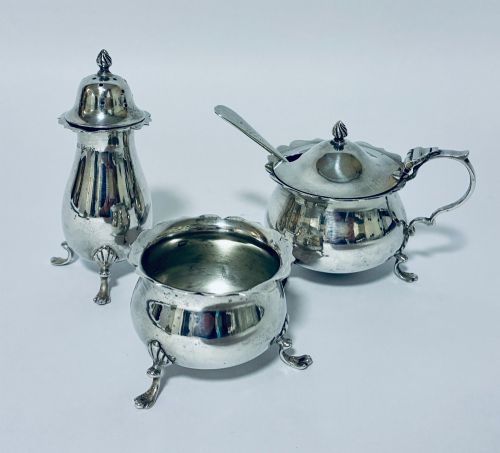
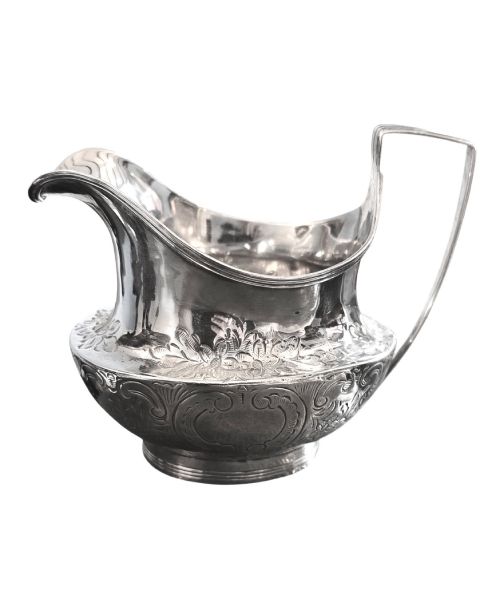
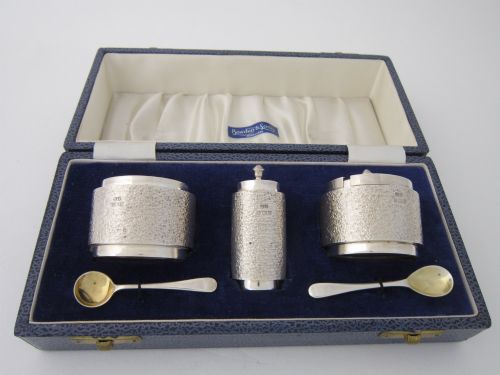
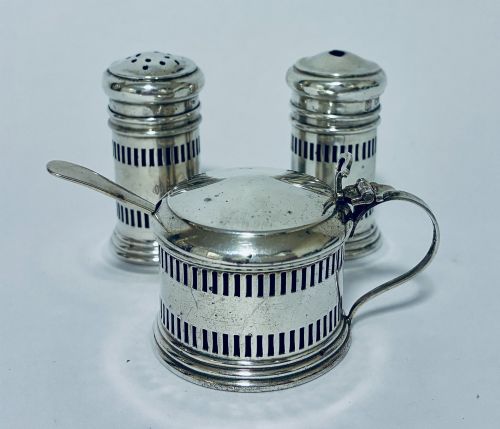
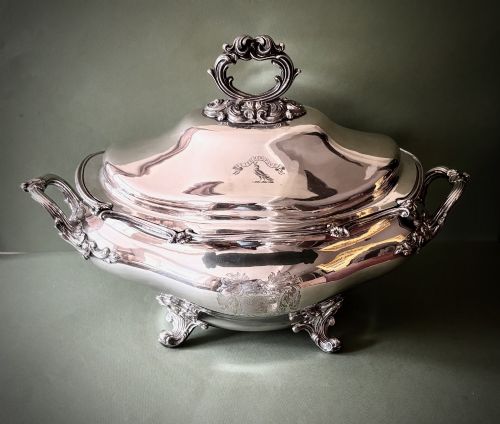
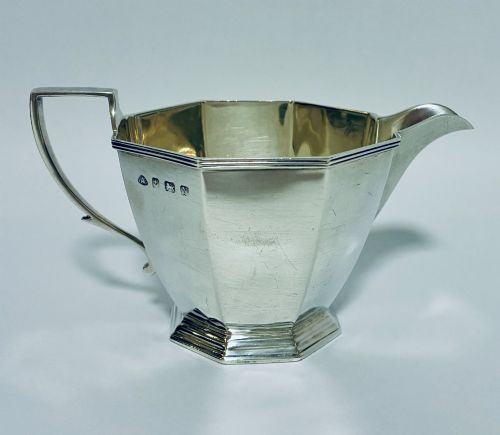
A silver tableware piece encompasses everything from functional condiment sets and cruet sets to cream jugs, tea services, and tureens. Buyers searching this phrase encounter items spanning the Georgian, Victorian, and Edwardian eras, alongside later twentieth-century designs.
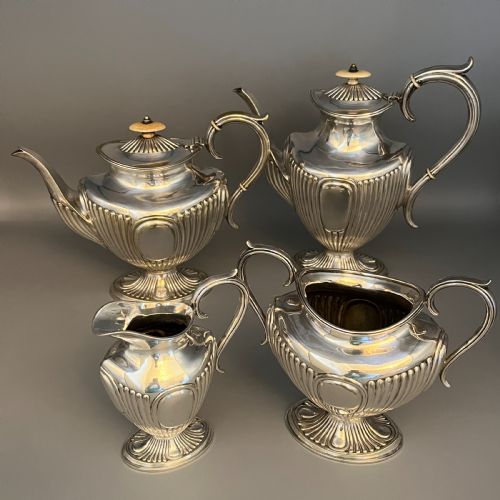
The most common examples on this page are Edwardian and Victorian silver-plated tea sets, alongside solid sterling silver condiment sets and milk jugs from the George V and Elizabeth II periods. These domestic objects reflect changing dining habits across the eighteenth, nineteenth, and twentieth centuries.
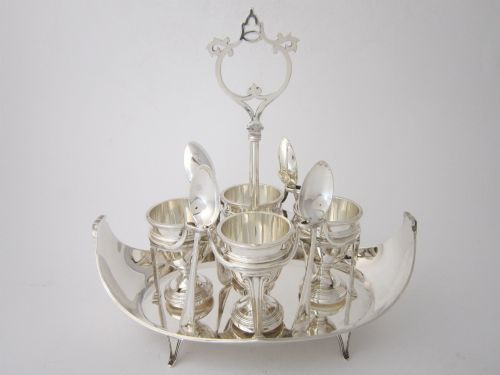
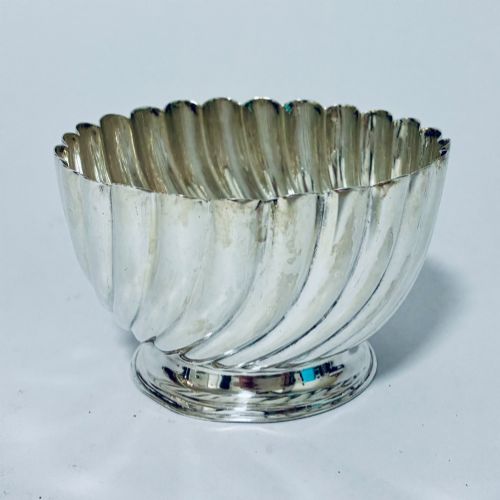
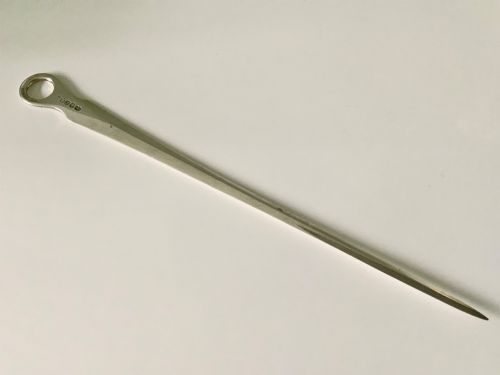
Forms range from simple Georgian meat skewers and bleeding bowls to ornate silver-plated strawberry dishes, decorative bowls, and egg cruets featuring wood and glass elements. Each piece served a specific function at the dining table or tea table, whether dispensing cream, salt, or soup.
Materials and construction
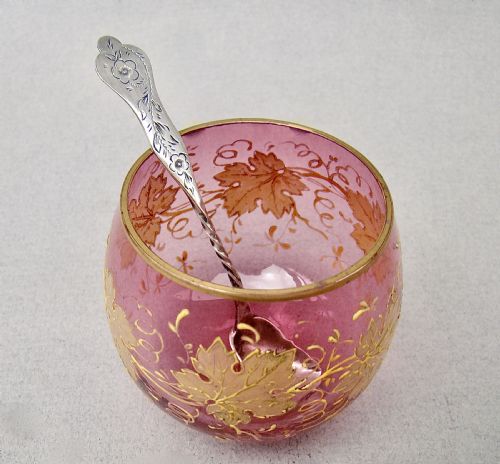
Makers utilised sterling silver, silver plate, and Old Sheffield Plate, often combining metal with glass, wood, and copper components. Cranberry glass inserts appear alongside French silver spoons, while egg cruets integrate oak bases with silver-plated frames.
Techniques varied from early eighteenth-century Britannia Standard work and Georgian embossing to later Edwardian and mid-century manufacturing methods. Surface treatments such as gilding and silver-gilt finishes enhance specific details on bowls and salt cellars.
Silver Tableware Piece Retail Price Guide 2026
Typical asking prices for silver tableware piece among the pieces listed under this phrase on Sellingantiques today, from the lower quarter to the upper quarter. They describe what is for sale here now, not the wider market.
The listings span from the seventeenth century through the Georgian, Victorian, and Edwardian eras up to the mid-twentieth century.
Judgements of quality
Quality rests in the crispness of chased or embossed ornament, the weight of the metal, and the integrity of any fitted handles or feet. A George II sauce boat or an ornate Edwardian tea set displays precise execution in its decorative motifs and balanced proportions.
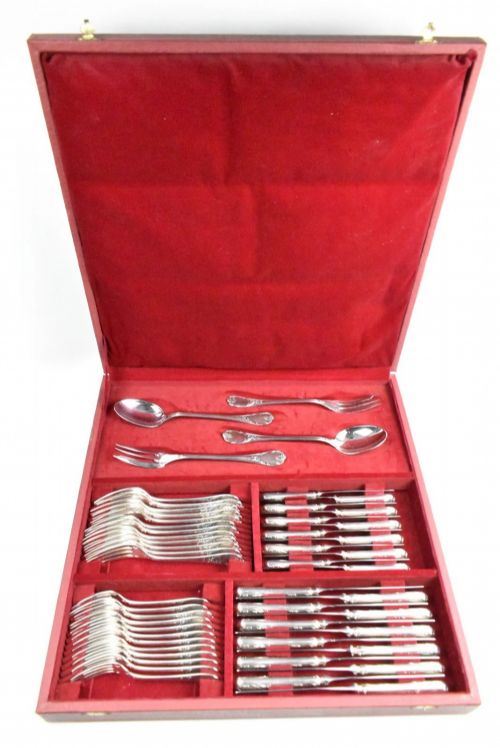
The survival of original components, such as glass liners, matching spoons, or fitted wooden cases, elevates an object. Maker marks from established firms or silversmiths provide further context regarding the workshop standards behind the piece.
Robert Pringle And Sons·Tiffany And Co·Viners Sheffield·Christofle
The Silver Tableware Piece Glossary
- Cruet set
- A matched collection of bottles, castors, or salt cellars held in a stand for condiments. These sets sit centrally on the dining table during meals.
- Britannia Standard
- A higher purity standard of silver introduced by law in England in 1697. Objects made to this standard use a purer alloy than standard sterling silver.
- Old Sheffield Plate
- An early form of composite metal made by fusing a thin sheet of silver to a thicker copper base. This technique preceded modern electroplating.
- Silver-gilt
- Silver that has been coated with a thin layer of gold on its surface. This treatment protects the interior of vessels like cream jugs from tarnishing.
Silver Tableware Piece: Frequently Asked Questions
How do I clean antique silver tableware?
Use a soft cloth and a specialised silver cleaner designed to remove tarnish without harming the metal surface. Avoid harsh abrasive pastes that can wear down thin silver plating or intricate embossing.
Store pieces in dry conditions away from direct sunlight and humidity to minimise future tarnishing. Regular, gentle dusting helps maintain the polished appearance of display items.
What is the difference between sterling and plate?
Sterling silver is a solid precious metal alloy containing a fixed proportion of pure silver and other metals for durability. Silver plate consists of a thin layer of silver bonded to a base metal like copper or nickel.
Pieces made of solid sterling typically carry distinct hallmarks indicating the metal standard and maker. Silver-plated items display alternative stamps that denote the plating technique used by the manufacturer.
How do I date an antique silver piece?
British silver items often feature a series of official hallmarks that include a date letter, a city mark, and a maker's mark. These stamps allow collectors to identify the exact year and assay office of manufacture.
Stylistic cues such as the heavy ornamentation of Victorian pieces or the clean lines of mid-century modern design also point to specific eras. Comparing the form and construction methods to documented examples helps narrow down the period.
Can I use these items for daily dining?
Many solid silver and plated tableware pieces remain fully functional for serving tea, condiments, or sauces at the modern table. Proper hand washing with mild soap preserves the finish and prevents damage to delicate handles or hinges.
Avoid putting antique silver or silver plate into modern dishwashers, as harsh detergents and high heat will ruin the surface. Items with glass inserts or wooden bases require particular care during cleaning.