
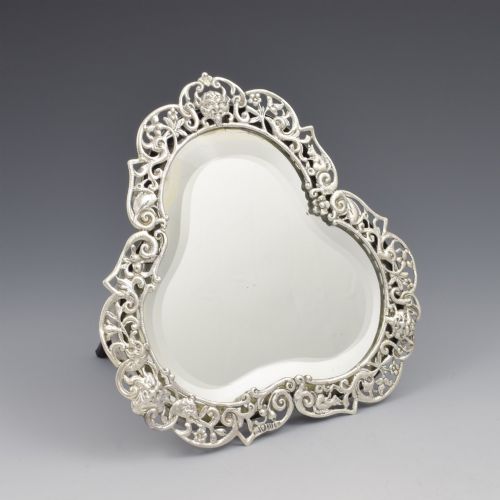


Silver Tabletop Mirror
A silver tabletop mirror brings immediate light and reflective depth to a dressing surface, combining functional glass with decorative metalwork.
Silver Tabletop Mirror
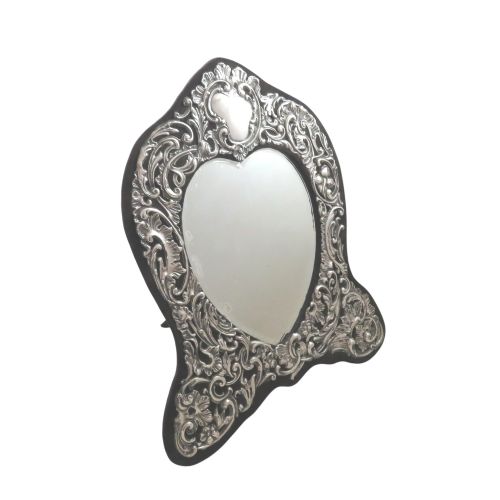
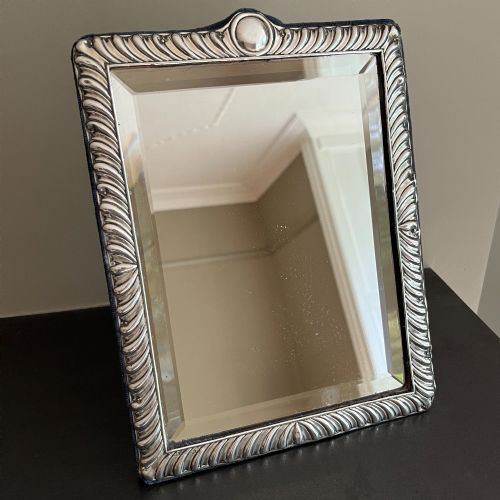
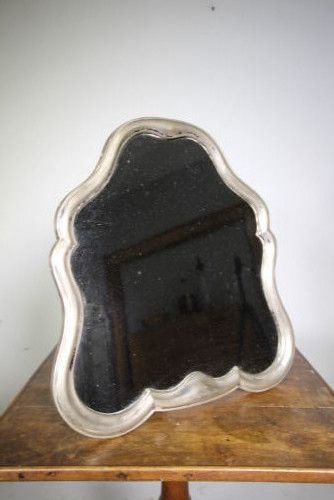
A silver tabletop mirror is designed for dressing tables, vanities and surfaces, appearing across Victorian, Edwardian and Art Deco periods. The pieces on this page span forms such as dressing table mirrors, vanity mirrors, easel backs and triptychs.
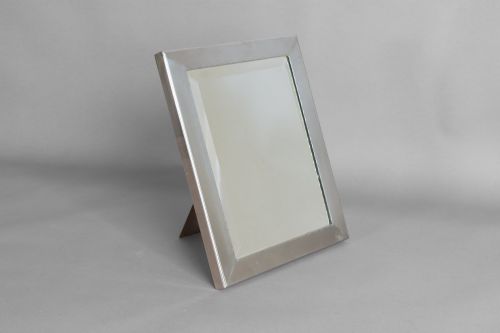
Victorian and Edwardian examples frequently showcase sterling silver mounts, pierced work, and Rococo Revival or Art Nouveau styling. Later 1930s pieces lean towards chrome and French Art Deco geometric lines.
Materials include mirror glass, sterling silver, silver plate, silver gilt, wood, velvet and chrome. Support structures utilise easel backs and wooden struts for tabletop display.
Materials and construction
Silver tabletop mirrors combine reflective glass with structural mounts of sterling silver, silver plate, or chrome over a supporting core. Easel backs often utilise wood covered in velvet to provide a stable angle for the mirror.
Decorative metalwork involves repoussé, piercing, and silver deposit techniques applied to porcelain or glass. Makers mounted the glass securely within these metal frames to create freestanding desk and vanity accessories.
Listings feature sterling silver, silver plate, chrome, and silvered copper alongside glass, wood, and velvet.
Assessing quality and finish
Quality in a silver tabletop mirror rests on the thickness of the metal mount and the crispness of the chased or pierced ornamentation. Finer Victorian and Edwardian pieces display deep relief work and clear hallmarks, whereas simpler versions use thin plating.
The condition of the original mirror glass and the stability of the easel mechanism heavily influence the piece. Substantial sterling silver frames with intact bevelled glass and sturdy wooden struts represent the upper tier of manufacture.
WMF·Jean Gille·William Comyns·Henry Matthews
The Silver Tabletop Mirror Glossary
- Sterling silver
- A silver alloy containing 925 parts of pure silver per thousand. This standard metal appears across many Victorian and Edwardian dressing table mirrors.
- Easel mirror
- A freestanding mirror supported by a hinged leg or strut at the back. This mechanism allows the glass to tilt at a comfortable viewing angle on a table.
- Triptych
- A mirror composed of three hinged panels, allowing the side wings to angle inward. This configuration provides multiple viewing angles for grooming.
- Silver deposit
- A technique where pure silver is chemically bonded to a glass or porcelain surface in decorative patterns. It creates a striking contrast against a coloured background.
- Silver gilt
- Silver that has been plated with a thin layer of gold on the surface. This treatment imparts a warm, dual-tone metallic finish to the frame.
Silver Tabletop Mirror: Frequently Asked Questions
How do I clean a silver tabletop mirror?
Use a soft cloth and a dedicated silver polish to gently clean the metal mounts, taking care to avoid getting liquid on the mirror glass or backing velvet.
For pieces with silver plate or silver gilt, use minimal pressure to preserve the thin metallic surface layers.
What is an easel back mirror?
An easel back mirror relies on a hinged rear leg or wooden strut to support the glass upright on a flat surface.
This design allows the mirror to sit independently on dressing tables without requiring wall mounting.
How do I date a silver mirror?
Dating relies on hallmarks stamped into the silver mounts, as well as stylistic cues from periods like the Victorian, Edwardian or Art Deco eras.
Makers' marks and date letters on sterling silver pieces provide the most precise indication of the year of manufacture.
Are these mirrors suitable for daily use?
Most tabletop mirrors function well for daily grooming, provided the glass and support struts remain secure.
Antique and vintage pieces require gentle handling to protect delicate pierced silver work and original bevelled glass.