


Silver Table Cruet Set
A silver table cruet set organises condiments on the dining table, combining precious metal framework with glass bottles for everyday service and display.
Silver Table Cruet Set
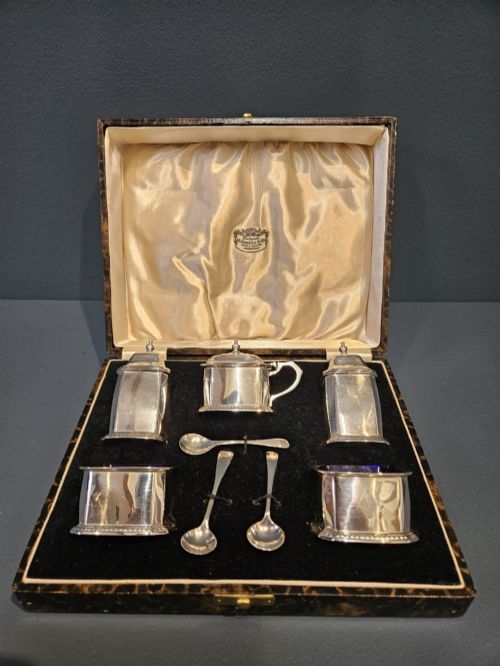
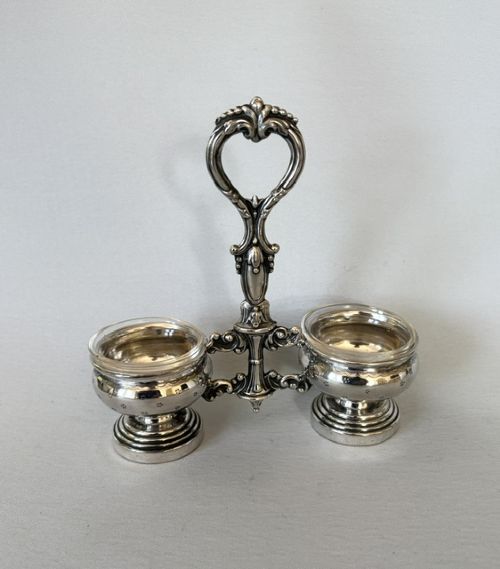
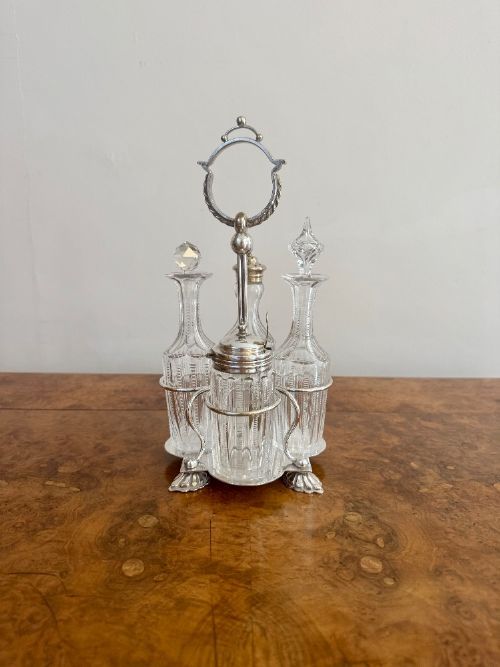
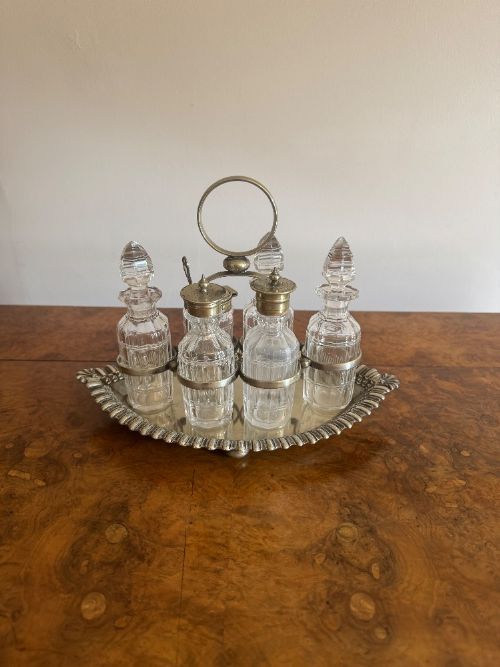
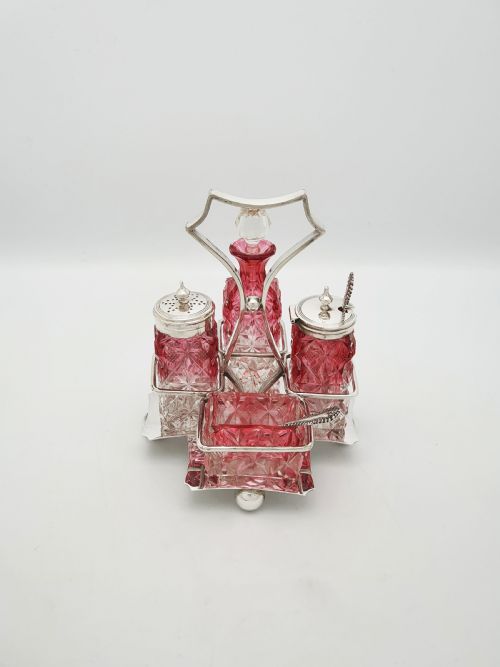
A silver table cruet set serves as the primary vessel holder for mustard, salt, pepper, vinegar, and oil during formal meals. These stands group multiple condiment containers together within a dedicated metal frame, often fitted with a central carry handle for table service.
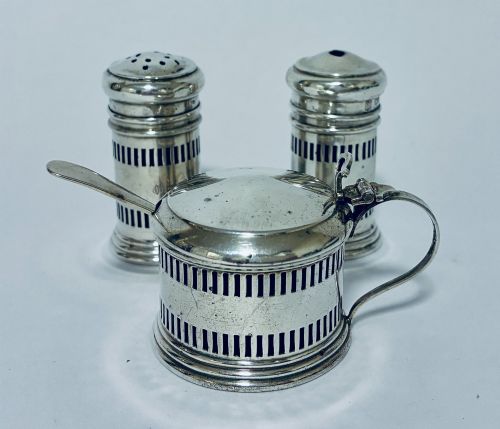
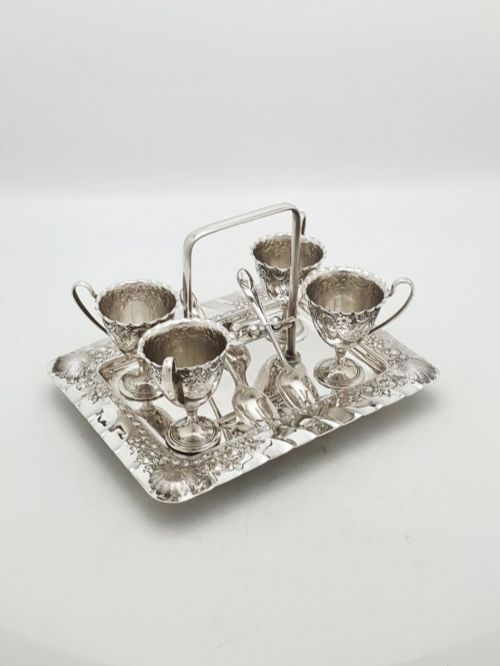
Edwardian silver plated multi-bottle frames dominate the selections available on this page, accompanied by earlier Georgian and Victorian examples. Formats range from modest three-piece mustard and salt groupings to elaborate seven-bottle frames and characterful novelty animal cruets.
Materials and construction
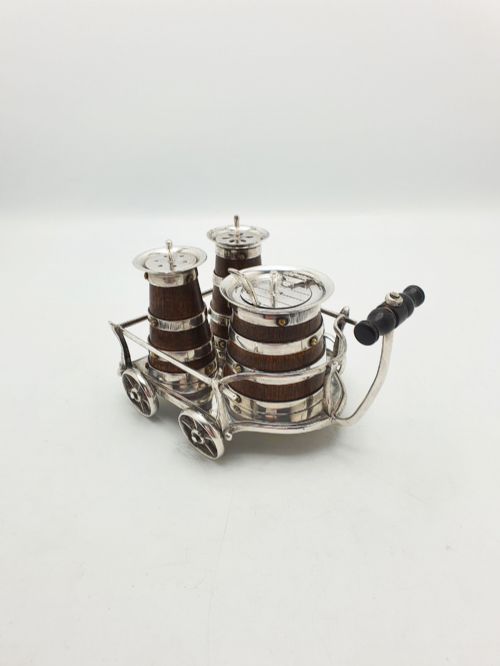
Makers constructed the supportive frames using sterling silver, electroplated nickel silver, or standard silver plate, frequently shaping them into oval or circular wirework bases. Oak barrel woodwork and embossed details occasionally augment the metal framework.
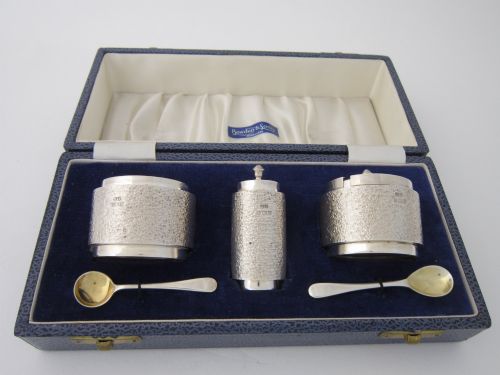
The accompanying vessels combine clear glass, cut glass, and cranberry flashed glass bottles fitted with matching metal collars and pierced lids. Interiors house inserts of velvet or satin in select boxed presentation sets.
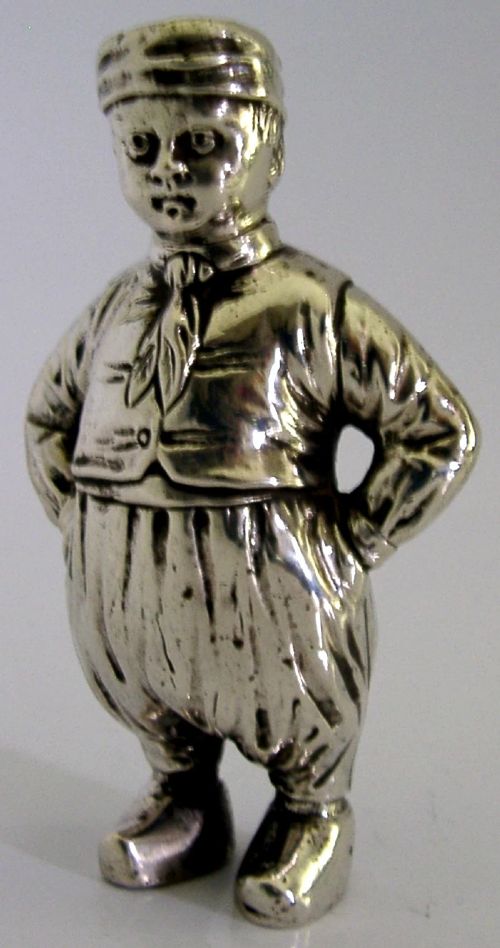
Dine alongside miniature silver chicks and farmyard animals ready to dispense your salt and pepper.
Assessing the range
Craftsmanship distinguishes standard production frames from work produced by noted silversmiths. Rigorous execution appears in the crispness of pierced gallery work, the precise alignment of bottle retainers, and the weight of the solid silver or plated metal.
Completeness dictates utility, making sets that retain their matching set of cut glass bottles and original pierced casters substantially more desirable. The clarity of the glass and the intact condition of delicate cut facets further separate fine examples from assembled or incomplete groupings.
Goldsmith & Silversmith's·Mappin Brothers·Hester Bateman·Bricks & Sons·Wilmot Manufacturing Co.·Sampson Mordan
The Silver Table Cruet Set Glossary
- Cruet set
- A matched collection of bottles and pots held within a single frame for holding table seasonings. These assemblies service multiple diners simultaneously.
- Caster
- A tall shaker with a pierced top used for sprinkling sugar or dry spices onto food. Casters form a standard component of larger multi-bottle frames.
- Silver plate
- A layer of pure silver fused to a base metal core such as nickel or copper. This technique provided the appearance of solid silver at a lower cost.
- Cranberry flashed glass
- Clear glass coated with a thin layer of gold-ruby glass before cutting. The process creates rich red facets that contrast against metal frameworks.
Silver Table Cruet Set: Frequently Asked Questions
How do I clean a silver table cruet set safely?
Wash glass bottles gently in warm soapy water using a soft brush to reach inside the narrow necks. Polish metal frames carefully with a dedicated silver cloth, avoiding abrasive pastes that might wear away thin plating.
Keep moisture away from any fitted velvet or satin linings inside presentation boxes. Dry all components thoroughly before returning glass inserts to the metal stand.
Were these sets used every day?
Dining rooms relied upon these vessels daily to season food before and during meals. Households kept vinegar, oil, mustard, and pepper close at hand for family dinners and larger gatherings alike.
Larger multi-bottle frames remained stationary on grand dining tables while smaller bachelor sets moved easily between rooms. Their widespread presence reflects the structured formality of historic dining customs.
How can I tell the period of my set?
Hallmarks stamped on silver components offer the most reliable guide to date solid pieces precisely. Maker marks, town marks, and date letters reveal the exact office and year of assay.
Stylistic clues such as heavy Victorian embossing, Edwardian wirework, or Art Deco geometric lines help date silver-plated examples lacking full hallmarks. The cut and form of the glass bottles provide additional clues to the era of manufacture.
Why do some sets feature animals?
Victorian and Edwardian silversmiths enjoyed playful novelty designs that brought humour to the dining table. Farmyard animals, birds, and hunting motifs transformed functional condiment pots into engaging conversation pieces.
These novelty cruets often modelled birds or mammals with removable heads or backs for filling. Such whimsical pieces remain sought-after examples of late nineteenth and early twentieth-century metalwork.