



Silver Storage Container
A silver storage container is a durable vessel designed to preserve dry goods or valuables, spanning tea caddies, biscuit barrels, and decorative boxes from the nineteenth and twentieth centuries.
Silver Storage Container
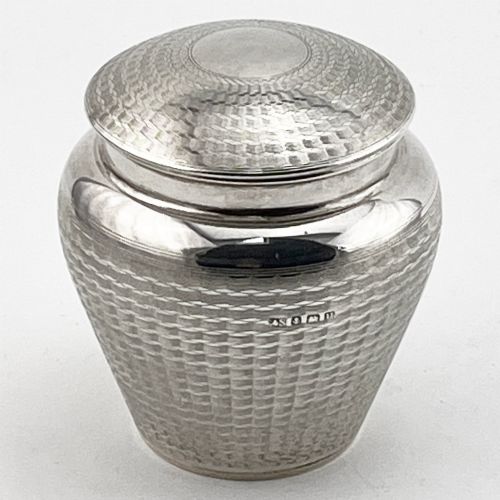
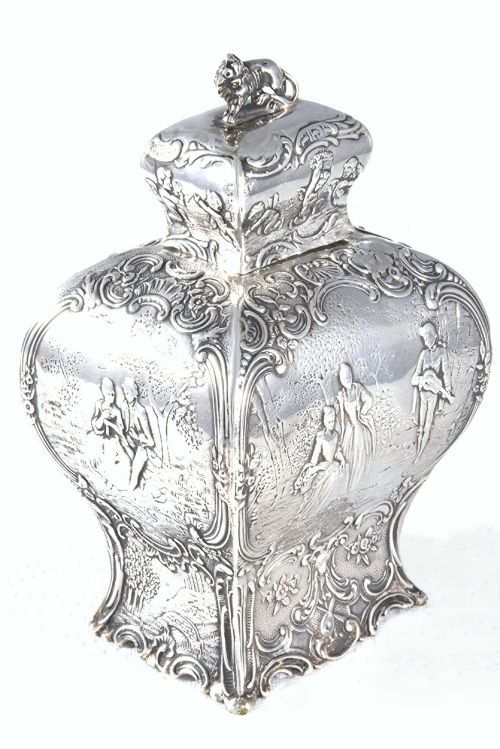
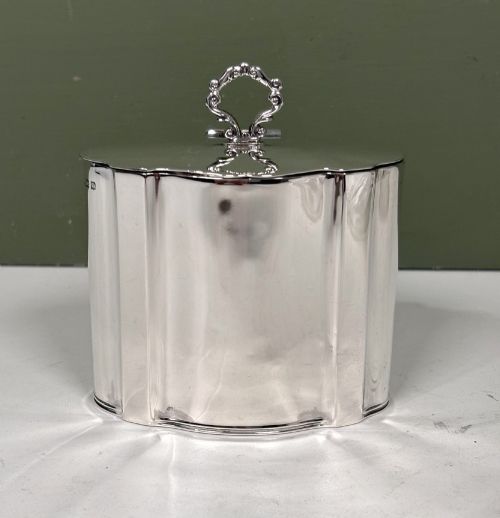
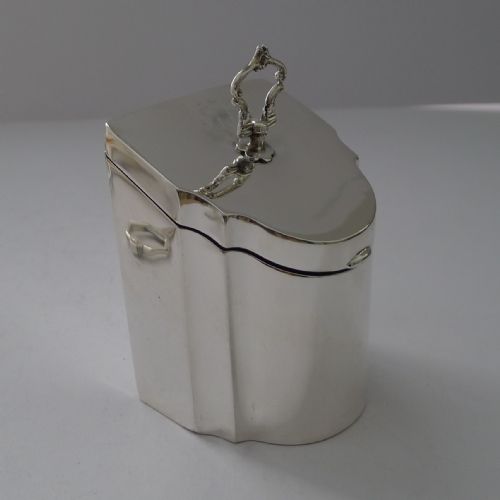
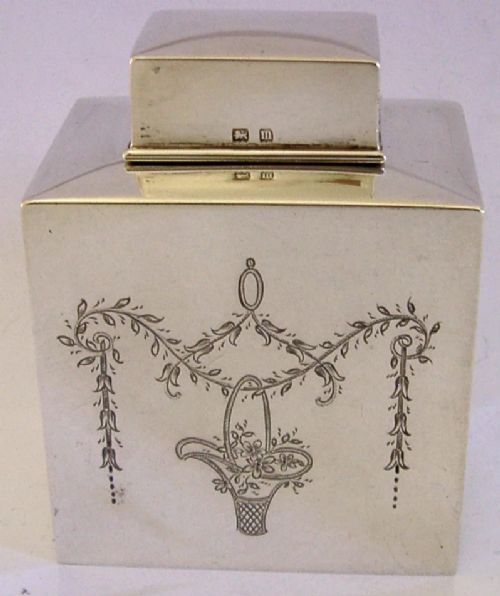
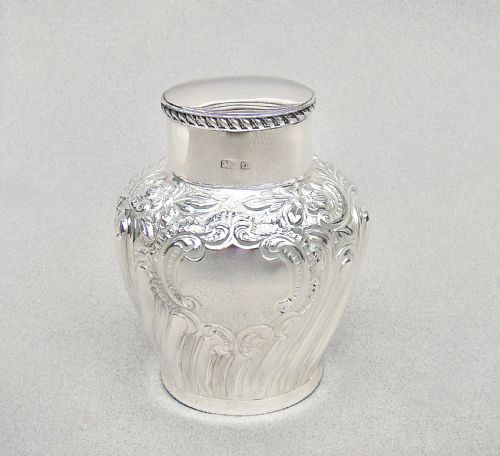
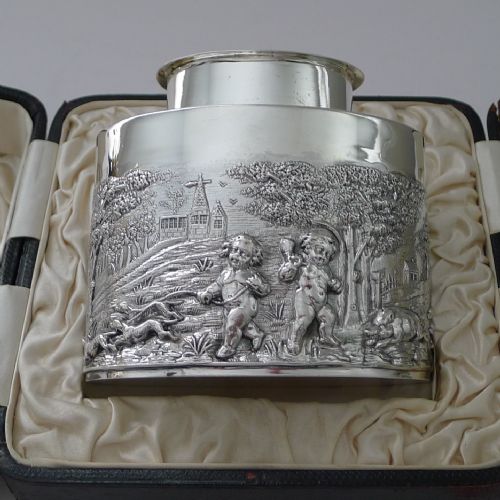
When you search for a silver storage container, you encounter a diverse array of nineteenth and twentieth-century vessels designed to hold tea, biscuits, cards, or tobacco. The most common form on this page is the tea caddy, emerging frequently in Victorian and Edwardian iterations alongside heavier biscuit barrels and novelty boxes.
These pieces cross numerous stylistic boundaries, ranging from traditional British Georgian and Victorian designs to Dutch Empire models, French modernist boxes, and Islamic Southeast Asian or Indian inlaid works. The variety reflects domestic storage habits across generations, utilising precious metal or plate to protect contents while displaying status on a sideboard or desk.
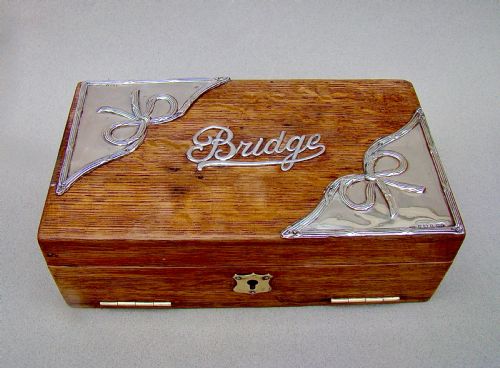
Makers adapted familiar container types into specialised domestic objects, producing items such as bridge playing cards boxes, humidor cigar boxes, and novelty paint tin canisters. Identifying a silver storage container relies on observing these specific functional forms and dating the hallmarks or regional manufacturing traits correctly.
Materials and Construction
Makers constructed these containers primarily from sterling silver, solid silver, and silver plate, frequently pairing the metalwork with internal oak linings or external bronze and glass bodies. The application of silver plating over base metal or nickel silver provided an accessible alternative to solid sterling constructions.
Techniques varied from smooth bombe contours and faceted glass cutting to intricate hand-beaten Indian motifs and Mindanao silver inlay on bronze. Birmingham and Sheffield assay offices stamped many of these items with full hallmarks, recording the specific year of production and the silversmith's responsibility for standard purity.
One unexpected container mimics a humble paint tin, proving that past silversmiths enjoyed a clever practical joke.
Assessing Quality and Execution
Quality in a silver storage container rests on the crispness of the chasing, the structural integrity of hinged lids, and the weight of the metal utilised. Pieces bearing crisp Birmingham or London hallmarks from established makers demonstrate superior manufacturing standards compared to unmarked or heavily worn plated equivalents.
The sophistication of the form, such as a bombastic Victorian profile or a registered novelty design by a known retailer, separates standard utility boxes from exceptional collector pieces. Original internal fittings, secure locking mechanisms, and well-preserved wooden or fabric linings further elevate the standing of an individual vessel.
Zimmermann·Levi & Salaman·Thomas Hayes·William Hutton & Sons Ltd.·Thomas Bradbury·Ernest Druiff & Co·Wright & Davies·Asprey & Co.·Atkin Brothers·Crevillen·Hermes
The Silver Storage Container Glossary
- Tea Caddy
- A small vessel designed originally for storing loose tea leaves securely before brewing. Most examples date from the Victorian and Edwardian periods.
- Biscuit Barrel
- A large container intended for holding dry biscuits on a dining table or sideboard. These often combine silver-plated mounts with ceramic, glass, or oak bodies.
- Hallmark
- An official stamp applied by an assay office to indicate metal purity, the city of testing, and the date letter. British pieces carry these crucial marks for identification.
- Bombe
- A swollen or bulging convex shape characteristic of certain continental and Victorian silver vessels. This contour requires skilled hammering to achieve symmetrical curves.
- Pandan Box
- A traditional Asian lidded container used for holding betel leaf preparations or aromatics. Examples often feature hand-beaten or inlaid surface decoration.
Silver Storage Container: Frequently Asked Questions
What were tea caddies used for?
Tea caddies served to store expensive loose tea leaves safely under lock and key in the household. Servants or masters kept the leaves sealed to preserve aroma and prevent theft.
Over time, these vessels evolved into decorative table accessories, reflecting the owner's wealth through chased silver motifs and fine internal compartments.
How do I clean a silver box?
Cleaning requires a soft microfibre cloth and a gentle silver polish formulated to remove tarnish without stripping thin plating. Avoid abrasive substances that scratch delicate chasing or engraved hallmarks.
Store the container in a dry environment to slow down oxidation and maintain the reflective lustre of the metal.
Are silver biscuit barrels heavy?
Solid silver biscuit barrels carry a noticeable weight, while silver-plated versions over base metal or paired with glass and oak remain lighter. The inclusion of heavy ceramic liners or thick wooden bases adds substantial heft.
Lifting the container reveals whether the structure relies on solid metal construction or a lighter plated shell.
How can I date an old box?
Dating relies primarily on reading the assay office hallmarks stamped directly onto the silver surface, which indicate the exact year of testing. Stylistic clues like Edwardian proportions or Victorian bombe shaping also help narrow down the decade.
Comparing the maker's mark against historical records confirms the active operating period of the silversmith.