


Silver Stamp Holder
A silver stamp holder is a small desk accessory or pocket case designed to keep postage neat, appearing here in Victorian and Edwardian forms.
What these pieces are
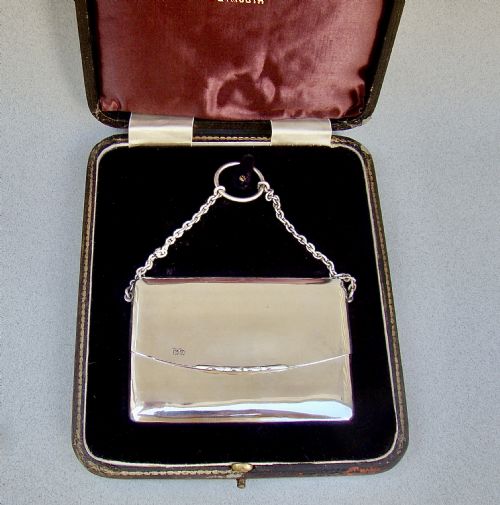
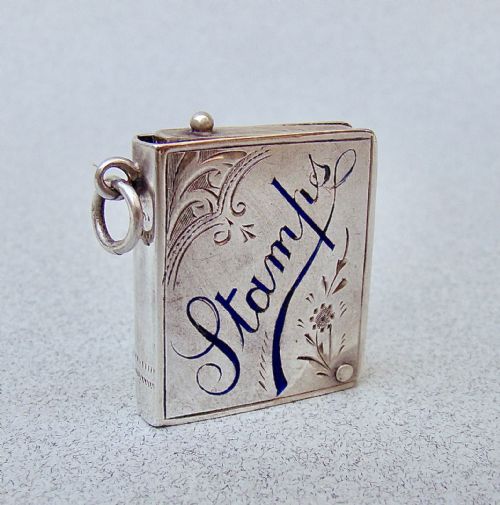
A silver stamp holder is encountered as a stamp case, stamp box, or desk accessory designed to protect small paper adhesives. The pieces seen here span the Victorian, Edwardian, and George V periods, reflecting changing stationery habits from the late nineteenth century onwards.
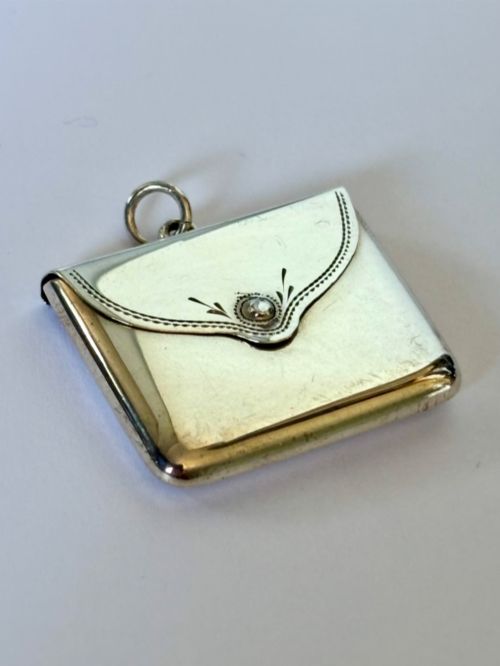
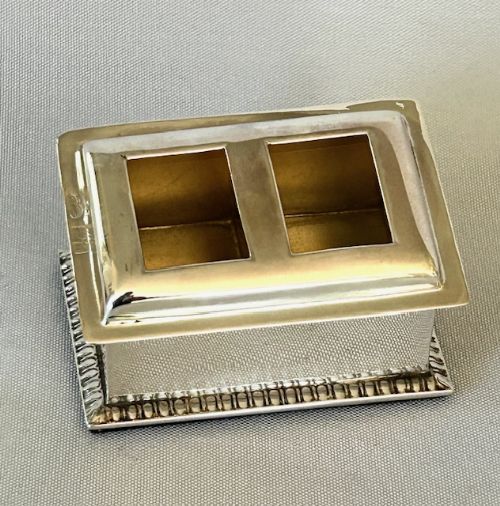
Forms vary from single pocket wallets and envelopes to double stamp holders and combination pieces that incorporate vesta cases, sovereign holders, and pencils. Novelty shapes such as garden trugs or desk forms also appear alongside cut glass writing sets fitted with stamp storage.
How they were made
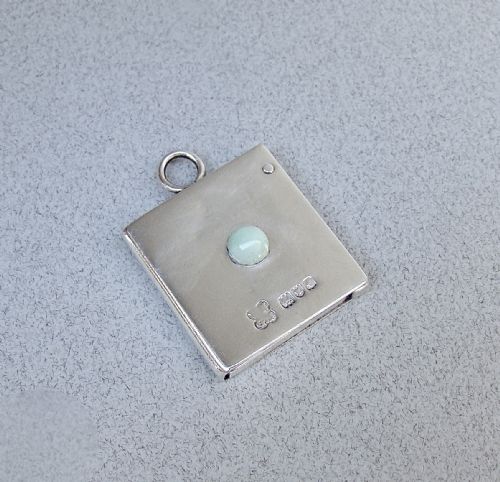
These items are constructed from sterling silver and 800 silver, sometimes combined with cut glass or set with green stones. Makers utilised techniques such as slide openings, folding frames, and hinged box construction to secure the contents.
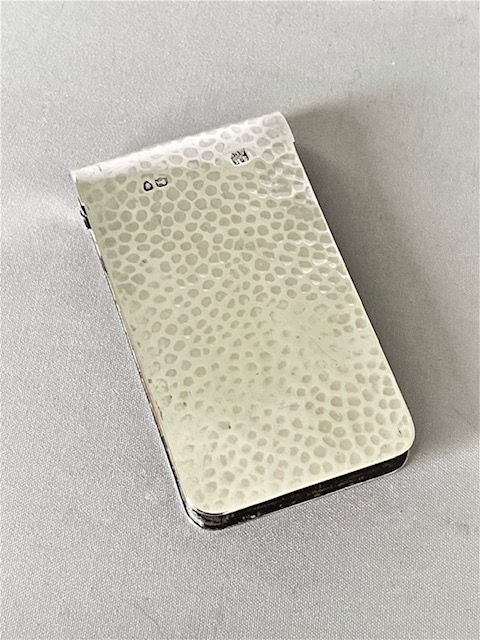
Surface decoration ranges from Arts and Crafts and Art Nouveau motifs to plain polished silver fashioned into envelope shapes or miniature desk accessories, stamped with hallmarks denoting assay offices including London, Birmingham, and Chester.
Retail Price Guide 2026
Typical UK retail prices for silver stamp holder, calculated from the Sellingantiques database of over a million retail prices indexed since 2003. This retail price guide relies exclusively on Sellingantiques data; no external sources or auction records are used, so the figures do not describe the wider market.
Assay marks on these stamp cases frequently originate from London, Birmingham, and Chester offices.
What varies in quality
Quality in a silver stamp holder is found in the complexity of its design, distinguishing simple pocket sleeves from multifaceted combination pieces and novelty shapes. The presence of crisp hallmarks and named makers elevates the standing of an individual piece.
The refinement of the mechanism, whether a smooth slide opening, a tight-fitting envelope flap, or a well-hinged box, marks the distinction between standard production and superior craftsmanship.
CRISFORD & NORRIS·Sampson Morden·A. E. Jenkins·BLANCKENSEE & SONS·DEAKIN & FRANCIS
The Silver Stamp Holder Glossary
- Sterling silver
- A standard of silver alloy containing 92.5 per cent pure silver by mass, widely used for British desk accessories and stamp cases. It ensures durability for items intended for daily handling.
- Hallmark
- An official mark stamped onto precious metals in Britain to indicate the standard of purity, the assay office, and the year of manufacture. These marks allow collectors to date pieces precisely.
- Vesta case
- A small pocket box designed to hold wax matches, frequently combined with stamp holders and sovereign cases in late Victorian and Edwardian accessories. They often feature integrated strikers on the base.
- Combination piece
- An object engineered to serve multiple functions, such as housing stamps, sovereigns, and matches while incorporating a pencil or toothpick. These multifunctional items represent intricate silversmithing.
- Arts and Crafts
- A design movement of the late nineteenth and early twentieth centuries emphasising handcraftsmanship and simple forms. Pieces from this style often display subtle surface textures rather than mass-produced machine engraving.
Frequently Asked Questions
How were combination stamp cases used?
Combination cases were pocket items designed to carry several daily essentials in one compact object. A single piece might hold stamps, sovereigns, and matches alongside a small pencil.
Travellers and gentlemen used them during the late nineteenth and early twentieth centuries to reduce the number of separate items carried in pockets.
How do I date an antique silver stamp case?
Dating relies primarily on the hallmarks stamped into the silver, which indicate the assay office and the exact year of manufacture. Style indicators such as Art Nouveau curves or Arts and Crafts textures also point to specific decades.
Makers' marks further narrow down the production period by referencing active workshop years.
Did stamp holders double as desk pieces?
Many stamp boxes and holders were manufactured specifically for stationery desks rather than pockets. These desk forms often matched inkwells, pen holders, and blotters as part of a coordinated writing set.
Larger double stamp holders allowed owners to keep different stamp denominations organised on a study surface.