
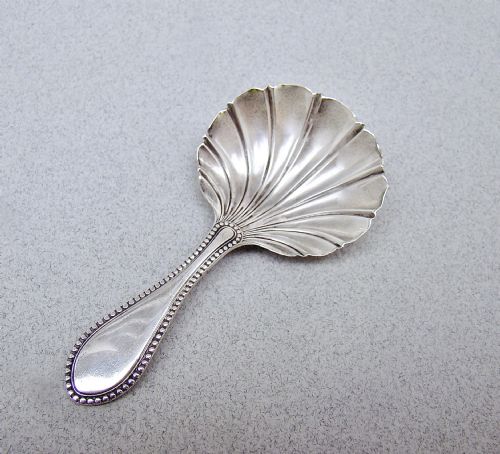
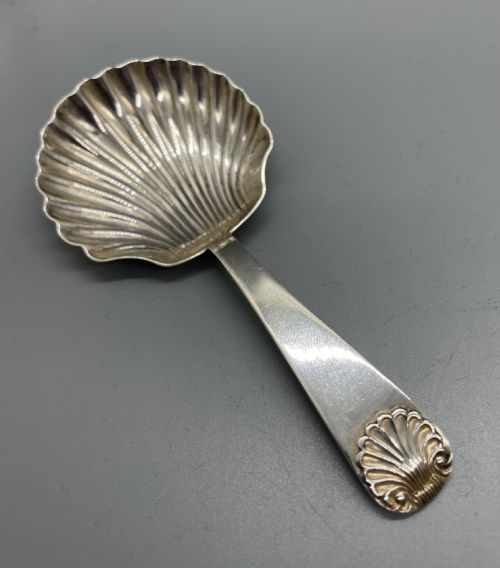
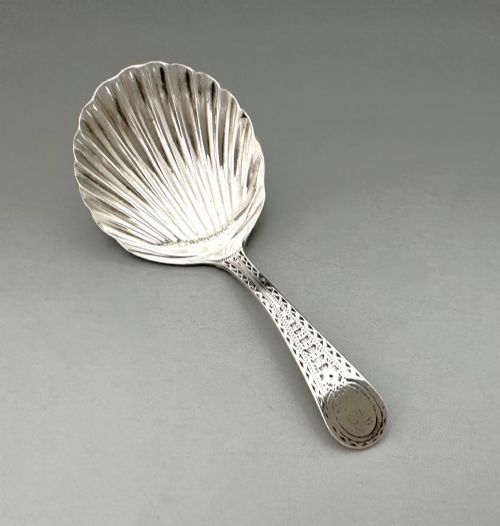
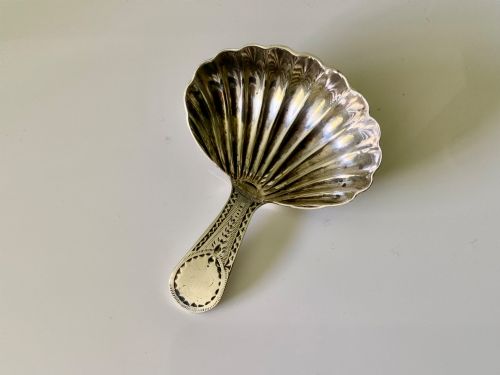


Silver Shell Tea Scoop
These silver shell tea scoop examples are tactile caddy spoons designed for measuring loose leaf tea, bringing genuine Georgian and Victorian craftsmanship to your daily table.
Silver Shell Tea Scoop
A silver shell tea scoop is fundamentally a caddy spoon shaped to resemble a fluted bivalve, most frequently encountered here as Georgian, Victorian, or Edwardian tableware. These small utensils served a precise domestic purpose within tea service traditions, designed specifically to transfer leaf tea from a caddy into the pot.
The versions you will most commonly meet on this page date from the late eighteenth century through to the Edwardian period, often fashioned in sterling silver with distinctive fluted bowls. Alongside traditional caddy spoons, the selection encompasses related tea collectables and occasional sugar spoons sharing the same characteristic shell form.
Originating predominantly from British workshops, these pieces bridge functional utility and decorative miniature sculpture. The survival of such items reflects their cherished status within historic households, where they remained protected inside tea caddies alongside fine porcelain and lockable wooden boxes.
Materials and construction methods
Silversmiths constructed these scoops primarily from sterling silver, shaping the bowls to mimic the radiating ribs and curves of natural shells. Many examples incorporate parcel-gilt finishes, applying a thin layer of gold wash to the interior bowl to protect the silver from tea staining.
Handles on these pieces demonstrate varied techniques, ranging from bright-cut engraving to cast scrollwork and plain flattened stems. Goldsmiths and silversmiths utilised punches to stamp hallmarks directly onto the metal, recording the city of assay, the date letter, and the sterling standard.
Listings span the Georgian, Victorian, and Edwardian periods, executed predominantly in sterling silver with occasional parcel-gilt finishes.
Distinctions in quality and execution
Quality in a silver shell tea scoop lies in the crispness of the repoussé or chased fluting on the bowl and the clarity of the engraved detail on the handle. Finer specimens display deep, even definition in the shell ribs without thinning of the metal from excessive polishing over generations.
The crispness of the maker marks and hallmarks also indicates the standard of production, as worn stamps suggest heavy use or over-restoration. Well-preserved gilding inside the bowl and sturdy junctions between handle and bowl separate standard domestic items from exceptional silversmithing.
Martin Hall & Co·Mappin & Webb
The Silver Shell Tea Scoop Glossary
- Caddy spoon
- A small specialised spoon used for measuring tea leaves from a caddy into a teapot. These developed diverse bowl shapes, including shells, leaves, and jockey caps, during the Georgian period.
- Sterling silver
- An alloy consisting of ninety-two point five percent silver and seven point five percent other metals, usually copper. This standard has been enforced by British assay offices for centuries.
- Parcel-gilt
- A technique where parts of a silver object, typically the interior bowl of a spoon, are selectively gilded with gold. This prevented the silver from tarnishing upon contact with moist tea leaves.
- Hallmark
- An official stamp applied by an assay office to precious metal items to certify their purity and origin. British marks traditionally include the maker's mark, standard mark, assay office mark, and date letter.
- Bright-cut engraving
- A surface decoration technique using faceted gravers to cut shallow angles that reflect light brilliantly. This method was widely utilised on late eighteenth-century silver handles.
Silver Shell Tea Scoop: Frequently Asked Questions
What is a silver shell tea scoop?
A silver shell tea scoop is a small antique spoon shaped like a shell, designed specifically for measuring loose leaf tea. They were kept inside tea caddies alongside valuable tea leaves.
Most examples seen here date from the Georgian and Victorian eras, combining practical utility with decorative miniature silversmithing.
How were caddy spoons used?
These spoons were used by the host to scoop precise amounts of tea leaves from a caddy into the teapot. Because tea was an expensive commodity, measuring it carefully was an important domestic duty.
They lived inside the tea caddy itself, often resting on top of the wooden or metal canisters within the box.
How do I date an antique tea scoop?
You can date these pieces by examining the hallmarks stamped into the silver, which record the assay office, the standard, and a specific date letter. Style and engraving techniques also provide strong clues to the period of manufacture.
Georgian and Victorian pieces display distinct design characteristics, from bright-cut handles to heavier cast scrollwork.
Are these spoons made of solid silver?
Yes, these pieces are fashioned from sterling silver, meeting the strict legal standard for silver purity enforced by British assay offices. Some pieces also feature parcel-gilt interiors.
Solid construction ensured the spoons could withstand daily use inside the tea caddy without bending or wearing away quickly.