



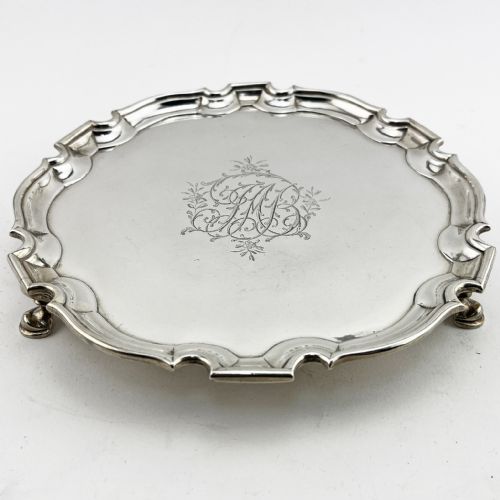
Silver Salver Tray
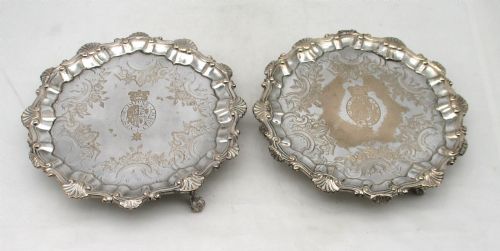
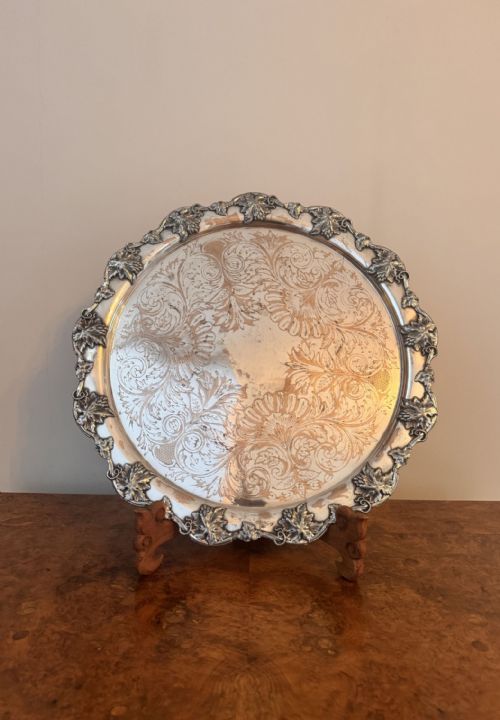
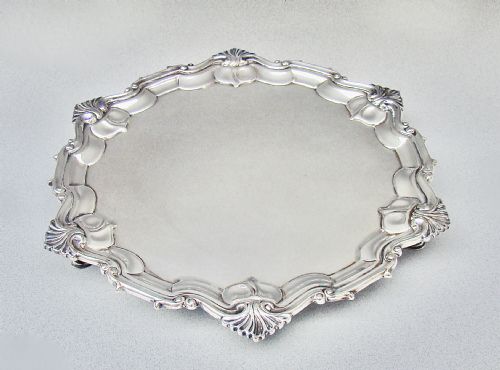
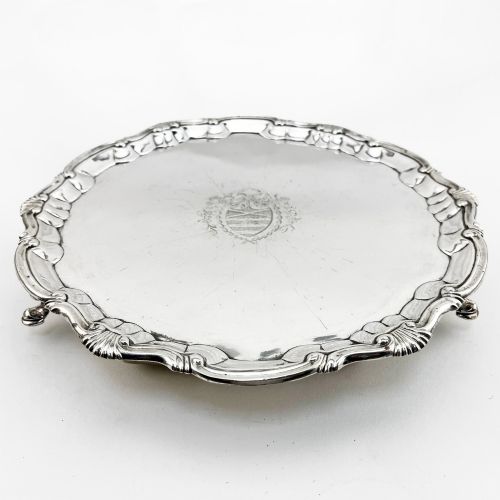
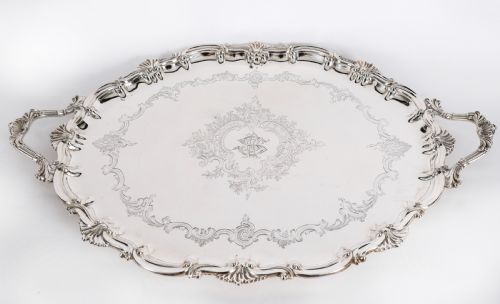
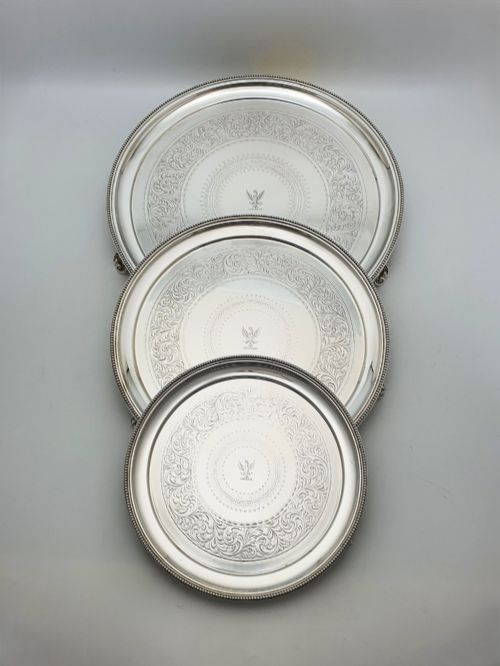
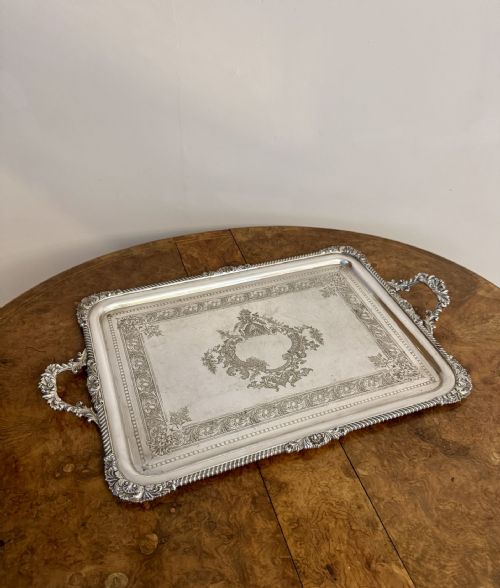
A silver salver tray offers a refined surface for serving drinks, presenting cards, or displaying domestic silver.
Silver Salver Tray
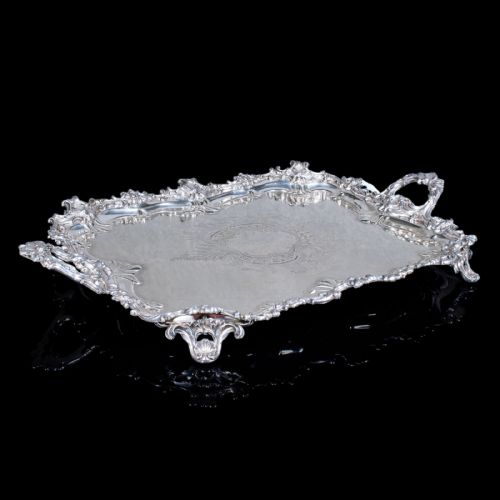
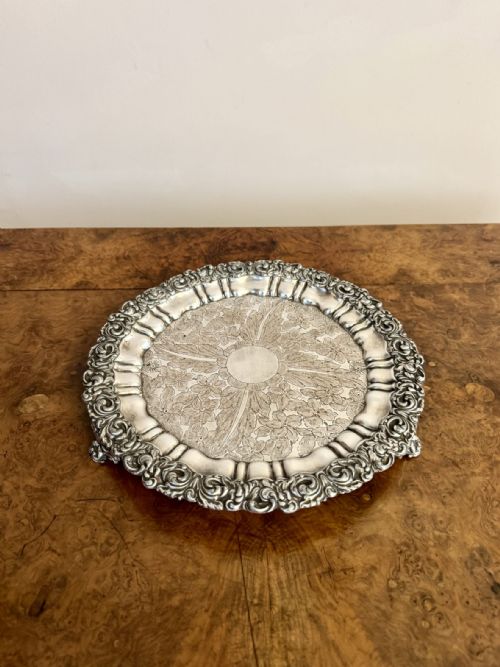
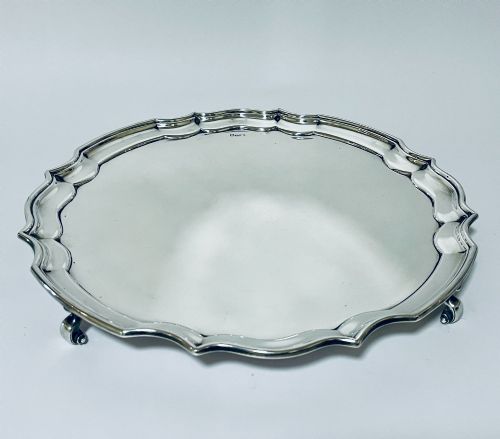
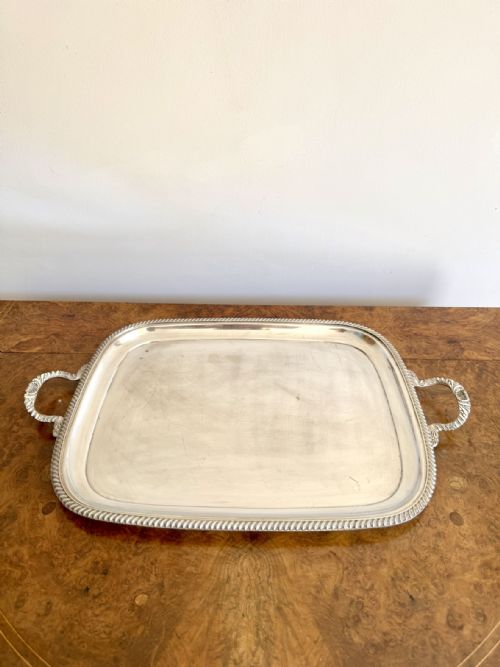
A silver salver tray encompasses both solid sterling silver examples and silver plated items produced across several centuries. The selections range from small calling card trays and square cocktail salvers to monumental serving platters and tea trays.
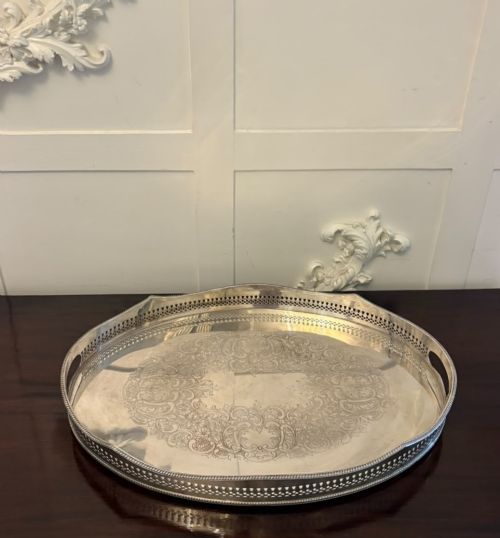
The assortment spans Georgian, Victorian, Edwardian, and Art Deco periods, alongside specialised items such as Old Sheffield Plate and Indian Colonial pieces. Buyers frequently encounter circular salvers with engraved surfaces and raised rims, alongside oval and gallery trays of various proportions.
Makers from London, Sheffield, Dublin, and York contributed to this tradition, producing footed waiters, patens, and expansive presentation trays designed for formal hospitality.
Materials and Techniques
Items in this category utilise sterling silver, silver plate, Old Sheffield Plate, copper, nickel silver, and base metal. Traditional workshops employed techniques such as chasing, engraving, and fusing silver to copper sheets.
Makers shaped raised borders, shell rims, and detailed feet through casting and hand-working methods. Plated pieces often combine a base metal core with a protective outer layer of silver applied via early plating methods or electroplating.
Listings feature items spanning the 18th Century through the Art Deco period, constructed from sterling silver, silver plate, and Old Sheffield Plate.
Assessing the Pieces
The standard of a silver salver tray depends upon the crispness of its hand-engraved surface decoration and the structural integrity of its applied borders and feet. Superior examples display balanced proportions, substantial weight, and well-preserved plating or hallmarks.
Workmanship varies from simple utilitarian platters to elaborately chased presentation pieces bearing family crests or commemorative inscriptions. The depth and clarity of the maker's mark and assay office stamps further distinguish standard production from exceptional workshop output.
William Hutton and Sons·Mappin and Webb·Thomas Bradbury and Sons·Elkington and Co·John Harrison·Harrison Bros·William Garrard·Padley Parkin·Charles Boyton·John Crouch and Thomas Hannam·A E Jones·Philip Ashberry and Sons·Walker and Hall·Barker Brothers·Robert W Smith·William Marshall
The Silver Salver Tray Glossary
- Salver
- A flat plate or tray, typically made of silver or silver plate, used for serving drinks or presenting items.
- Old Sheffield Plate
- An early composite material made by fusing a sheet of silver to a copper core, common in 18th and 19th-century items.
- EPNS
- Electro-Plated Nickel Silver, a common manufacturing method where a thin layer of silver is deposited onto a base metal alloy.
- Waiter
- A small plate or tray, often footed, historically used by servants for carrying glasses or letters.
- Gallery Tray
- A tray featuring an openwork pierced gallery or raised metal railing around its perimeter.
- Paten
- A small plate, historically used for ecclesiastical purposes but applied to flat serving dishes of similar form.
Silver Salver Tray: Frequently Asked Questions
How were silver salver trays used?
These items served functional roles in domestic life, carrying tea services, wine decanters, and cocktail glasses during gatherings. Smaller versions functioned as calling card trays placed in hallways for visiting guests.
Households also utilised them for presentation purposes, often engraving the surface to record civic events, sporting achievements, or retirement gifts.
How do I care for a silver tray?
Maintenance involves gentle cleaning with appropriate silver polishes to remove tarnish without abrading the surface or wearing through plated layers. Soft cloths and non-scratch sponges help preserve intricate engraved details.
Storage in dry environments prevents accelerated oxidation, while avoiding abrasive pads protects the integrity of both solid silver and silver plate.
How can I identify the period of a tray?
Hallmarks on solid silver items provide specific town marks, date letters, and maker stamps that allow precise dating. Stylistic indicators such as Rococo Revival scrolls, geometric Art Deco borders, or Georgian proportions further narrow the era of production.
Plated items rely on maker marks, patent stamps, and structural clues like Old Sheffield fusion lines or electrical kitemarks to indicate their timeframe.
What is the difference between silver plate and sterling?
Sterling silver consists of a solid silver alloy containing a fixed proportion of pure silver and other metals, marked by standard assay office symbols. It maintains its metallic composition throughout the entire object.
Silver plate comprises a base metal, such as copper or nickel silver, coated with a thin layer of exterior silver. Over time, heavy use may reveal the base metal beneath the worn plating.