



18th Century Silver Salver
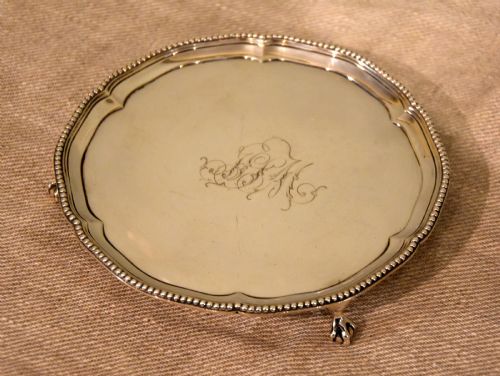
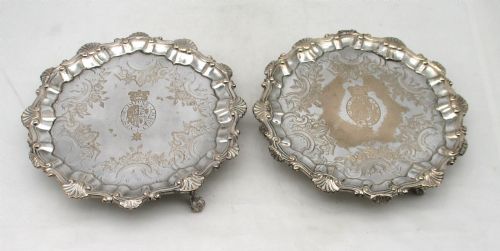
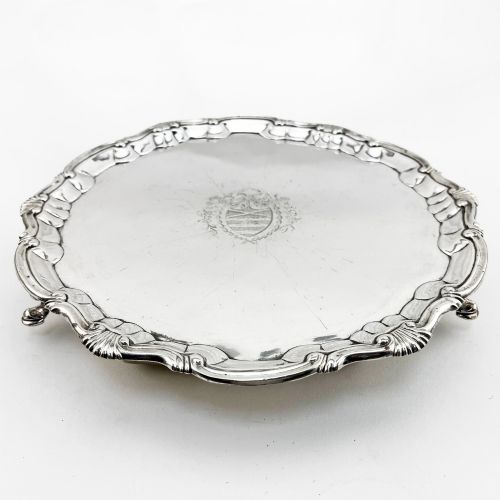
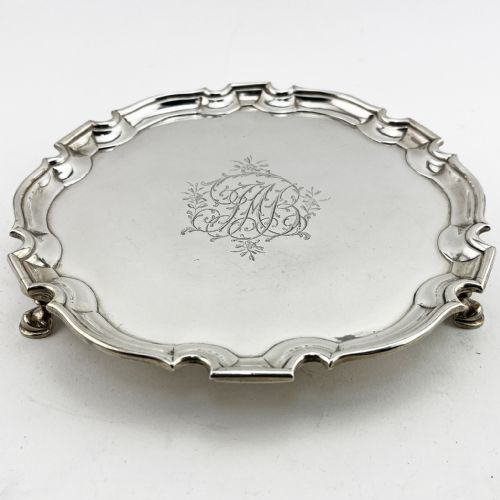
An 18th century silver salver sits on three or four small feet, offering a sturdy flat stage for serving glasses or calling cards.
18th Century Silver Salver
An 18th century silver salver takes the form of a small dish or plateau, often raised on feet and edged with decorative borders. You will find solid sterling silver pieces alongside Old Sheffield plate alternatives, spanning the Georgian era from the seventeen hundreds through to eighteen hundred.
The assortment on this page includes compact card trays alongside broader serving salvers and dishes, originating from London and Irish workshops. These pieces served polite society for presenting correspondence or holding drinking vessels in period interiors.
Makers shaped these items as circular platters with scalloped, beaded or moulded rims, matching the formal dining habits of the Georgian period. Surviving examples demonstrate how homeowners displayed status through polished metal surfaces on side tables.
How they were made
Solid pieces begin with melted sterling silver hammered and rolled into sheets before being raised into a shallow disc. Silversmiths then cast separate feet and borders, attaching them to the main body with solder.
Old Sheffield plate items utilise a thin sheet of sterling silver fused to a thicker copper core through heat and pressure. Makers then shaped this composite material and applied silver wire edges to hide the exposed copper seams.
18th Century Silver Salver Retail Price Guide 2026
Typical asking prices for 18th century silver salver among the pieces listed under this phrase on Sellingantiques today, from the lower quarter to the upper quarter. They describe what is for sale here now, not the wider market.
Materials on this site range from solid sterling silver to copper fused with silver through the Old Sheffield plate method.
What varies in quality
The weight of the metal and the crispness of the chased or engraved decoration define the upper tier of these pieces. Thicker gauge sterling silver maintains its structural integrity without bowing under weight, whereas thinner plates show flexing.
The integration of the applied border and the stability of the cast feet indicate the maker's original skill level. Finer examples retain sharp surface engraving and secure joints where the feet meet the underside of the tray.
Robert Abercromby·William Garrard
The 18th Century Silver Salver Glossary
- Sterling silver
- A standard alloy containing ninety-two point five percent silver by weight, with the remainder usually copper. This composition provides the necessary durability for functional tableware.
- Old Sheffield plate
- An early fused plating technique where silver and copper sheets are heated together until bonded. This method precedes electroplating and creates a distinctive layered cross-section.
- Salver
- A flat tray used for serving food or drink, or for presenting visiting cards. In this period, they typically stand on short bracket, scroll or claw and ball feet.
- Card tray
- A smaller version of a salver designed specifically for holding calling cards in a hallway or parlour. These items often measure around six inches across.
- Paten
- A small plate or dish used primarily for ecclesiastical purposes, sharing similar manufacture to secular salvers of the same era.
18th Century Silver Salver: Frequently Asked Questions
What is an 18th century silver salver used for?
These pieces served households as serving vessels for wine and tea glasses, or as trays for visiting cards in the hallway. Their raised rims kept items secure when carried by a servant.
Today, they function well on side tables or desks to hold small everyday objects. Their reflective surfaces also suit traditional interior display.
How do I clean an old silver salver?
Use a gentle silver polish and a soft cloth, avoiding harsh abrasive pastes that wear away thin plating or engraving. Wash away residue with warm soapy water and dry thoroughly.
Old Sheffield plate requires particular care to avoid exposing the underlying copper along sharp edges. Regular gentle dusting prevents heavy tarnish from accumulating.
How do I date a Georgian silver salver?
Solid sterling silver pieces from this era frequently carry hallmarks indicating the assay office, year, and silversmith's mark. London and Irish pieces often feature distinct date letters stamped into the underside.
Old Sheffield plate items rely on construction methods and style rather than official marks, as makers rarely stamped them. The presence of fused copper edges helps place manufacture within the Georgian period.