

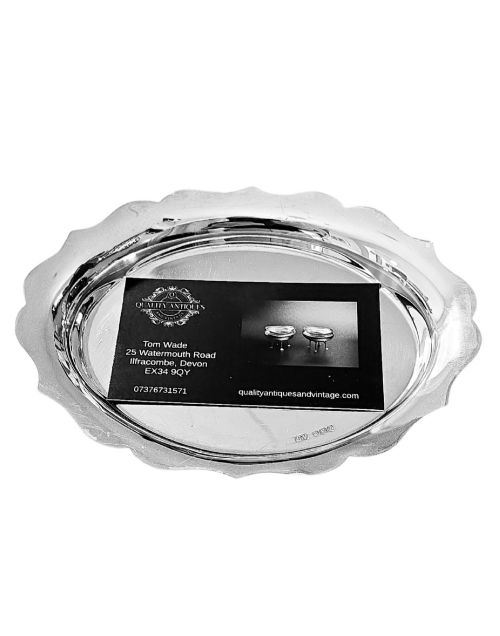

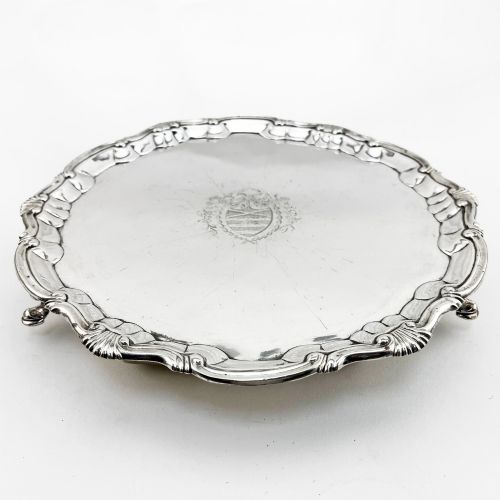
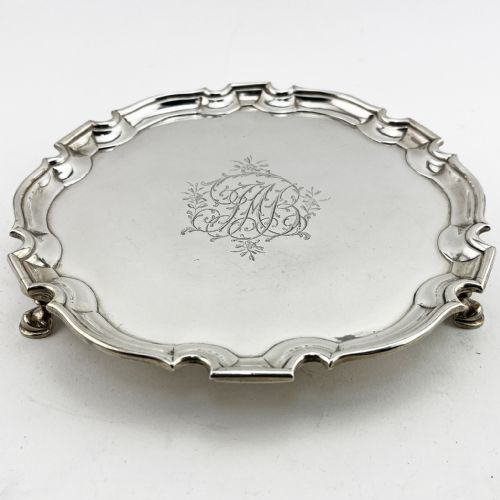
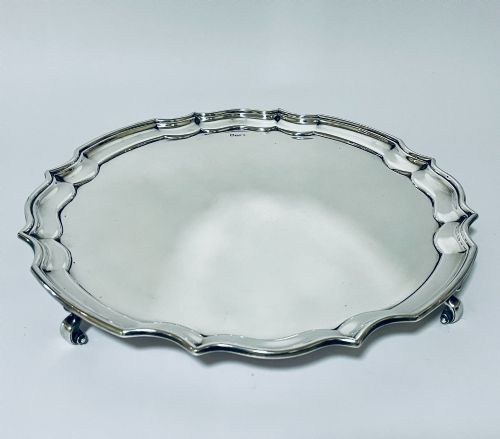


Solid Silver Waiter
A solid silver waiter serves drinks or holds correspondence with quiet elegance, and these sterling pieces range from Georgian salvers to Art Deco trays.
Solid Silver Waiter
The pieces on this page span several centuries, moving from early Georgian examples to Victorian revivals and later Art Deco designs. You will encounter forms ranging from diminutive teapot stands to larger drinks trays with handles.
How they were made
These items are fashioned primarily from sterling silver, with some examples incorporating wood in their construction or backing. Metalsmiths shaped the silver through hammering, casting, and raising techniques to achieve the desired form.
Makers applied decorative borders, chased motifs, and engraved crests by hand, often incorporating cast feet to elevate the tray. Surface finishing involved meticulous polishing to bring out the bright lustre of the metal.
Solid Silver Waiter Retail Price Guide 2026
Typical asking prices for solid silver waiter among the pieces listed under this phrase on Sellingantiques today, from the lower quarter to the upper quarter. They describe what is for sale here now, not the wider market.
One historical piece in the archive served its time as a horse racing prize before finding a new life on the antiques market.
What varies in quality
Quality rests in the crispness of the chased or engraved detail and the substantial gauge of the sterling silver used. Heavier plates resist warping better and feel more balanced in the hand.
The refinement of the cast border and the elegance of the supporting feet distinguish finer work from simpler production. Maker attribution also plays a role, with pieces by noted silversmiths displaying superior proportion and finish.
S C Younge And Co·Robert Abercromby·Charles Boyton·Tiffany And Co·Paul Storr
The Solid Silver Waiter Glossary
- Waiter
- A small serving tray or salver, typically standing on feet, used for carrying glasses, letters, or teacups. The term is often used interchangeably with a small salver.
- Salver
- A flat plate or tray of sterling silver used for serving food or drinks. They frequently feature decorative cast rims and feet.
- Sterling silver
- An alloy of silver containing ninety-two point five percent silver and seven point five percent other metals, usually copper. This standard is universally marked on British pieces.
- Chasing
- A metalsmithing technique where the silver is worked from the front with hammers and punches to sink the metal and create a raised or textured design. It decorates many surfaces on these trays.
- Teapot stand
- A small variant of the tray designed specifically to sit beneath a teapot to protect furniture from heat. These share the same materials and stylistic traits as larger waiters.
Solid Silver Waiter: Frequently Asked Questions
What is a silver waiter used for?
A silver waiter is a small tray traditionally utilised for presenting visiting cards, letters, or individual drinks. They offer a refined way to serve items in a domestic setting.
In modern rooms, they work well on a desk for stationery or on a sideboard to hold glassware.
How do I care for solid silver?
Solid silver requires periodic polishing with a soft cloth and a reputable silver polish to maintain its lustre and remove tarnish. Avoid abrasive cleaners that can scratch the metal surface.
Storing pieces in a dry environment away from direct sunlight helps minimise the accumulation of tarnish over time.
How can I tell the period of a tray?
The period is typically identified through a combination of the style, the form of the decoration, and the hallmarks stamped into the silver. Georgian pieces often feature simpler lines or ornate Rococo revival borders, while Art Deco items show geometric styling.
Consulting the assay office marks and maker's stamps provides the most precise date of manufacture.
Are these pieces made of solid silver?
The listings consist of sterling silver items, meaning the body of the tray is fashioned entirely from silver alloy rather than being plated. Hallmarks stamped on the reverse or rim guarantee this metal standard.
Some examples may include wooden elements for structural support or insulation.