

Silver Powder Box
These silver powder boxes combine practical dressing-table utility with fine metalwork, offering a tangible piece of early twentieth-century vanity.
What these silver powder boxes are
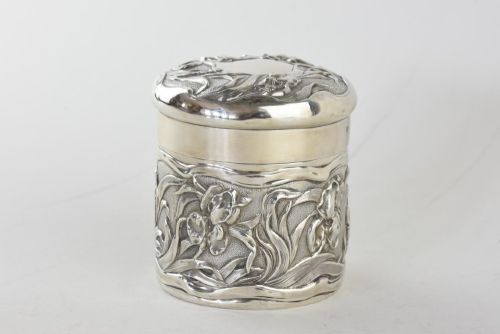
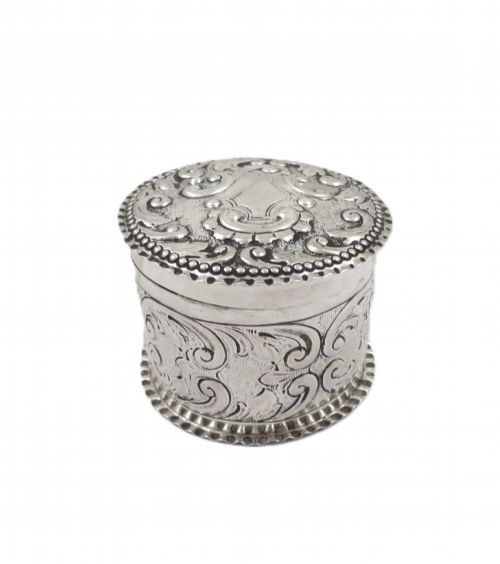
A silver powder box serves as a dressing-table container for cosmetics, holding loose face powder, tooth powder, or trinkets. These pieces range from small pill boxes to larger lidded canisters designed for the boudoir.
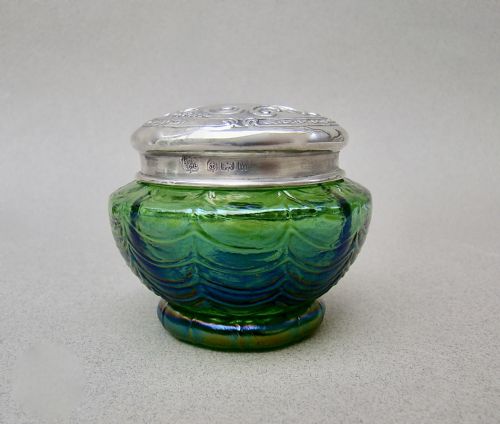
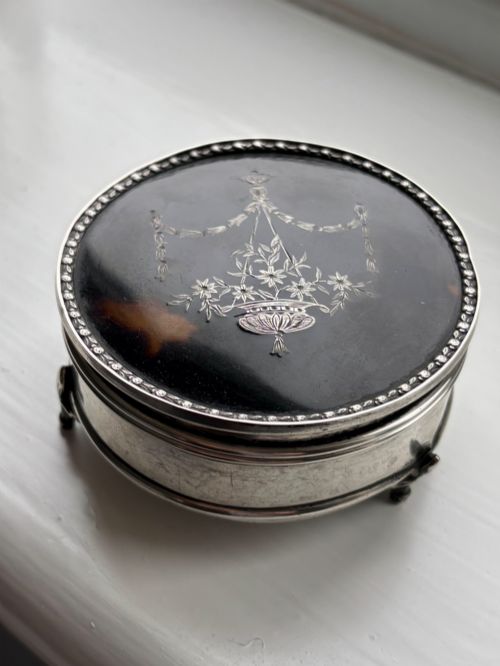
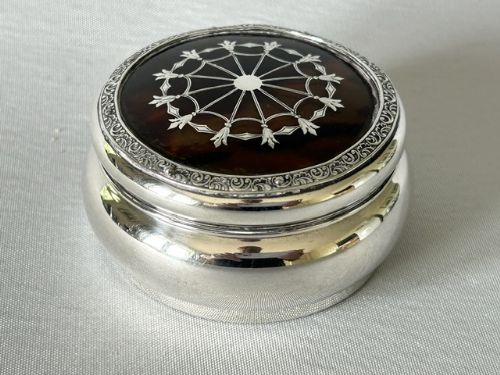
The selections span distinct stylistic movements, including Edwardian tortoiseshell pairings, Art Deco enamel designs, and regional variations such as Persian filigree and Austrian Secessionist work. You will encounter pieces dating from the late eighteenth century through the 1930s.
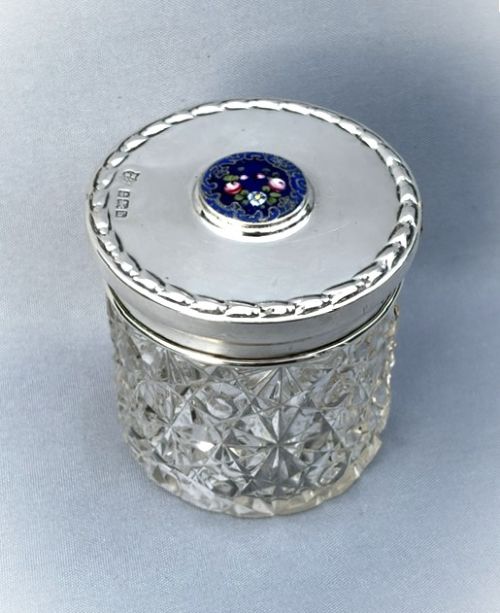
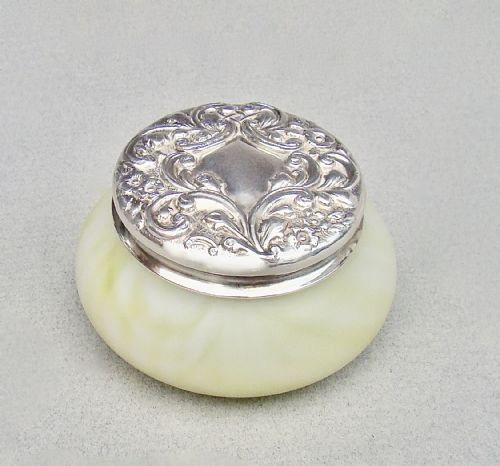
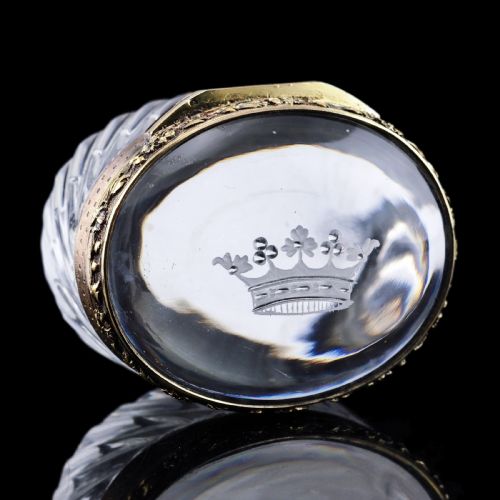
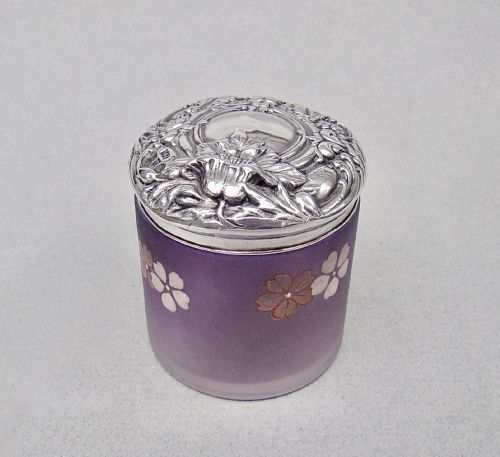
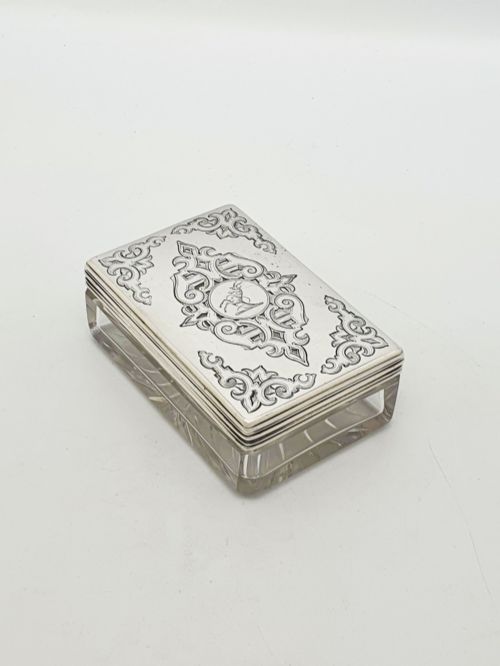
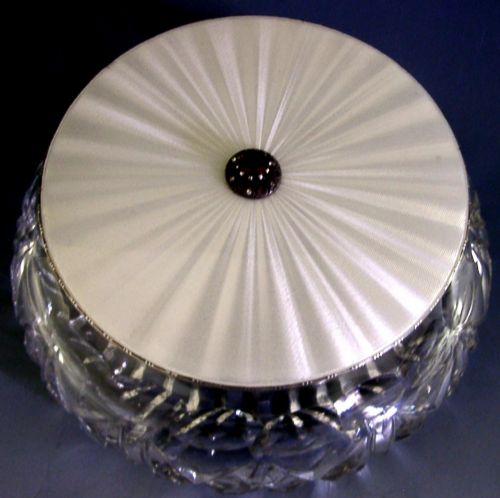
Forms vary from simple round pots to hexagonal compacts and cut crystal bases fitted with metal lids. Each example reflects the dressing habits and aesthetic preferences of its period.
How they were made
Silversmiths constructed the bodies using sterling silver, sometimes combining the metal with organic materials like tortoiseshell or Bakelite. Lids often feature hinged mechanisms fitted flush to the main body.
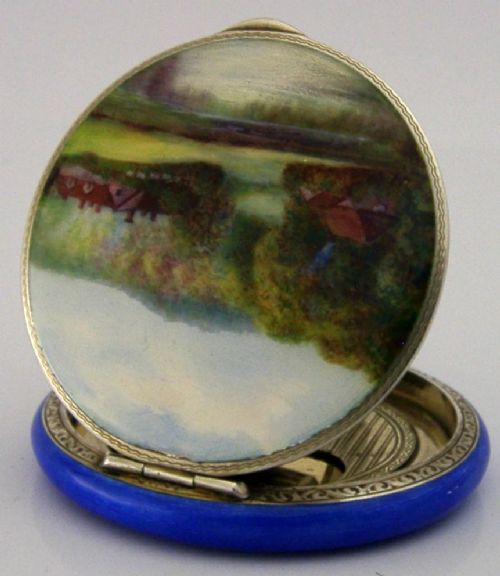
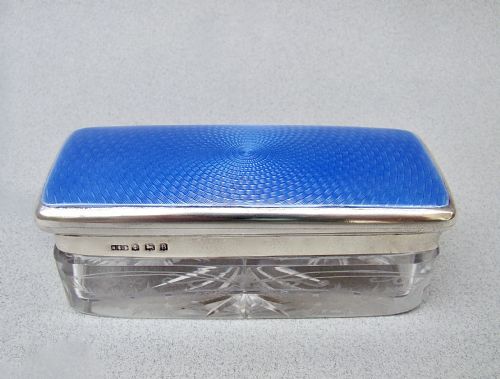
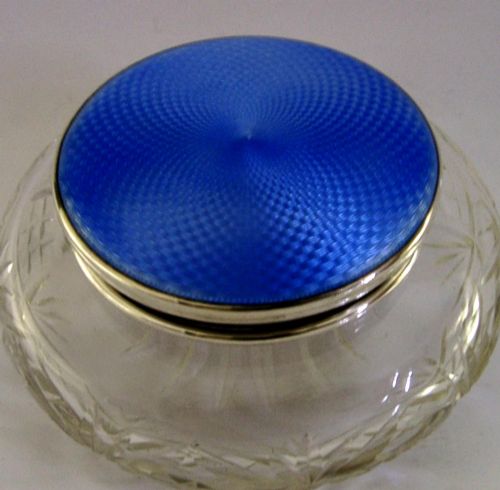
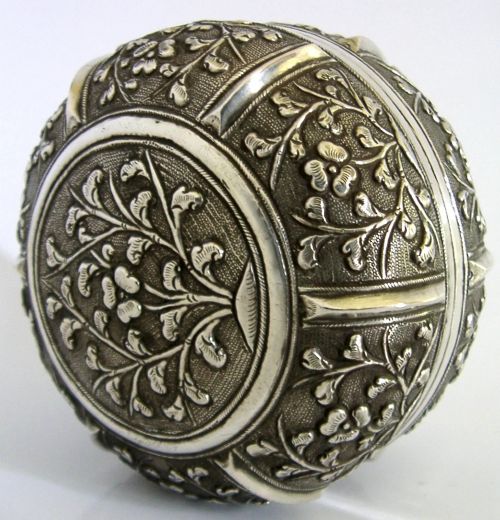
Surface decoration frequently involves guilloche enamel in pink, blue, lilac, or green, applied over engine-turned metal grounds. Persian examples utilise intricate silver filigree wirework soldered together to form openwork lids.
Tooth powder boxes remind us that eighteenth-century morning routines involved scrubbing dental work with prepared chalk while wearing a powdered wig.
What varies in quality
Quality rests on the crispness of the engine-turning beneath translucent enamel and the preservation of the glass-like surface without chips or hairline cracks. Heavier gauge silver provides a more substantial feel in the hand compared to thin pressed sheet metal.
The precision of the hinge mechanism and the tightness of the lid closure distinguish finer workshop output from standard production. Artisanal filigree work and detailed hallmarks add notable distinction to individual pieces.
John Thornton·Josef Margold
The Silver Powder Box Glossary
- Guilloche
- A decorative technique where a precise mechanical pattern is engraved into a metal surface beneath translucent enamel. This creates repeating geometric waves that catch the light.
- Filigree
- Delicate ornamental work made from fine silver wire twisted and soldered into open tracery patterns. It is frequently seen on Persian metalwork lids.
- Sterling silver
- An alloy consisting of silver and other metals, usually copper, formulated to increase durability while maintaining a bright lustre. Most British and American pieces adhere to this standard.
- Canister
- A rigid cylindrical or box-shaped container designed to hold dry goods or powders securely. In dressing-table wares, these often feature removable or hinged lids.
- Secessionist
- An early twentieth-century Central European stylistic movement favouring geometric simplification and clean lines over historic revivalism. Austrian makers applied this approach to utilitarian metal objects.
Frequently Asked Questions
What is a silver powder box used for?
These vessels held loose cosmetic powder or tooth powder on a dressing table or inside a handbag. They served as both functional vanity items and decorative dressing-table accessories.
Over time, their uses expanded to include holding pills, trinkets, or small keepsakes as vanity habits shifted through the decades.
How do I date a silver powder box?
Dating relies primarily on hallmarks stamped into the silver, which indicate assay offices, standard marks, and date letters. Stylistic clues such as Edwardian tortoiseshell or Art Deco guilloche enamel also narrow down the period.
Examining construction methods, hinge types, and fastener styles provides additional context for determining when a piece was manufactured.
Are guilloche enamel lids fragile?
Guilloche enamel is essentially a layer of fused glass over metal, meaning it can chip or crack if subjected to sharp impacts or heavy drops. Normal handling and careful storage prevent most accidental damage.
Pieces with intact enamel retain their bright colouration and visual depth, making them particularly desirable for display.
What materials were used besides silver?
Maker workshops frequently paired sterling silver with natural tortoiseshell, cut crystal, and coloured glass bases. Early twentieth-century pieces also incorporated early plastics like Bakelite.
Enamel surfaces provide colour variations ranging from lilac and green to pink and blue across different regional styles.