
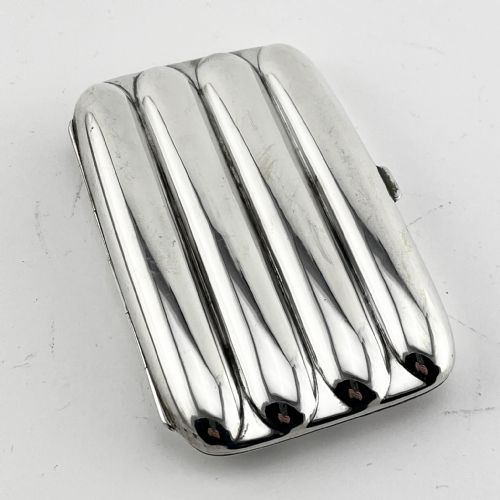


Silver Pocket Cigar Holder
A silver pocket cigar holder is a portable protective case for smoking reeds, prized for keeping leaves intact while travelling.
Silver Pocket Cigar Holder
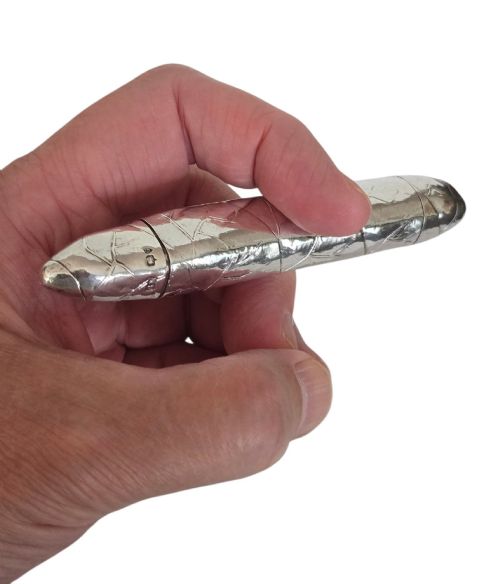
A silver pocket cigar holder is a portable vessel designed to carry and protect cigars, cheroot or tobacco items in the pocket. Buyers searching for a silver pocket cigar holder encounter forms ranging from flat rigid cases to cylindrical tubes and torpedo-shaped designs.
The pieces listed on this page span the Georgian, Victorian and Edwardian eras, with notable 19th-century Dutch examples alongside English makers. Forms include standard cigar cases, double-ended novelty vesta cases and combination cheroot holders.
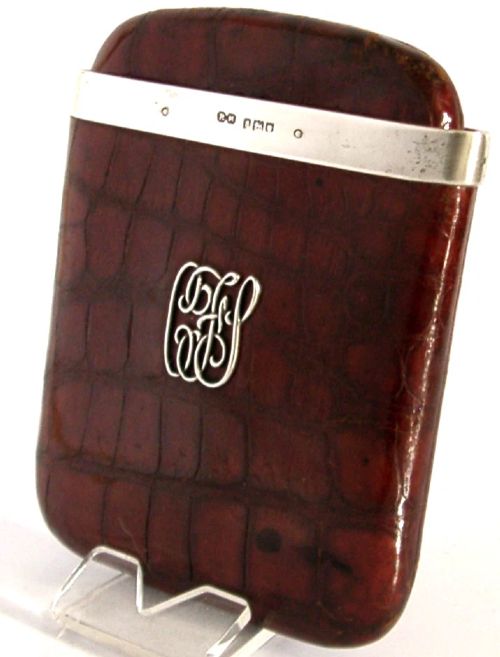
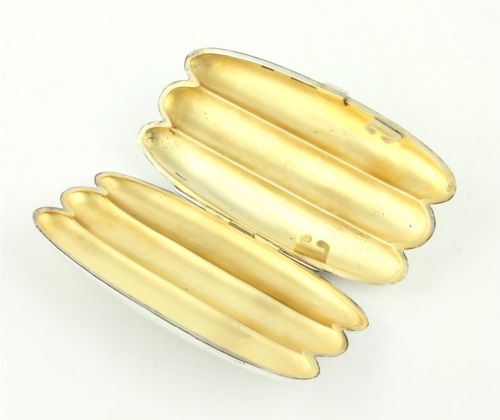
Materials extend beyond plain metal to incorporate crocodile leather, amber, gold gilt and silver gilt interiors. Most variants integrate fitted compartments for individual cigars or flexible leather bodies banded in sterling silver mounts.
Materials and construction
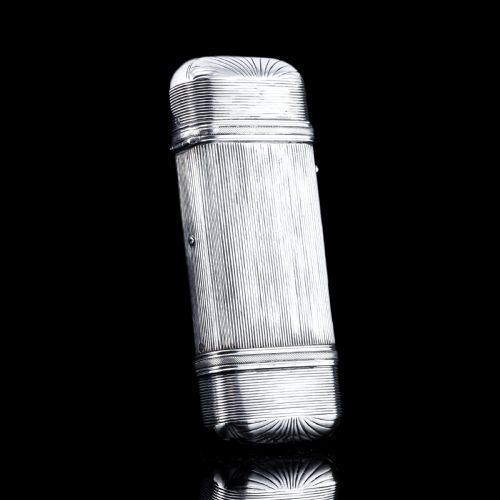
Makers constructed these holders using sterling silver, solid silver and silver gilt, often applying engine-turned decoration or reeded designs to the exterior metal surfaces. Some examples pair metal frames with natural crocodile skin leather or amber and gold components.
Silversmiths formed rigid tubes and hinged cases to secure individual cigars, whilst flexible pockets combined stitched leather with hallmarked silver mounts and clasps. Interior gilding protected the silver from tobacco oils and moisture.
Evaluating craftsmanship
Quality in a silver pocket cigar holder rests upon the crispness of the engine-turning, the integrity of the hinges and the precise fit of the internal compartments. Superior pieces display deep, legible hallmarks and secure closures that protect the contents without binding.
The combination of secondary materials, such as genuine crocodile skin and silver gilt interiors, distinguishes finer workshops from standard production. Novelty forms and signed items by notable silversmiths demonstrate greater technical ambition.
Sampson Mordan Co·Edward Edwards
The Silver Pocket Cigar Holder Glossary
- Sterling silver
- A silver alloy containing 92.5 percent pure silver by mass and 7.5 percent other metals, usually copper. This standard composition provides the necessary durability for pocket items.
- Silver gilt
- Sterling silver that has been coated with a thin layer of gold on the interior or exterior surfaces. This treatment prevents the silver from tarnishing when exposed to tobacco.
- Engine turned
- A decorative technique engraved mechanically into the metal surface using a lathe to produce precise geometric patterns. It adds grip and visual texture to smooth silver cases.
- Vesta case
- A small pocket box originally designed to hold wax matches and a striker. Some novelty smoking accessories combine this function with cigar storage.
- Cheroot
- A cylindrical cigar with both ends cut straight, distinct from tapered formats. Cases frequently accommodate these alongside traditional cigars.
Silver Pocket Cigar Holder: Frequently Asked Questions
How do I clean a silver cigar case?
Use a soft microfibre cloth to gently polish exterior silver surfaces, avoiding harsh abrasives that can wear away engine-turned details.
Keep moisture away from any leather components or interior linings to preserve the materials.
Can I still carry modern cigars in these?
Many historical holders were designed for specific slender formats like cheroots or small cigars rather than modern bulky ring gauges.
Check the internal dimensions of the tube or case against your preferred smoke before travel.
What is the difference between a cigar case and a vesta case?
A cigar case is proportioned specifically to protect long tobacco cylinders from being crushed in a pocket.
A vesta case is a smaller pocket container made primarily for carrying matches and striking them.
How do I date an antique silver holder?
Look for the set of hallmarks stamped into the metal, which typically include a maker mark, standard mark, town mark and date letter.
Style indicators like engine-turning or the presence of crocodile leather also point to Victorian or Edwardian periods.