

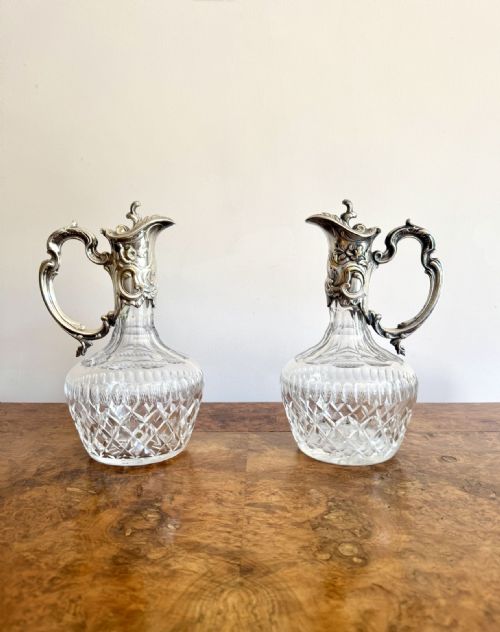


Silver Plated Wine Decanter
A silver plated wine decanter brings poured hospitality to the dining table, combining metalwork and glass from the Victorian and Edwardian periods.
Silver Plated Wine Decanter
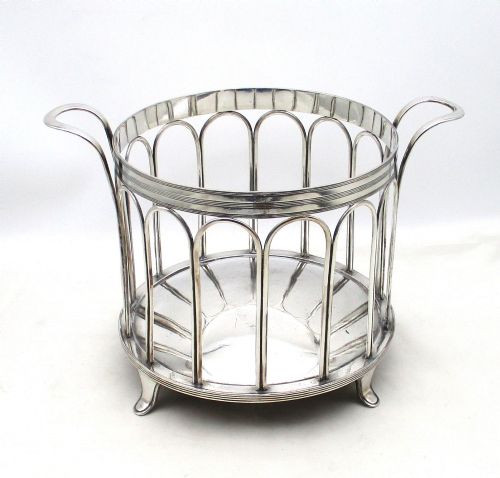
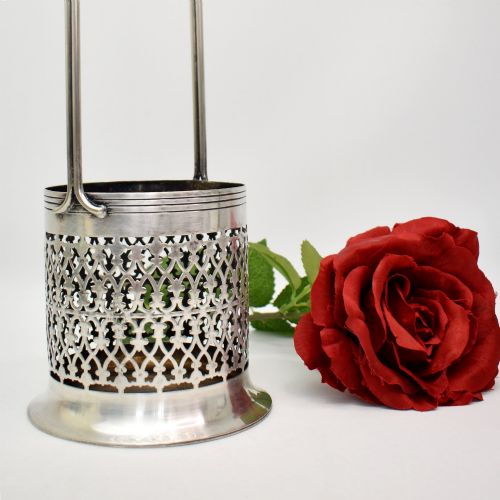
A silver plated wine decanter search encompasses claret jugs, table coasters, bottle holders, and carafes. The majority of pieces met here belong to the Victorian and Edwardian periods, often combining metal mounts with glass vessels.
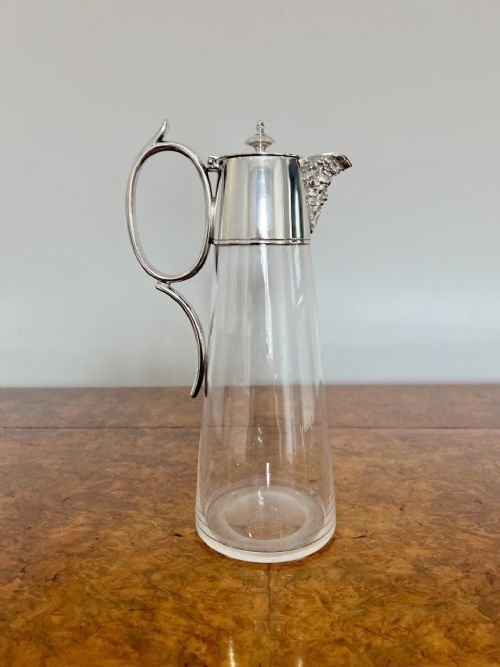
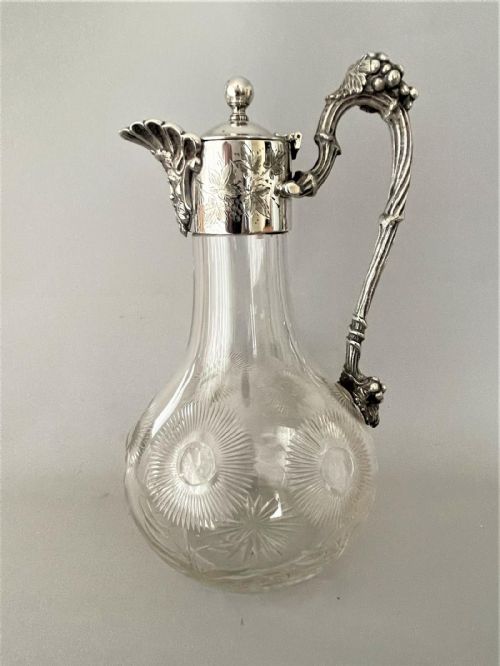
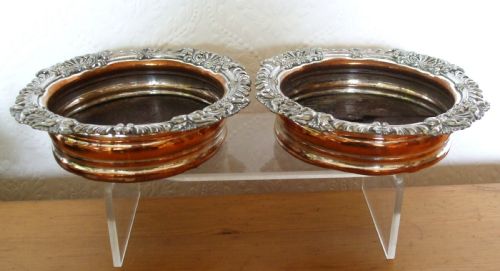
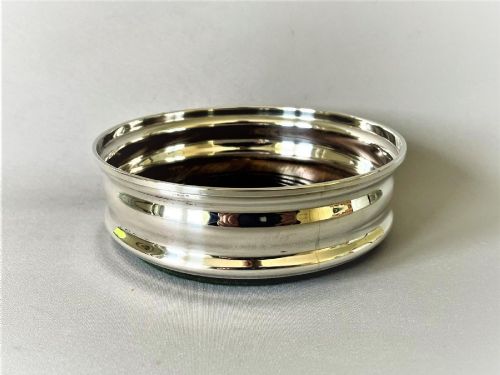
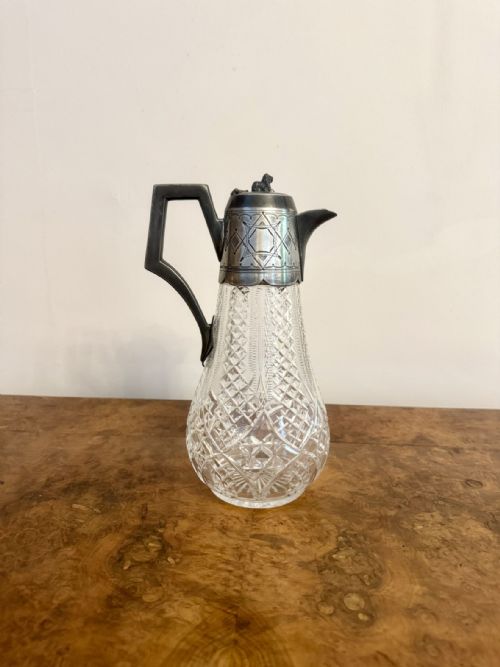
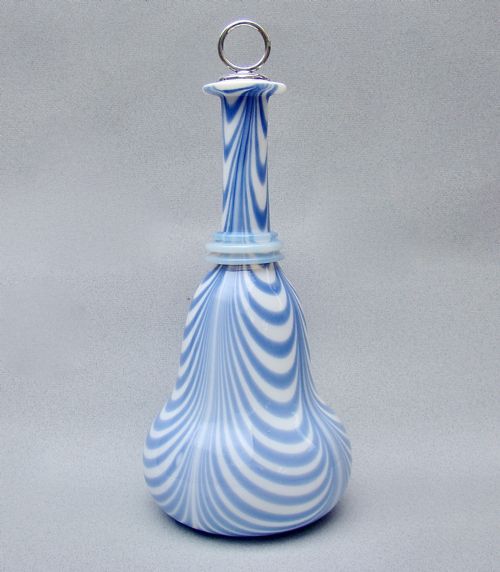
Claret jugs dominate the selection, frequently paired with cut, etched, or Nailsea glass bodies. Coasters and bottle stands appear singly or in matched pairs, sometimes incorporating turned mahogany bases or deep Old Sheffield Plate rims.
Makers and designers from the late nineteenth century introduced distinctive Art Nouveau contours and utilitarian carriers alongside traditional forms. Each object served to circulate wine at the table or protect sideboards from spills.
How they were made
Silversmiths applied silver plating techniques over copper or base white metal substrates, with early nineteenth-century examples utilising Old Sheffield Plate where silver sheets were fused to copper base metal. Later items relied on electroplating methods to bond the silver layer.
Vessels combined blown glass bodies with cast and chased metal mounts, hinged lids, and handles. Glass components were frequently wheel-cut, etched, or manufactured in coloured variants such as cranberry and Nailsea glass.
Coaster construction integrated turned wooden bases, often mahogany, centred with button mounts and surrounded by pierced, gadrooned, or beaded silver plated galleries.
Listings feature items from the Victorian, Edwardian, and Georgian periods, showcasing materials such as Old Sheffield Plate, cut glass, and mahogany.
What varies in quality
Quality rests in the crispness of the cast mounts and the depth of the glass cutting. Superior claret jugs display heavy, well-balanced crystal bodies with deeply carved flutes and tightly fitting, hallmarked or stamped silver-plated lids.
The integrity of the plating separates standard items from finer works, particularly where copper shows through worn silver layers. Makers who employed advanced techniques or engaged notable designers produced pieces with superior structural weight and proportion.
Brook and Son·Hukin and Heath·Elkington
The Silver Plated Wine Decanter Glossary
- Old Sheffield Plate
- A composite material made by fusing a thin sheet of silver to a thicker copper ingot before rolling. This early technique produces a characteristic warm glow where the base copper shows subtly at the edges.
- Claret Jug
- A tall pouring vessel specifically designed for serving red wine at the table. These items feature hinged metal covers, scroll handles, and glass bodies.
- Wine Coaster
- A low, disc-like stand with a raised gallery designed to hold a bottle steady on the mahogany dining table. Many feature felt-lined or wooden bases to protect polished surfaces.
- Nailsea Glass
- A type of glass notable for its characteristic looped or combed opaque white trails embedded within a coloured glass body. It frequently appears in nineteenth-century carafes and jugs.
- Electroplate
- A method of depositing a layer of silver onto a base metal using an electrical current, which largely replaced Old Sheffield Plate after the mid-nineteenth century.
Silver Plated Wine Decanter: Frequently Asked Questions
How do I date a silver plated decanter?
Dating relies on style markers, manufacturing techniques, and retailer marks stamped into the metal. Pieces made before the mid-nineteenth century often utilise Old Sheffield Plate.
Victorian and Edwardian examples display stylistic shifts ranging from heavy Gothic revival and cut crystal to fluid Art Nouveau curves. Design registrations and maker marks assist in narrowing the decade.
How were these decanters used?
They were utilised for decanting, holding, and serving wine during formal meals and gatherings. Coasters protected polished dining tables from bottle rings.
Claret jugs allowed hosts to pour red wine gracefully at the table. Bottle carriages made passing multiple decanters around the company easier.
How do I care for silver plate?
Maintenance requires gentle cleaning with non-abrasive silver cloth to preserve the thin metal layer. Avoid harsh chemical dips that strip underlying copper.
Glass components can be washed separately in warm soapy water. Proper storage away from damp environments prevents corrosion of the base metal.