

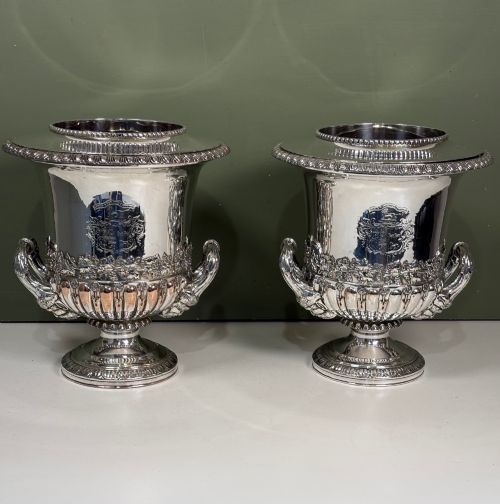


Silver Plated Wine Chiller
A silver plated wine chiller brings effortless style to the table, keeping bottles properly cold while offering the gleam of traditional metalwork without the solid cost.

What a silver plated wine chiller is
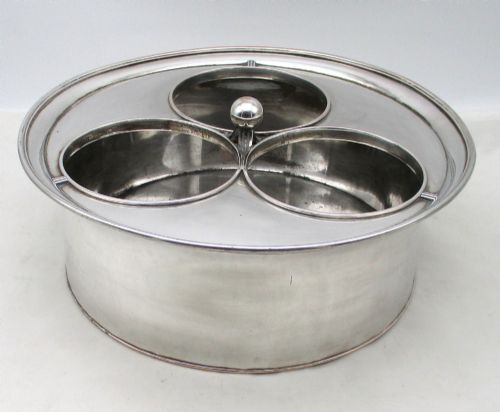
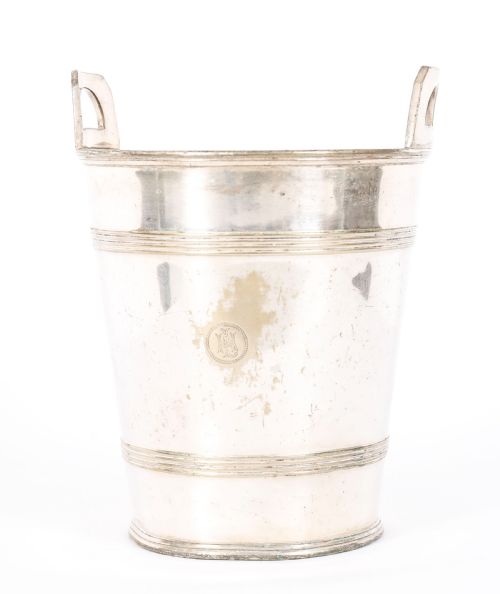
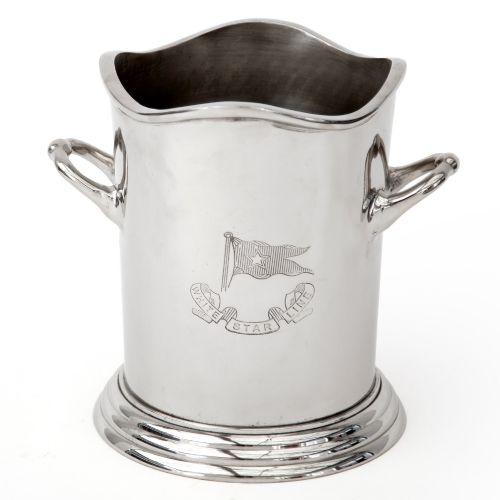
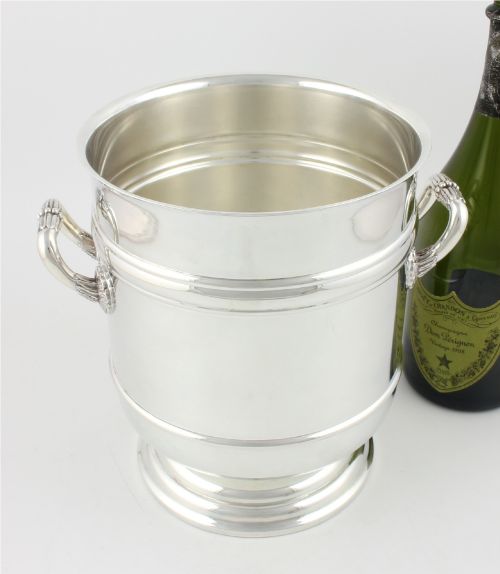
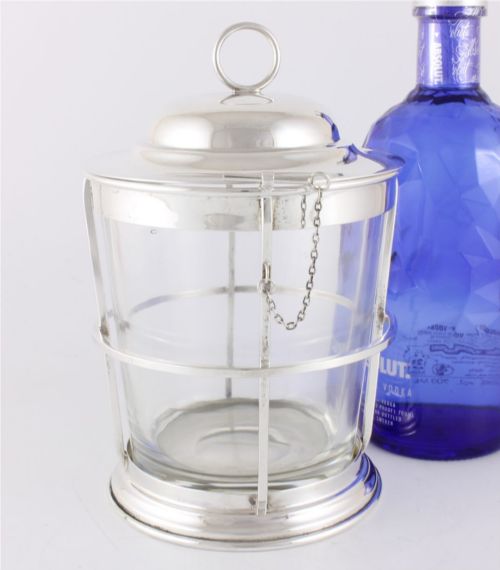
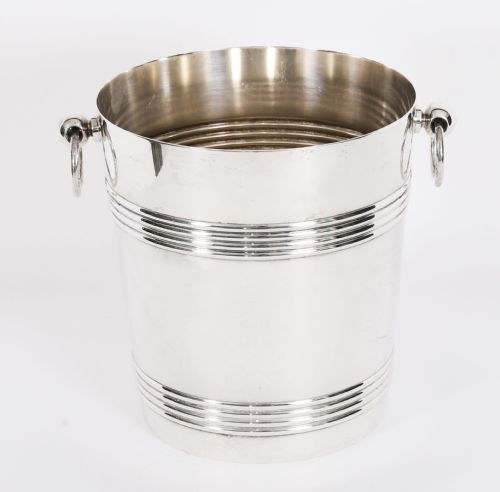
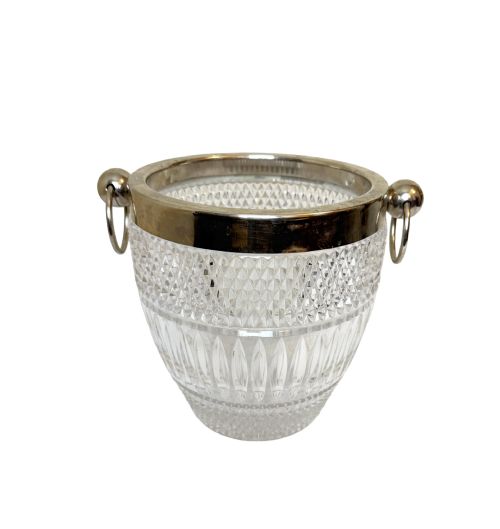
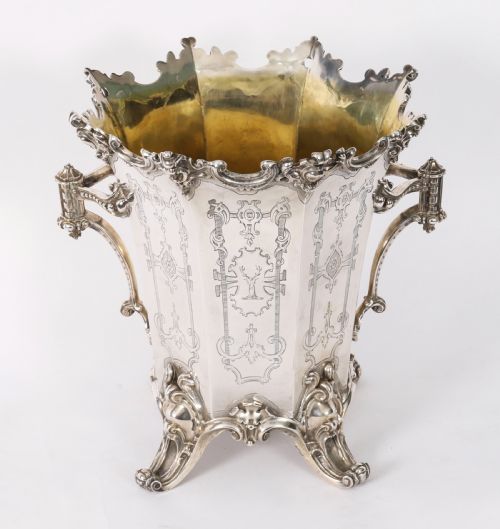
When you search for a silver plated wine chiller, you are looking at vessels designed to hold wine and champagne at the correct temperature using silver plate, Old Sheffield plate, or metal. The pieces available here span several distinct periods, including the Regency era, Edwardian period, and twentieth-century decades like the 1920s, 1930s, 1940s, and 1950s. You will encounter forms ranging from heavy embossed champagne buckets to converted meat covers and classic French bistro coolers.
The most common examples you are likely to meet on this page date from the early to mid-twentieth century, particularly the Art Deco period and the 1950s. These often take the form of champagne magnums or standard wine buckets created by English and French makers. Alongside these standard vessels, the historical record shows rarer nineteenth-century items such as Old Sheffield plate coolers and repurposed kitchen pieces.
How they were made
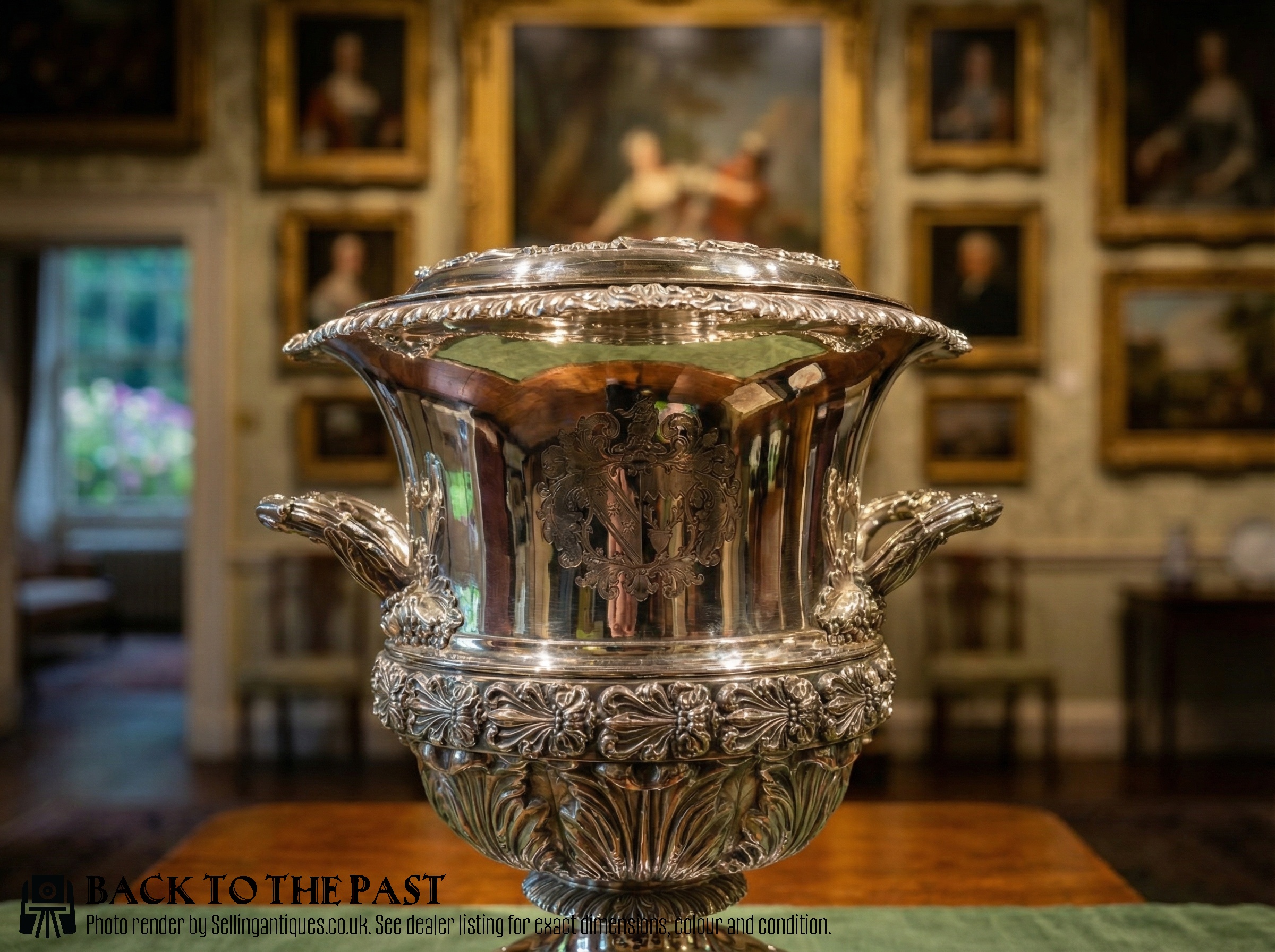
Makers constructed these chillers using a base metal such as copper or standard metal, which was then coated with a layer of silver to provide a bright reflective finish. Earlier examples utilise Old Sheffield plate, a specialised technique involving the fusion of a thin sheet of silver to a thicker copper ingot before rolling and shaping.
Surface decoration required skilled handwork, visible in heavily embossed motifs and structural details applied to the bodies of the buckets. Twentieth-century pieces incorporated cleaner geometric lines suited to Art Deco and mid-century styles, while retaining robust metal construction to handle ice and heavy bottles.
Retail Price Guide 2026
Typical UK retail prices for silver plated wine chiller, calculated from the Sellingantiques database of over a million retail prices indexed since 2003. This retail price guide relies exclusively on Sellingantiques data; no external sources or auction records are used, so the figures do not describe the wider market.
One resourceful Victorian past-owner decided a standard meat cover deserved a glamorous retirement as a dedicated wine chiller.
What varies in quality
Quality rests primarily on the depth and integrity of the silver plating and the weight of the underlying metal body. Thicker plate and heavier copper or base metal ensure the vessel maintains its structural rigidity and withstands decades of polishing and handling.
The distinction between standard production items and high-end pieces lies in the crispness of the chasing, embossing, or maker attribution. Pieces associated with notable workshops demonstrate superior artistic execution in their handles, rims, and overall proportions compared to anonymous utility items.
Matthew Boulton and Co·Luc Lanel for Christofle
The Silver Plated Wine Chiller Glossary
- Silver Plate
- A manufacturing method where a thin layer of silver is bonded to a base metal substrate, such as copper or brass, to give the appearance of solid silver.
- Old Sheffield Plate
- An early fusing technique where silver and copper are thermally joined together before being rolled into sheets, often showing a thin line of copper at the cut edges.
- Art Deco
- A design style prominent in the 1920s and 1930s characterised by streamlined geometric forms, stylized motifs, and modern industrial aesthetics.
- Regency
- A British design period spanning the early nineteenth century known for classical revival forms, restraint, and elegant proportions.
- Embossing
- A metalworking technique where a design is hammered or pressed into relief from the reverse side of the material to create a raised pattern.
Frequently Asked Questions
How do I clean a silver plated wine chiller?
Use a soft cloth and a dedicated silver polish designed for plated items to maintain the shine without wearing through the thin metal surface. Avoid harsh abrasive pads that can scratch the finish or expose the underlying copper.
Rinse the chiller thoroughly in warm water after polishing and dry it immediately with a lint-free cloth to prevent water spots and tarnishing.
How do I date a silver plated wine chiller?
Examine the style of the handles, the weight of the metal, and any maker marks or stamps located on the base. Art Deco pieces show geometric lines from the 1920s and 1930s, while Regency items display classical revival motifs.
Look closely at the construction techniques, as fused Old Sheffield plate points to an earlier nineteenth-century origin than mid-twentieth-century stamped production.
What is the difference between Old Sheffield plate and standard silver plate?
Old Sheffield plate involves fusing solid silver to a copper core through heat and pressure before rolling it into sheets, creating a distinct layered structure. Standard silver plate, developed later via electroplating, deposits a uniform coating of silver onto a base metal using an electrical current.
You can often spot Old Sheffield plate by examining the rims or edges where the underlying copper shows through as a subtle warm line.