



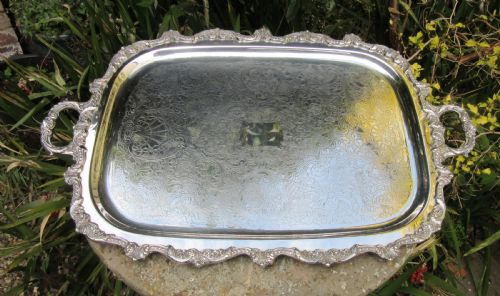
Silver Plated Tea Server
A silver plated tea server brings the heavy, reflective elegance of formal hospitality to a room.
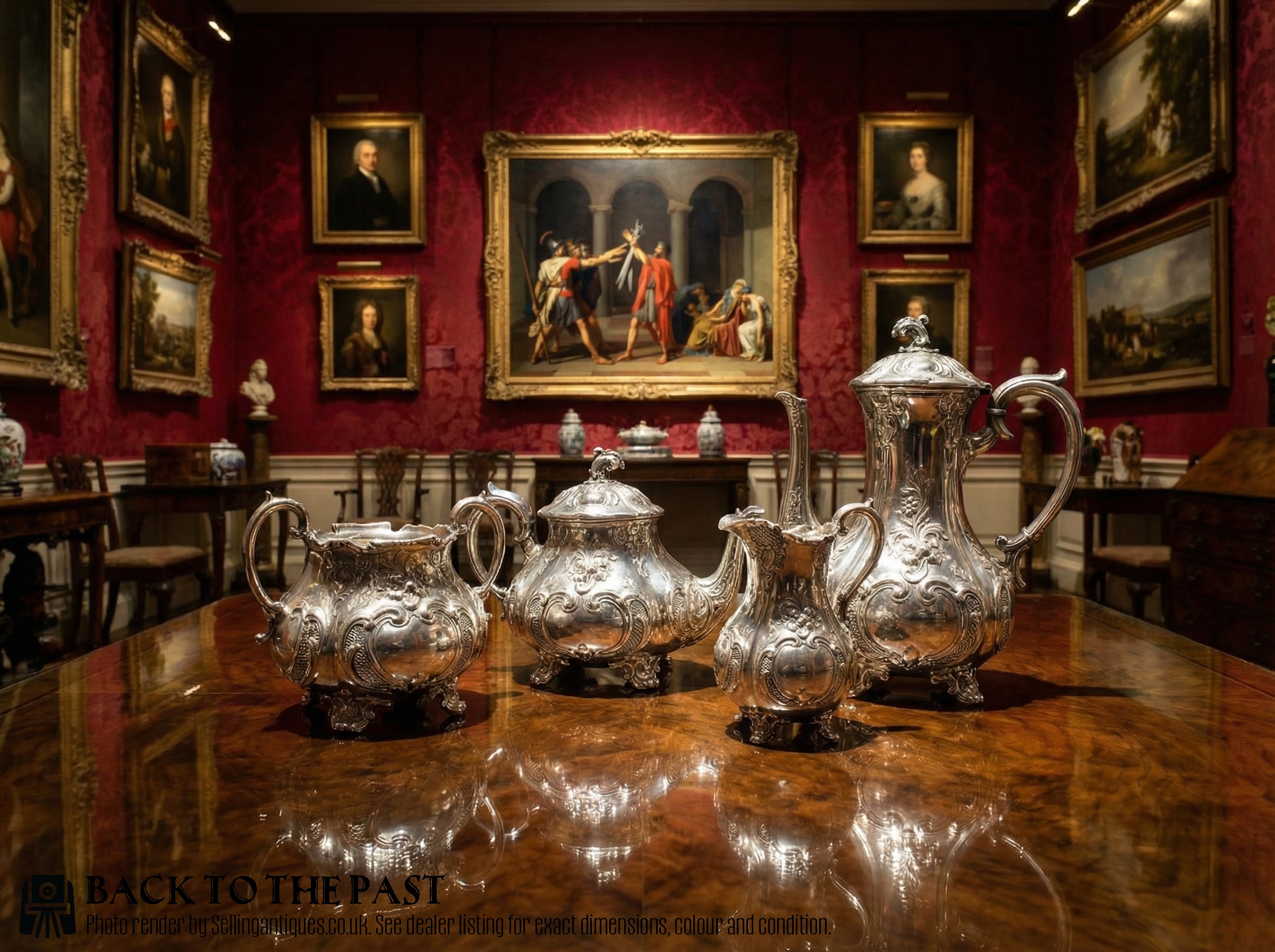
Silver Plated Tea Server
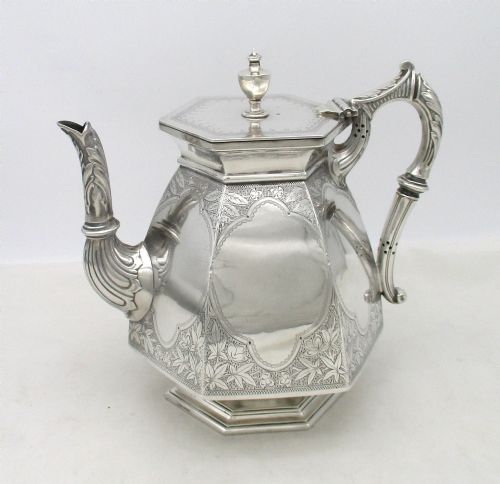
A silver plated tea server encompasses a range of vessels and trays designed for the formal service of hot beverages. When searching for a silver plated tea server, a buyer encounters coffee pots, teapots, tea urns, café au lait pots, and serving trays spanning from the eighteenth century into the twentieth century.
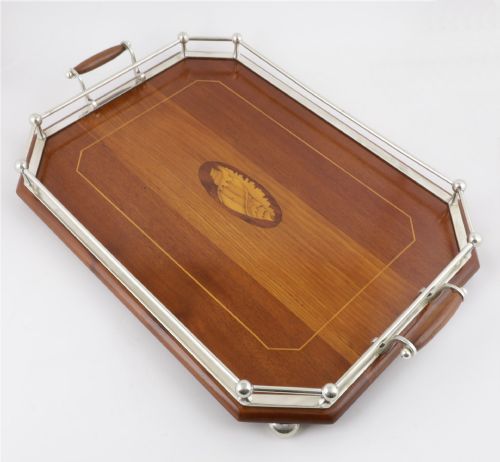
The selections on this page draw predominantly from the Victorian, Edwardian, and Georgian periods, alongside Regency and Old Sheffield examples. Forms vary from octagonal gallery trays with shell inlay to large tea services and biscuit barrels fitted with cut glass.
Makers such as Mappin & Webb, Walker & Hall, and Boardman Glossop & Co appear among the offerings. These pieces reflect the shifting domestic habits of British households over two centuries of dining and entertaining.
How they were made
Construction relies upon base metals such as copper and nickel silver, transformed through electroplating or the older Old Sheffield plating technique. Handles and insulators frequently incorporate wood, ebony, bone, or metal to manage heat during service.
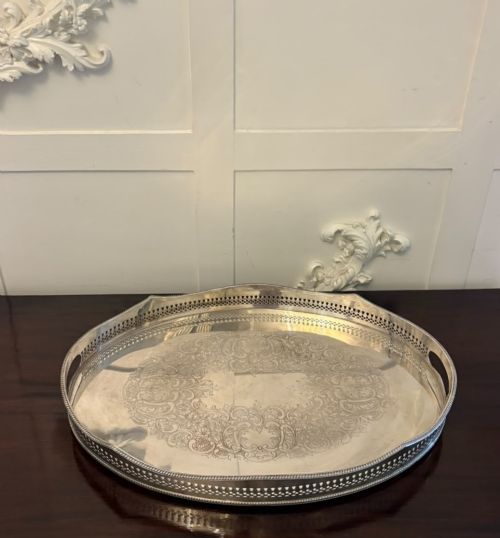
Surface decoration is achieved through hand engraving, piercing, and applied gallery borders. Trays often integrate detailed woodwork and shell inlay into the metal structure.
A Victorian biscuit barrel ensures your dry baked goods remained suitably protected from damp British drawing rooms.
What varies in quality
Quality separates objects by the crispness of their cast and engraved ornament and the integrity of the underlying plate. Thicker application of silver or the fusion method of Old Sheffield plate ensures durability through generations of use.
Design cohesion also distinguishes finer examples, particularly in matched tea services or trays where handles, feet, and borders share a unified stylistic grammar.
Mappin & Webb·Walker & Hall·Boardman Glossop & Co
The Silver Plated Tea Server Glossary
- Old Sheffield Plated
- A method of fusing a thin sheet of silver to a thicker copper core by heat and pressure. This technique predates nineteenth-century electroplating.
- Electroplated Nickel Silver
- A process where a layer of silver is deposited via electrical current onto a base of nickel silver. It became the dominant manufacturing method in the Victorian era.
- Gallery Tray
- A serving tray featuring a low, pierced or solid metal wall around its perimeter. These walls often incorporate wooden bases and decorative handles.
- Cafe Au Lait Pots
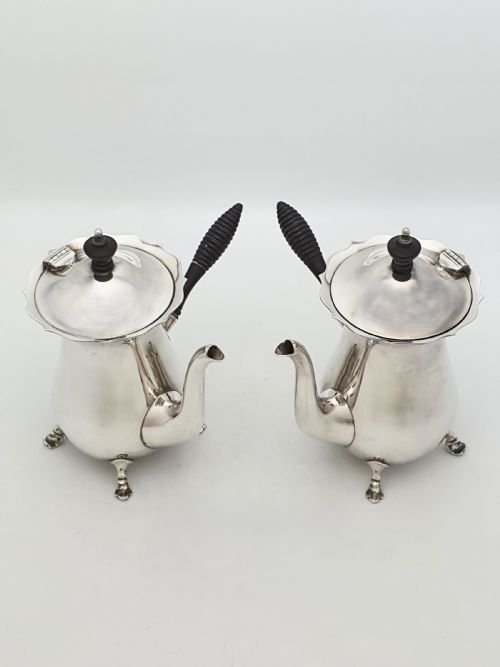
- Matched pairs of pots designed for serving strong coffee and hot milk simultaneously. They appear frequently in Edwardian dining settings.
- Tea Urn
- A large vessel fitted with a spigot at the base, used for heating and dispensing water during large gatherings. They are typical of Georgian and Regency hospitality.
Silver Plated Tea Server: Frequently Asked Questions
How do I clean silver plate?
Clean silver plate using a specialised liquid or paste polish formulated for plated items, applied with a soft cloth. Avoid abrasive cloths or harsh chemical dips that strip the remaining silver layer.
Rinse the item thoroughly in warm water and dry it immediately with a soft lint-free cloth to prevent water spots and tarnishing.
Can I use these for daily tea?
These pieces function well for serving hot beverages, provided interior linings remain intact and spouts or handles are secure. Modern users often reserve them for occasional hosting to preserve the historic plating.
Check for internal cleanliness and test water retention before serving drinks from antique pots.
How do I date a silver plated piece?
Dating relies on stylistic markers such as Aesthetic Movement engraving or Georgian Neoclassical forms, alongside manufacturing methods like Old Sheffield plate versus electroplating. Maker marks and registry numbers stamped on the base offer further chronological clues.
Comparing the weight, handle materials, and joining techniques helps align the piece with its associated period.
What is the difference between Old Sheffield and electroplate?
Old Sheffield plate involves physically fusing silver sheets to copper through heat before shaping the metal. Electroplate uses an electrical bath to bond silver particles to a nickel or metal base.
Old Sheffield pieces often reveal a faint copper show-through along high edges where the top layer has worn thin.