
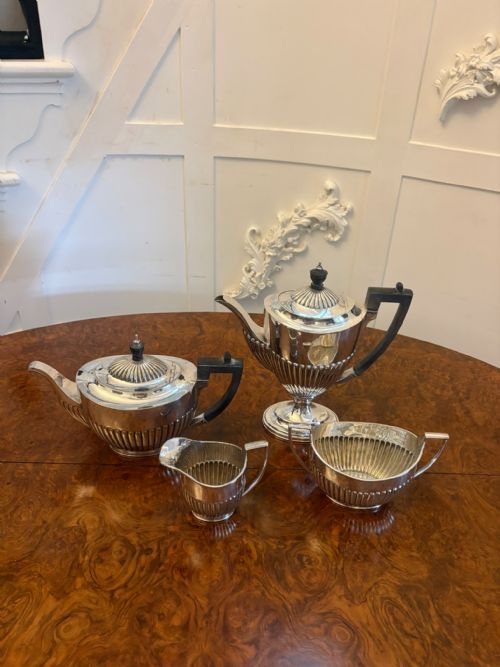
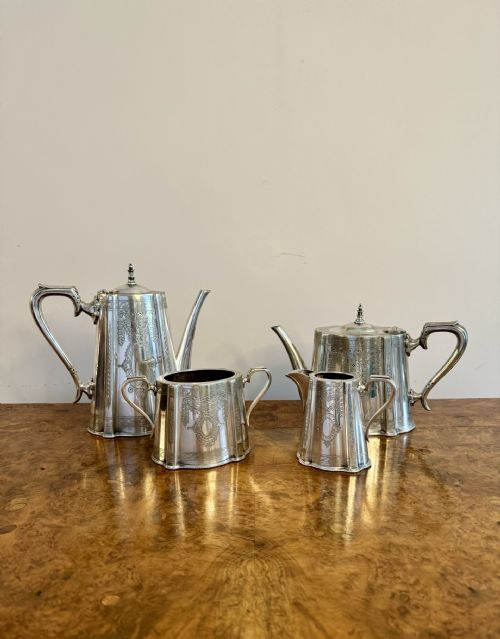
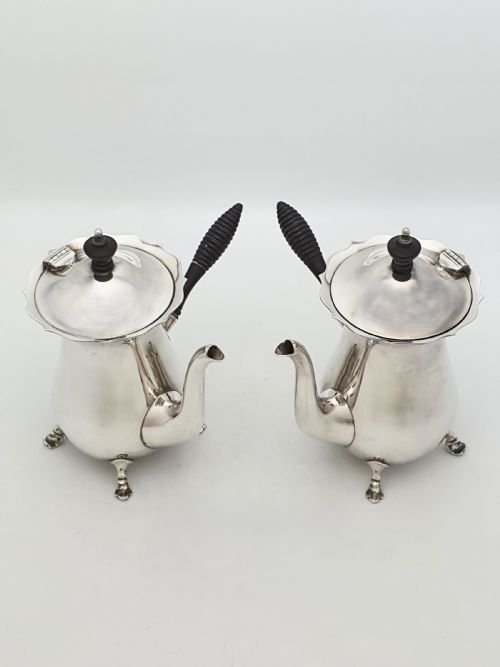


Edwardian Silver Coffee Pot
These edwardian silver coffee pot examples bring upright elegance and gleaming hospitality straight from the early twentieth century to the modern table.

Edwardian Silver Coffee Pot
An edwardian silver coffee pot stands as a distinct form within tea and coffee sets, tea services, and café au lait pots. Most pieces on this page appear within larger matched silver plated or sterling silver services, alongside standalone side-handled pots and miniature versions.
The material range spans standard silver plate and electroplated nickel silver through to solid sterling silver. Makers adopted both plain classical shapes and ornate revival styles, reflecting the diverse dining habits of the period.
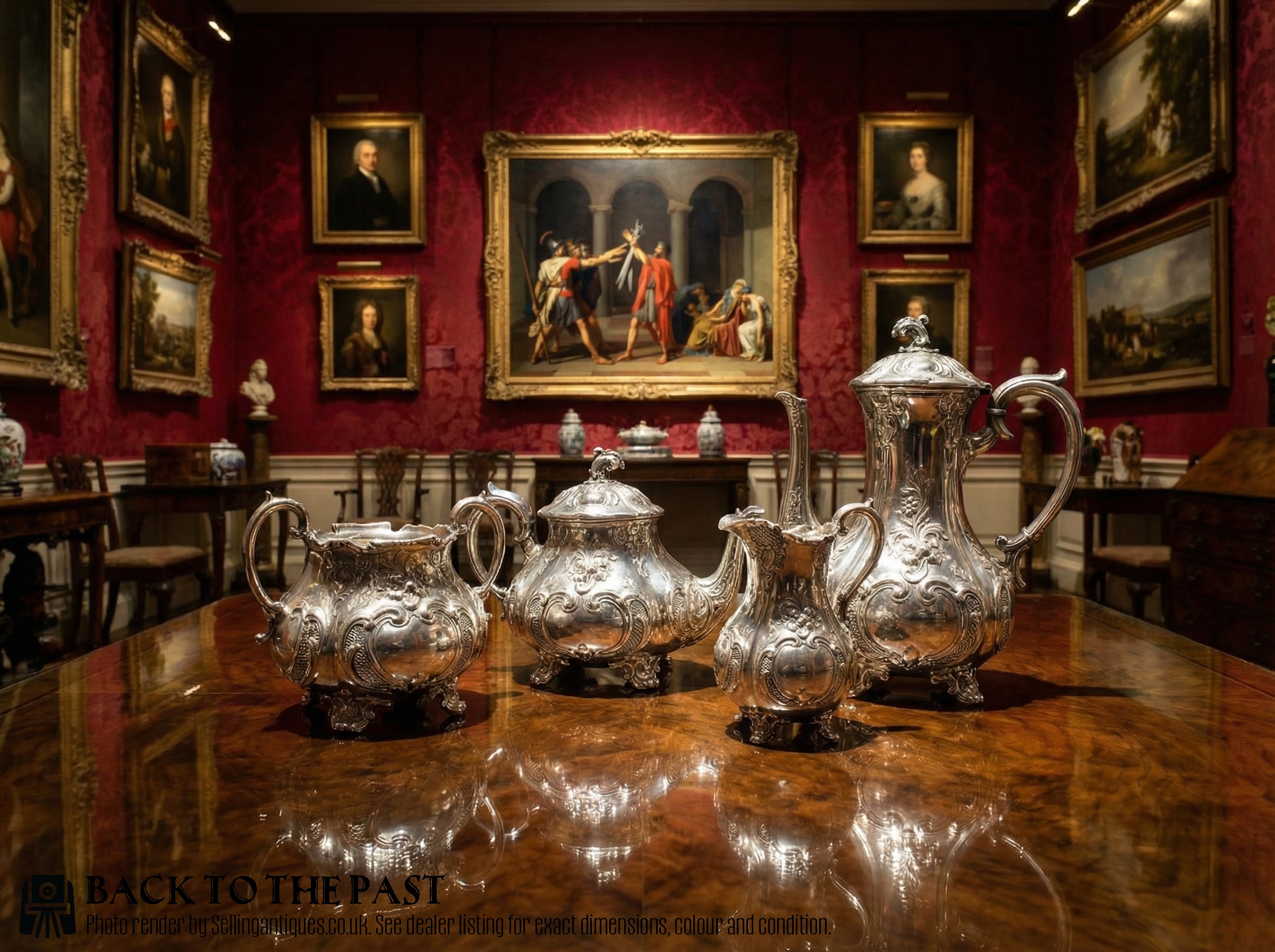
How They Were Made
Silversmiths utilised traditional hammering, casting, and soldering techniques to shape sterling silver and silver plate over copper or nickel bases. Surfaces frequently received hand-engraved floral designs or elaborate repoussé work in revival styles.
Insulating mounts on handles incorporated materials like wood, ebonised wood, ebony, and bone to prevent heat transfer during pouring.
Listings feature 1900, 1910, Edwardian, and 19th Century periods alongside wood, bone, silver plate, and sterling silver materials.
What Varies in Quality
Substantial gauge metal and crispness in hand-engraving distinguish the finer productions from standard commercial wares. The weight of the silver and the precision of the hinged lid assembly mark the tier of the piece.
Complete matched services with original fitted cases represent the higher end of the range, while individual plated pots and miniature items demonstrate varying degrees of workshop elaboration.
Walker and Hall·Harrison Brothers and Howson·William Vale·Elkington and Co·Mappin and Webb·Harry Atkin
The Edwardian Silver Coffee Pot Glossary
- Silver Plate
- A thin layer of silver fused or electroplated onto a base metal such as copper or nickel. This technique allowed manufacturers to produce domestic wares at a lower cost than solid silver.
- Sterling Silver
- An alloy consisting of pure silver and other metals, usually copper, standardised at a high degree of purity. British pieces commonly bear hallmarks indicating this standard.
- Electroplated Nickel Silver
- A copper, nickel, and zinc alloy coated with a layer of pure silver using an electrical process. It provided a durable and bright surface for utilitarian items.
- Ebonised Wood
- Timber treated with a dark stain or finish to imitate ebony. Makers used this material on handles and finials to contrast with polished silver.
- Café Au Lait Pots
- Vessels designed specifically for serving coffee with hot milk simultaneously. They often appear as matched pairs within the evidence.
Edwardian Silver Coffee Pot: Frequently Asked Questions
How do I clean an edwardian silver coffee pot?
Use a soft cloth and a dedicated silver polish designed to remove tarnish without abrading the metal surface. Avoid harsh chemical dips that strip away desirable patination on older pieces.
Wash the pot gently in warm soapy water afterwards and dry it immediately with a lint-free cloth to prevent water spots.
Are these pots safe for daily use?
Many solid silver and plated pots remain structurally sound for serving hot beverages. Inspect the interior lining and handle insulators for integrity before regular use.
Silver plate can wear thin over decades of cleaning, so frequent use might accelerate the loss of the silver layer on older items.
What is the difference between solid silver and silver plate?
Solid sterling silver consists of the same precious metal all the way through and carries official assay office hallmarks. Silver plate uses a base metal core covered by a thin external coating of silver.
Objects made of solid silver generally retain greater intrinsic worth and longevity over time.
How can I tell if a piece is Edwardian?
Look for British hallmarks that include date letters corresponding to the reigns of Edward VII, alongside distinct design characteristics typical of the early twentieth century. Stylistic markers often combine late Victorian heaviness with lighter Edwardian neoclassical or rococo revival motifs.
Comparing the maker's mark and registry numbers against historical records helps confirm the exact decade of manufacture.