


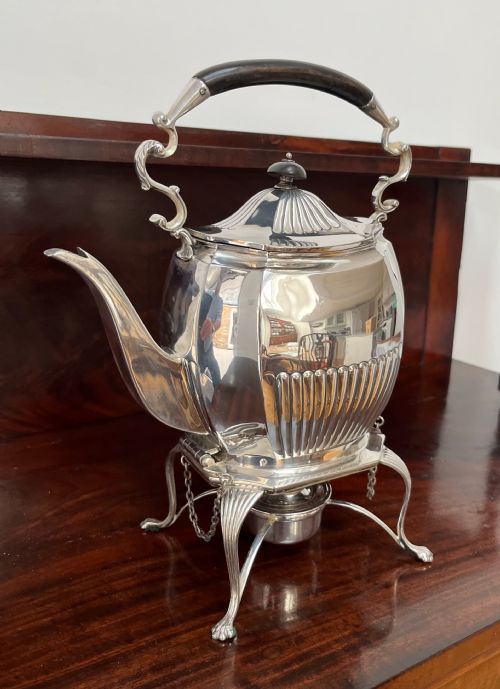


Edwardian Plated Tea Service
An edwardian plated tea service brings the elegance of early twentieth century entertaining to the modern table through bright silver and balanced forms.

Edwardian Plated Tea Service
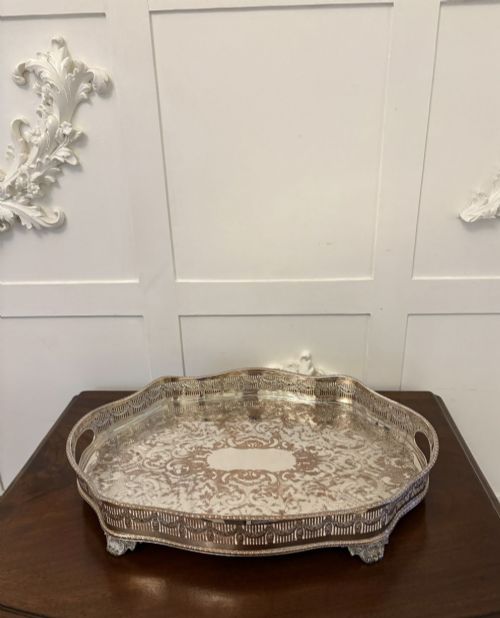
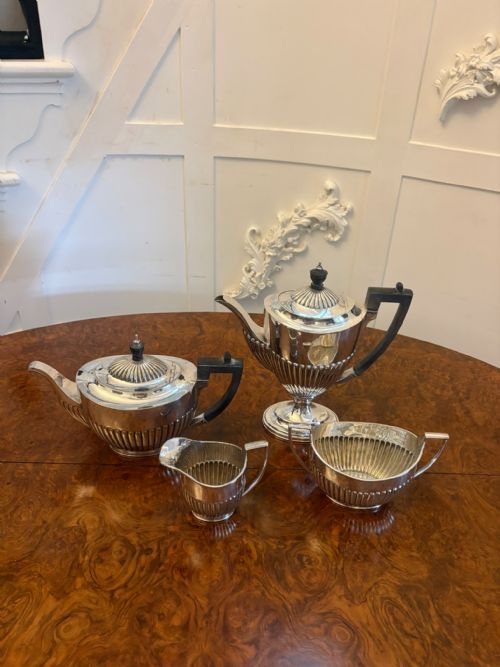
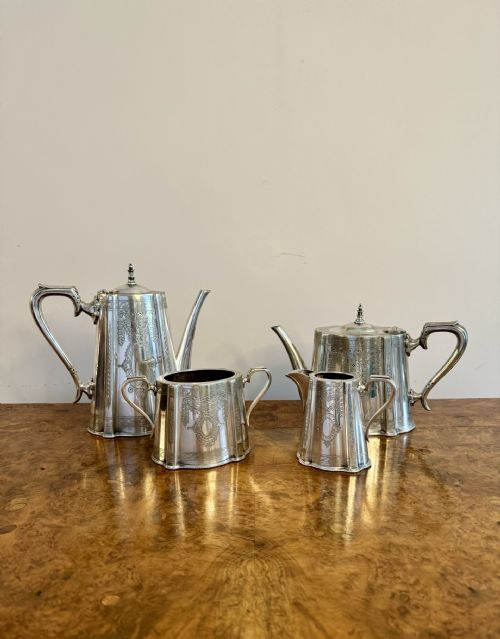
When you search for an edwardian plated tea service, you find matching sets of pots, sugar basins and milk jugs produced during the Edwardian period and adjacent decades. Most sets on this page consist of three or four pieces, often accompanied by spirit kettles on stands or large serving trays.
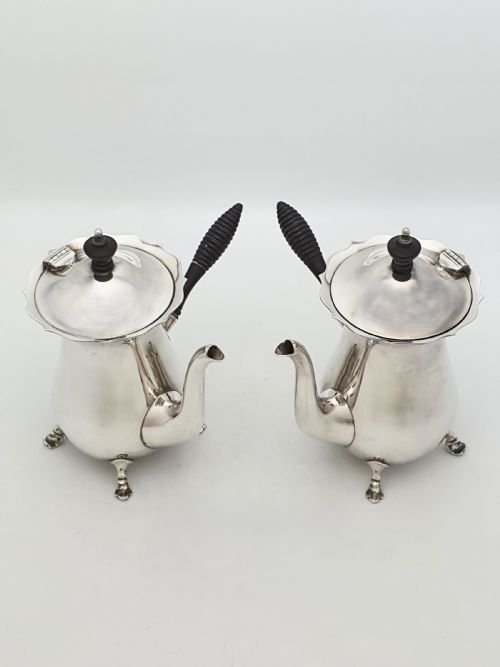
The forms span simple rounded bodies to ornate vessels with chased grapevine detailing or Edwardian Rococo Revival scrolling. Alongside standard metal sets, you encounter related dining table ceramics and specialised café au lait pots.
The dominant material standard is electroplated nickel silver, commonly known as EPNS, which provided households with the bright appearance of solid silver at a more accessible cost.
Materials and technique
Maker workshops formed the body of each pot and kettle from base metal alloys before applying a layer of silver via electrolysis, a process that created a durable and lustrous metallic skin.
To protect users from the heat of boiling water, makers insulated the handles using inserts of ebonised wood, ebony or bone, secured neatly to the metal mounts.
Decoration relied on hand chasing, engraving and applied cast borders, creating textured surfaces that caught the light around the rims and handles.
Listings feature items dated across the Edwardian era, alongside pieces from the 1920s and 1930s reflecting later Art Deco influences.
What separates the best from the rest
Quality in an edwardian plated tea service rests on the crispness of the chased ornament and the weight of the underlying metal, which gives the vessels a reassuring balance in the hand.
The integrity of the original silver plating across high-wear points like spouts and handles dictates the visual success of a set, alongside the tightness of the lid hinges and the correct insulation of the handles.
Walker and Hall·Fenton Brothers·Goldsmiths and Silversmiths Co
The Edwardian Plated Tea Service Glossary
- Electroplated Nickel Silver
- A base alloy of copper, nickel and zinc coated with a thin layer of pure silver through an electrical bath. This method underpinned the mass production of domestic tableware in the twentieth century.
- Spirit Kettle
- A water kettle mounted upon a metal stand above a small alcohol burner. These pieces kept water hot throughout lengthy drawing room gatherings.
- Café Au Lait Pot
- A specialised dual vessel or matched pair designed for pouring coffee and hot milk simultaneously. They appear occasionally in larger breakfast and tea configurations.
- Gallery Tray
- A serving tray featuring a pierced or solid metal upright border around the perimeter. The gallery prevented items from sliding off during service.
Edwardian Plated Tea Service: Frequently Asked Questions
How many pieces make a full set?
A standard service usually comprises a teapot, a sugar basin and a milk jug, occasionally expanding to four pieces with the addition of a hot water pot.
Larger configurations may also incorporate matching trays, slop bowls or spirit kettles on stands.
Can I use these for daily tea?
These silver plated sets were built for regular household use and function reliably for serving hot beverages today.
Hand washing with mild detergent preserves the plating and protects the internal insulation of the handles.
What is EPNS?
EPNS stands for electroplated nickel silver, which served as the primary base material for quality British tableware from the late Victorian era onward.
It provided the bright aesthetic of solid silver without the prohibitive expense.
How do I polish plated silver?
Maintenance requires a dedicated liquid or cream silver polish applied with a soft cloth, avoiding abrasive pads that can wear through the thin silver layer.
Rinsing the pieces thoroughly in warm water removes residual polish from engraved crevices and decorative handles.