


Vintage Silver Plated Tea Set
A vintage silver plated tea set brings the elegance of Edwardian and Art Deco hosting directly to the modern table.

Vintage Silver Plated Tea Set
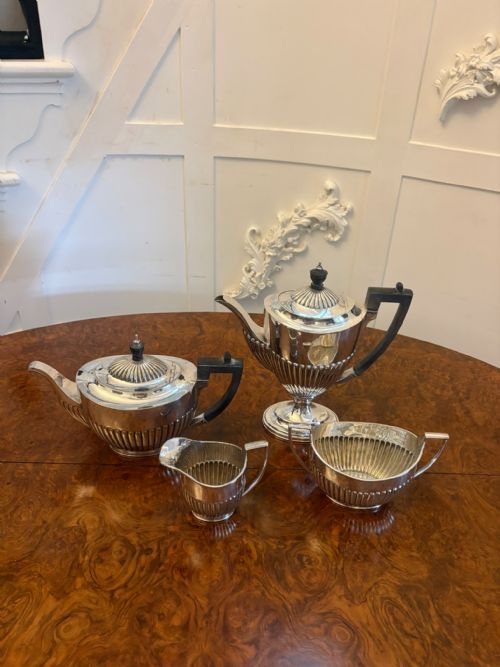
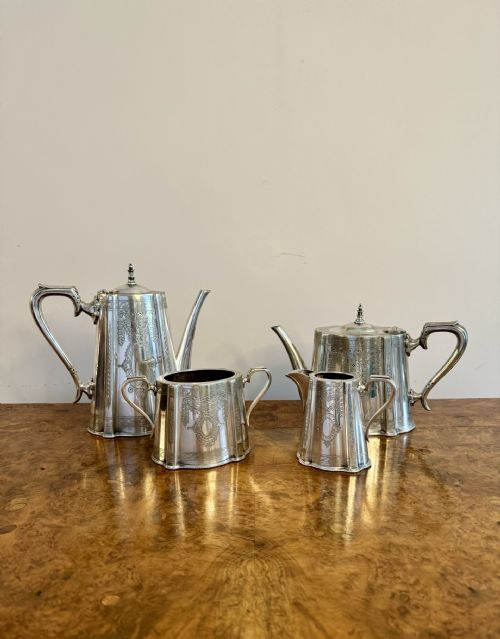
A vintage silver plated tea set comprises matching vessels for serving hot beverages, most frequently encountered in Edwardian and Art Deco configurations spanning three to six pieces. The pieces usually incorporate teapots, coffee pots, sugar bowls, and cream jugs, occasionally accompanied by specialist containers.
The dominant offerings on this page date from the 1900s and 1910s, reflecting Edwardian taste alongside later 1930s Art Deco examples. Makers such as Walker and Hall and the Goldsmiths and Silversmiths Co. feature prominently among the English silver plate traditions represented here.
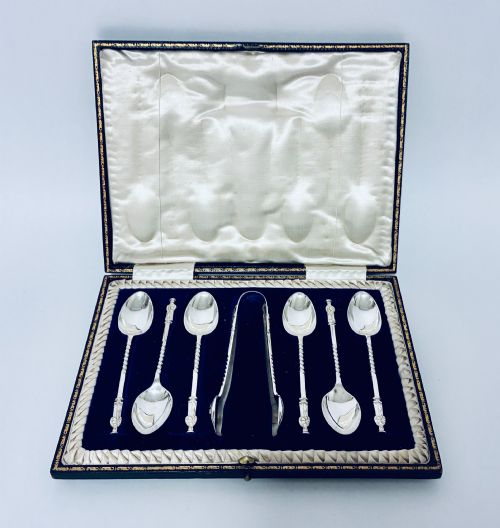
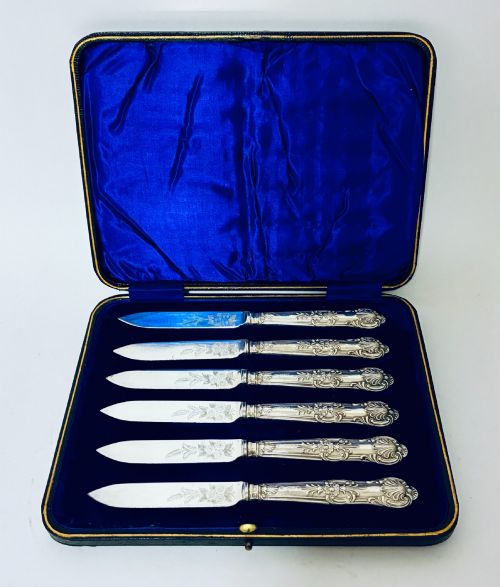
Beyond standard beverage services, related table items like sugar bowls, cream jugs, and apostle spoon sets appear within the wider selection. These groupings provide a complete domestic display rooted in early twentieth-century dining customs.
Assessing quality
The distinction between standard services and exceptional items rests upon the crispness of ornamentation and the weight of the underlying metal. Pieces bearing identifiable maker marks from established silversmiths demonstrate higher production standards.
Subtleties in handle attachment, hinge durability, and the preservation of the original silver plate layer dictate the overall merit of a service. Well-maintained surfaces retain their reflective qualities without excessive wear down to the base metal.
Materials recorded across the inventory include silver plate, electroplated nickel silver, ebonised wood, and velvet.
Walker and Hall·Mappin and Webb·Goldsmiths and Silversmiths Co
The Vintage Silver Plated Tea Set Glossary
- Electroplated nickel silver
- A process where a layer of silver is deposited onto a nickel alloy base via electrical current. This technique became the standard method for producing durable domestic tableware.
- Sheffield plate
- An earlier method of fusing a thin sheet of silver to a thicker copper base before rolling. This technique predates modern electroplating methods found in later sets.
- Edwardian
- A period spanning from the death of Queen Victoria in 1901 to the First World War in 1914. Sets from this era often display ornate revival styles and generous proportions.
- Art Deco
- A design style emerging in the 1920s and 1930s emphasising streamlined geometric forms. Tea sets from this period substitute traditional curves for sharp angles and streamlined silhouettes.
- Ebonised wood
- Timber treated to resemble ebony, utilised for teapot handles and insulators. This material provides a practical grip that remains cool during use.
Vintage Silver Plated Tea Set: Frequently Asked Questions
How many pieces make a complete tea set?
A standard set typically includes a teapot, a sugar bowl, and a milk or cream jug, forming a core three-piece service.
Larger configurations often expand to four pieces by adding a dedicated hot water pot or coffee pot, matching the formal dining requirements of the Edwardian era.
Can I use my vintage silver plated tea set daily?
These sets are structurally robust enough for regular use, provided they receive gentle hand washing rather than dishwasher cleaning.
Careful handling protects the underlying silver plate from abrasive wear and preserves the ebonised wooden insulators on handles.
How do I date a silver plated tea service?
Dating relies heavily on style markers, such as the exuberant ornamentation of Edwardian pieces versus the streamlined geometry of 1930s Art Deco.
Maker stamps and registry numbers stamped onto the base of the metalware provide further clues to the exact manufacturing decade.
What is the cube tea set?
The Cube tea set is a compact, space-saving English design patented in the early twentieth century. Its distinct shape allows the pot and associated vessels to nest together efficiently.
Such sets represent a departure from traditional curving silhouettes, appealing to modern domestic spaces of the 1920s.