





Silver Plated Table Vases
Silver plated table vases bring gleaming presence to dining tables, combining sturdy base metals with bright silver surfaces for timeless display.
Silver Plated Table Vases
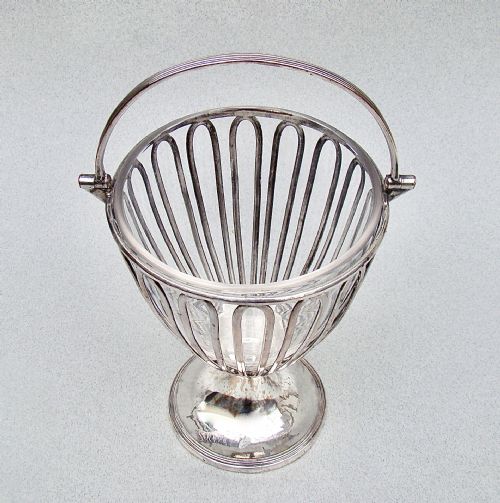
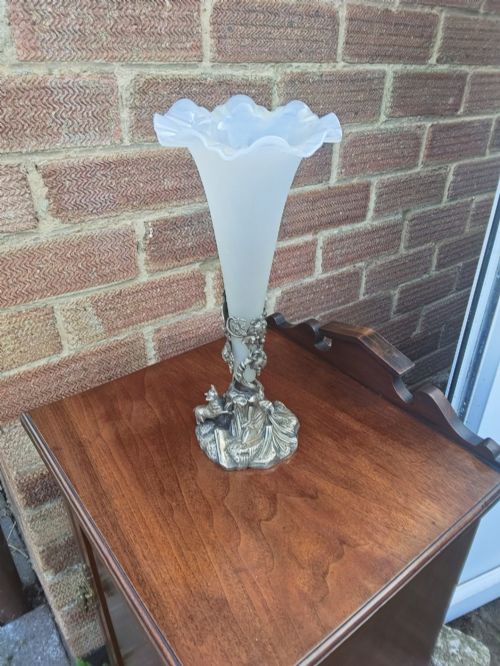
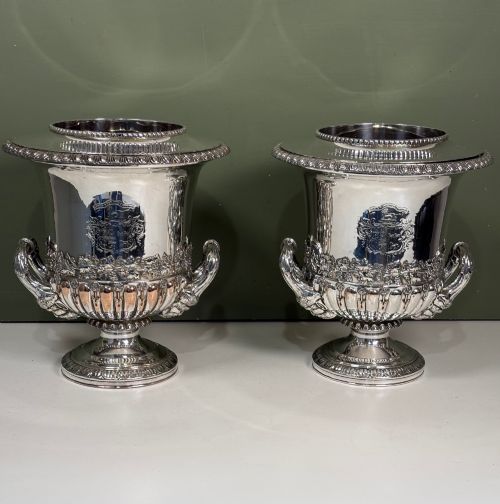
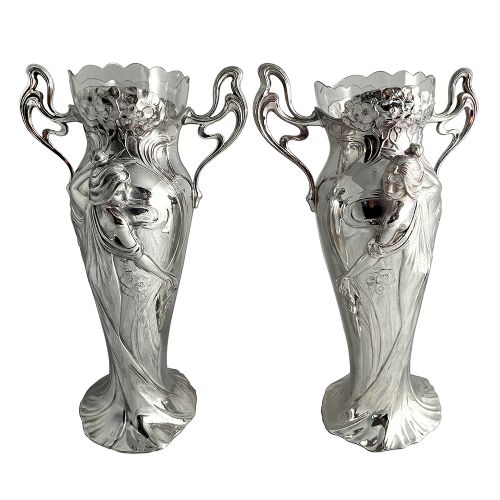
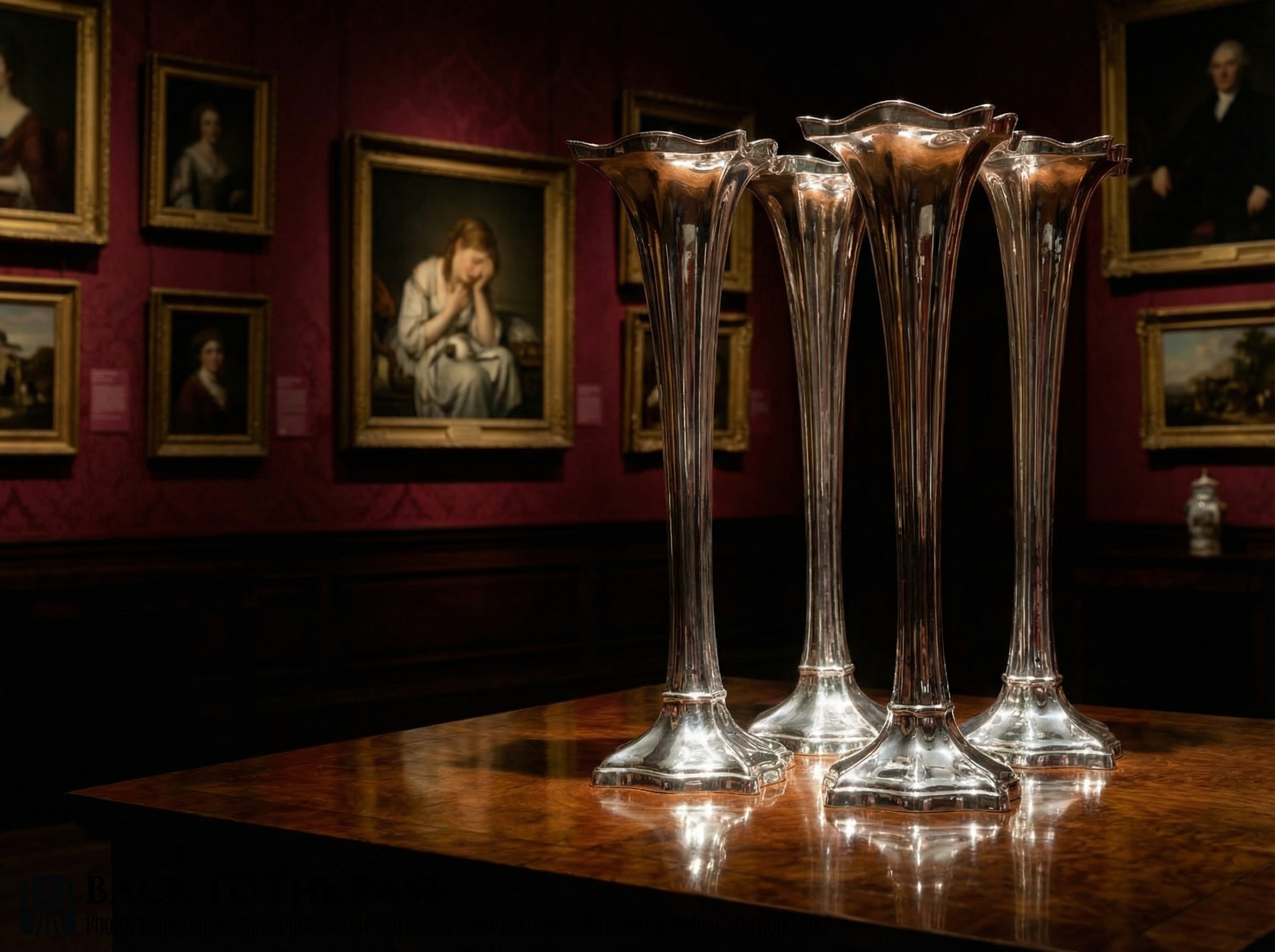
When you search for silver plated table vases, you encounter an array of vessels designed for floral display and table ornamentation. These pieces range from towering epergnes and sets of trumpet vases to matched pairs of wine coolers and decorative garnitures.
The selection on this page spans the nineteenth century through the Edwardian era, taking in Victorian, Arts and Crafts, and Art Nouveau styles. You are most likely to meet multi-vase epergnes featuring removable glass inserts or sturdy trumpet forms intended for formal dining tables.
Materials and construction
Makers built these vessels using a durable base metal or white metal foundation, often employing silver plate or electroplated nickel silver (EPNS) to achieve a bright metallic exterior. Some early examples utilise old Sheffield plating techniques, fusing a thin layer of silver to a copper core.
Glass forms an integral part of the construction, appearing as opaque glass, pearlescent bowls, or cut glass inserts held securely within metal frames. Artisans embellished the metallic surfaces through etching, figural casting, and Neoclassical revival detailing.
Silver Plated Table Vases Retail Price Guide 2026
Typical asking prices for silver plated table vases among the pieces listed under this phrase on Sellingantiques today, from the lower quarter to the upper quarter. They describe what is for sale here now, not the wider market.
The selection includes versatile forms ranging from single wine coolers to complex epergnes with removable glass trumpet vases.
Assessing quality and craftsmanship
Quality rests heavily on the crispness of the casting and the integrity of the underlying metalwork, particularly where figural maidens or complex foliage adorn the piece. Heavier gauge metal provides better balance and structural stability for taller vessels and multi-stem epergnes.
The relationship between the metal stand and its glass component dictates the overall success of the object. Superior examples display harmonious proportions where etched or pearlescent glass inserts fit their silver plated mounts precisely.
Fox & Grapes·Walker & Hall·WMF·Daniel & Arter
The Silver Plated Table Vases Glossary
- Epergne
- A large table centrepiece featuring a central bowl with multiple branching Trumpet Vases for holding flowers or fruit. These impressive tiered vessels dominated formal dining settings during the Victorian period.
- EPNS
- Electroplated nickel silver, a common base material where a thin layer of silver is applied via an electrical current. This method became widespread for manufacturing domestic tableware from the mid nineteenth century onwards.
- Sheffield Plate
- An early method of fusing a thin sheet of silver to a thicker copper ingot before rolling them into sheets. Pieces made this way often reveal faint traces of copper showing through the worn highlights.
- Garniture
- A matching set of ornamental vessels, usually numbering three or more, designed to be displayed together on a mantelpiece or sideboard. They typically share identical motifs and graduating proportions.
- Wine Cooler
- A deep vessel designed to chill bottles at the table, frequently constructed with heavy silver plating on a robust base metal core. Many feature twin handles and generous proportions to hold ice and water.
Silver Plated Table Vases: Frequently Asked Questions
How were silver plated table vases used?
These vessels served primarily as decorative centrepieces for formal dining tables, holding cut flowers, fruit, or foliage. Epergnes and trumpet vases allowed hosts to display arrangements at eye level without obstructing conversation across the table.
Wine coolers and faux urns fulfilled practical and decorative roles during large gatherings, keeping bottles chilled while enhancing the symmetry of the table setting.
How do I date a silver plated vase?
Dating relies on stylistic clues, manufacturing marks, and the combination of materials used in the piece. Victorian examples often feature heavy ornamentation and etched glass, while Arts and Crafts pieces show simpler, hand-finished surfaces.
Art Nouveau vessels frequently incorporate flowing figural elements like maiden motifs, characteristic of the turn of the twentieth century. Maker marks stamped into the base also help narrow down the production era.
What is the difference between an epergne and a trumpet vase?
An epergne is a complex, multi-component centrepiece that combines a central bowl with several detachable arms and smaller vases. This tiered structure allowed for elaborate, cascading floral arrangements on large dining tables.
A trumpet vase is a standalone vessel with a flared, trumpet-like profile, usually displayed in pairs or matching sets rather than as a single towering centrepiece.
How do I care for silver plated tableware?
Care requires gentle cleaning with a soft cloth and a reputable silver polish formulated for plated items to avoid wearing through the thin silver layer. Regular, light dusting prevents tarnish from building up in the recessed details of etched glass and cast mounts.
Glass inserts should be washed separately in warm, soapy water and dried thoroughly before being returned to their metal frames.
What styles are common in antique silver plated vases?
The listings feature several distinct design movements spanning the nineteenth and early twentieth centuries. Victorian and Edwardian pieces lean towards decorative etched glass and formal symmetry.
Arts and Crafts items showcase honest construction and simpler lines, whereas Art Nouveau pieces embrace organic, flowing forms with figural elements. Neoclassical revival styles draw inspiration from classical urns and antique motifs.