

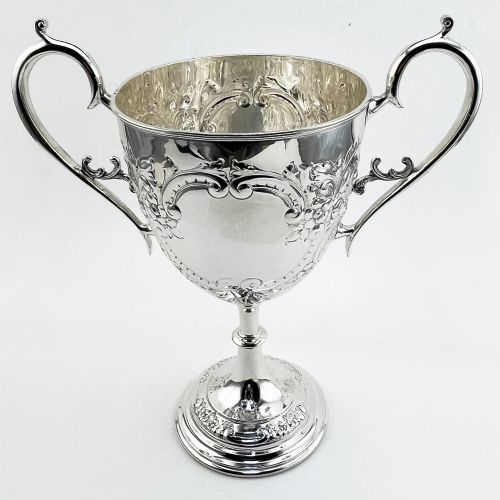
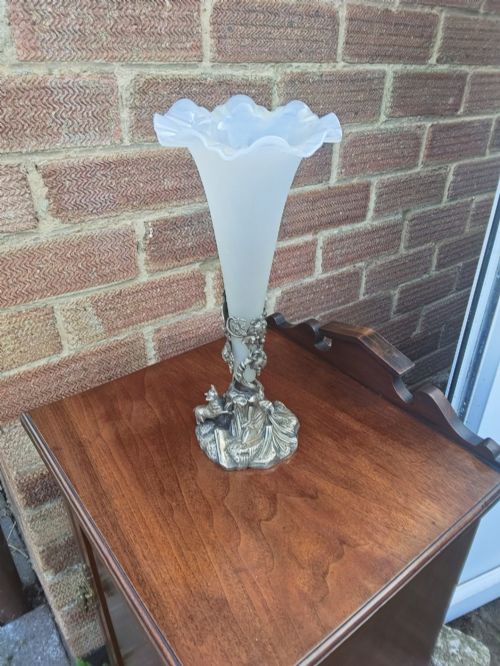


Silver Plated Centrepiece Vase
These silver plated centrepiece vase designs are decorative vessels crafted to anchor a dining table with height and shine.
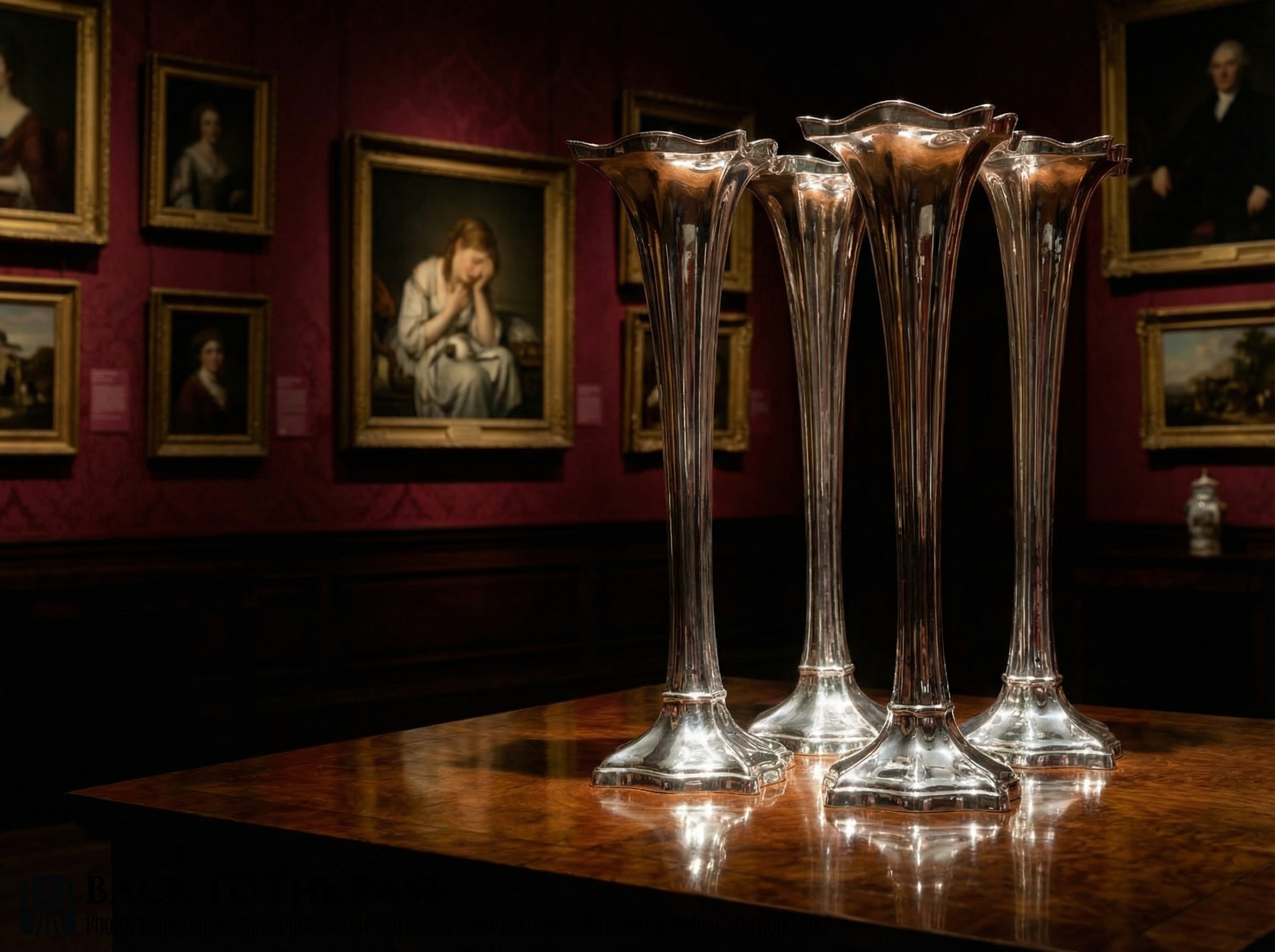
Silver Plated Centrepiece Vase
A silver plated centrepiece vase combines a heavy metal stand with glass inserts or intricate framing to hold flowers on a dining table or sideboard. These pieces originate across the nineteenth and early twentieth centuries, spanning Victorian, Edwardian, and Art Nouveau periods.
You will most commonly encounter multi-armed epergnes and tall pedestal vessels on this page, often paired with cut, opaque, or vaseline glass. Maker-marked examples and matched pairs occasionally appear alongside single large presentation pieces.
The forms range from simple tapered trumpet holders to elaborate multi-vessel centerpieces supported by white metal or electroplated nickel silver frames. Each version reflects the dining customs and decorative tastes of its respective decade.
How they were made
Makers formed the structural frames using white metal, electroplated nickel silver, or Old Sheffield plate, applying a thin layer of silver over a base metal foundation. This technique allowed workshops to achieve the appearance of solid silver at a fraction of the weight and cost.
Glass components were blown, moulded, or cut separately before being fitted into the metal mounts, often featuring etched patterns or pearlescent finishes. Many vessels utilised removable glass inserts to facilitate cleaning and flower arrangement.
Silver Plated Centrepiece Vase Retail Price Guide 2026
Typical asking prices for silver plated centrepiece vase among the pieces listed under this phrase on Sellingantiques today, from the lower quarter to the upper quarter. They describe what is for sale here now, not the wider market.
Victorian diners must have navigated towering floral epergnes just to see the person sitting opposite them across the mutton.
What varies in quality
Quality depends upon the crispness of the cast mounts and the thickness of the silver application over the base metal. Finer examples display deep, hand-chased botanical motifs rather than shallow stamped decoration.
The integrity and weight of the associated glass inserts distinguish standard production items from superior workshop output. Original, undamaged glass elements that fit their mounts precisely elevate the overall character of the piece.
Fox & Grapes·Walker & Hall·Joseph Rodgers & Sons·Daniel & Arter·Deykin & Sons
The Silver Plated Centrepiece Vase Glossary
- Epergne
- A large table centrepiece featuring a central trumpet vase surrounded by smaller hanging baskets or arms. These multi-vessel constructions dominated formal Victorian dining tables.
- EPNS
- Electroplated nickel silver. This designates a base metal of copper, nickel, and zinc coated with a layer of pure silver through an electrical process.
- Old Sheffield Plated
- An early method of fusing a thin sheet of silver to a copper ingot before rolling them into sheets. This technique predates modern electroplating.
- Vaseline glass
- A type of glass containing uranium dioxide that produces a distinctive yellow-green colour under natural light. It frequently appears in late nineteenth-century table vessels.
- White metal
- An alloy of low-melting metals such as tin, lead, or antimony used as a base for silver plating. It provides stability for intricate cast decorative mounts.
Silver Plated Centrepiece Vase: Frequently Asked Questions
How were silver plated centrepieces used?
These vessels held fresh flowers and fruit to decorate formal dining tables during the Victorian and Edwardian eras. Hosts positioned them centrally to display floral arrangements and catch candlelight.
They served as status symbols during large dinner parties, reflecting the fashion for elaborate table displays. The removable arms and baskets allowed servants to rearrange the floral contents between courses.
How do I clean a silver plated vase?
Wash the piece gently in warm, soapy water using a soft cloth, taking care around plated edges. Avoid harsh abrasive dips that strip the thin silver layer from the base metal.
Dry the metal thoroughly with a lint-free cloth to prevent water spots. Store glass components separately if the stand is disassembled for transport.
Are the glass inserts usually original?
Many surviving pieces retain their original blown or cut glass inserts, though replacements are common due to accidental breakage over time. Examining the fit and wear patterns helps determine if the glass belongs to the mount.
Look for matching manufacturing traits such as pontil marks on the base of blown glass vessels. Original vaseline or opaque glass inserts add significant historical value to a centerpiece.
How do I date a silver plated epergne?
Examine the style of the cast mounts, as Victorian pieces often feature heavy floral scrolls while Art Nouveau designs display whiplash lines. Maker marks stamped on the base provide direct links to active workshop years.
Techniques also shift from early fused plating methods toward later electroplated nickel silver production by the end of the nineteenth century. Comparing form and material against documented maker periods narrows the decade of manufacture.