



Silver Fluted Vases
Silver fluted vases bring architectural rhythm to a table, pairing reflective metal surfaces with upright floral forms from the Georgian to the Art Deco eras.
Silver Fluted Vases
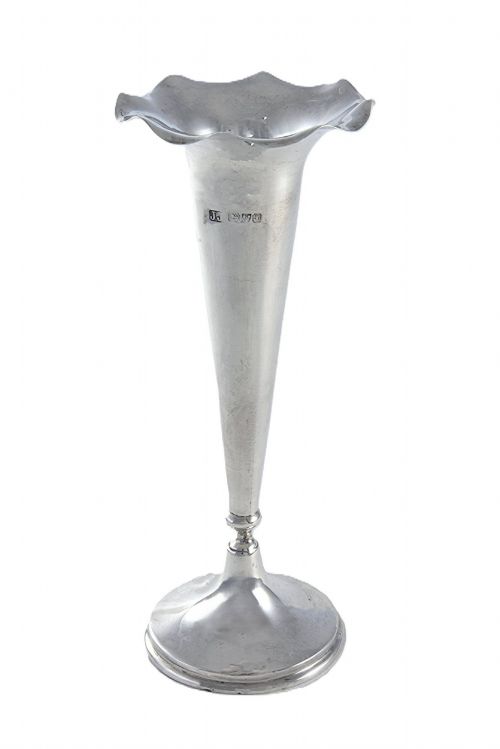
Silver fluted vases encompass upright vessels shaped with vertical grooves, spanning periods from George III solid silver down to Art Deco chrome. These pieces include single trumpet forms, paired garnitures, and multi-branch epergnes.
The versions most frequently met on this page date from the Victorian and Edwardian periods, typically rendered in sterling silver or silver plate. They range from small posy holders to tall decorative centerpieces.
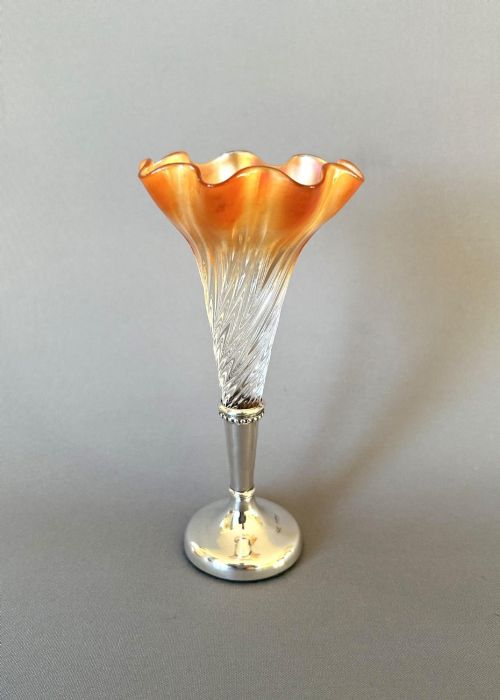
Makers utilised various supporting materials alongside metal, producing hybrid forms such as glass flutes fitted with sterling silver bases. The inventory also records related objects like tea caddies and complex five-trumpet epergnes.
Materials and construction
Metals employed across these pieces include solid sterling silver, electroplated nickel silver, base metal, and chrome. Smithing and plating techniques created the signature vertical fluting that catches the light along the trumpet bodies.
Makers combined silver with blown glass to form dual-material vessels, securing glass flutes into solid silver bases. Silver plate and chrome offered durable alternatives to solid sterling silver during later production phases.
Silver Fluted Vases Retail Price Guide 2026
Typical asking prices for silver fluted vases among the pieces listed under this phrase on Sellingantiques today, from the lower quarter to the upper quarter. They describe what is for sale here now, not the wider market.
Judging quality in fluted vessels
Quality rests upon the crispness of the vertical fluting and the integrity of the metalwork, whether solid sterling or plated over base metal. Substantial gauge silver maintains its structural form better than thinner alternatives.
Sets and pairs demonstrate higher workshop ambition than single items, particularly when matching multiple trumpet vases or four-branch epergnes. Hallmarks on solid silver pieces provide precise accountability for date and origin.
The Silver Fluted Vases Glossary
- Fluting
- Vertical parallel grooves cut or pressed into the body of a vessel. This decorative technique adds depth and linear emphasis to trumpet forms.
- Epergne
- An ornamental centrepiece featuring a central dish or vase surrounded by multiple branching holders. These tiered constructions often support several trumpet flutes.
- Trumpet vase
- An upright vessel that flares outward from a narrow base toward a wide rim. The profile resembles the bell of a musical instrument.
- Sterling silver
- An alloy containing a high proportion of pure silver combined with other metals for strength. British pieces often bear distinct hallmarked stamps verifying this standard.
- Electroplated nickel silver
- A base metal alloy coated with a layer of pure silver through an electrical process. This method provided the appearance of solid silver at a lower production cost.
Silver Fluted Vases: Frequently Asked Questions
What periods do these vases cover?
The pieces span multiple eras, beginning with Georgian examples from the eighteenth century and moving through Victorian, Edwardian, and Arts and Crafts periods. Later twentieth-century manufacturing brings in Art Deco and Vienna Secessionist designs.
Materials shift across these timelines, transitioning from early solid sterling silver to silver plate, chrome, and combined glass-and-silver constructions.
How do single vases differ from epergnes?
Single vases stand alone as individual trumpet or fluted vessels intended for modest floral displays. Epergnes are complex centrepieces that branch out to hold multiple flutes simultaneously.
Multi-branch epergnes require larger display spaces and often feature detachable trumpet sections for easier arrangement and cleaning.
How do I care for silver and plated surfaces?
Regular dusting with a soft cloth prevents surface grime from settling into the vertical flutes and recesses of the metal. Polishing should be done sparingly with appropriate creams to preserve hallmarks and plating.
Glass inserts require gentle hand washing separately from their metal bases to avoid accidental damage to fitted rims.
How can I distinguish solid silver from plated pieces?
Solid silver items generally display official hallmarks indicating the silver standard, assay office, and date letter. Plated items rely on base metal or nickel silver underneath the silver coating.
Weight and touch also offer clues, as solid sterling silver feels denser and maintains an even temperature compared to plated base metals.