

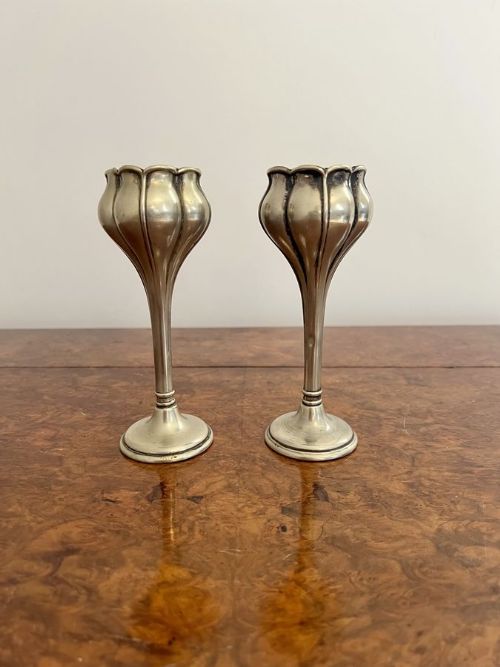




Edwardian Silver Plated Vases
Edwardian silver plated vases bring undeniable grace to a room, combining slender metal mounts with brilliant cut glass for a striking display.
Edwardian Silver Plated Vases
When you search for edwardian silver plated vases, you enter a field defined by slender spill vases, tall display vessels, and elaborate epergnes. These pieces emerge predominantly from the Edwardian period, alongside related examples spanning the late nineteenth century and the early decades of the twentieth.
The forms you encounter most frequently on this page include pairs of spill vases, pedestal centrepieces, and figural designs rooted in the prevailing aesthetic movements of the time. Makers utilised durable base metals coated in a layer of silver, often pairing the metalwork directly with moulded or cut glass vessels.
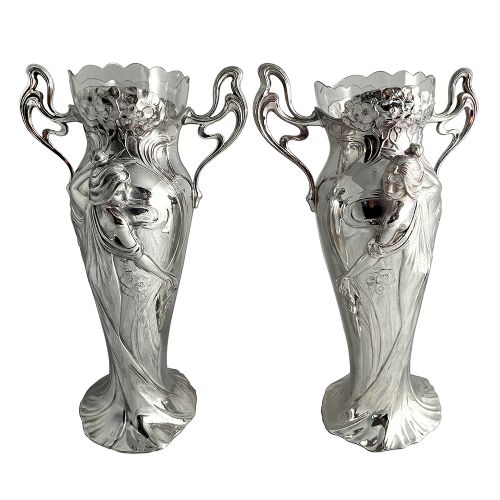
Originating from an era of confident table decoration, these vessels range from simple trumpet shapes to complex multi-part epergnes and figural maiden stands. The stylistic influence stretches from traditional Edwardian patterns to bold Art Nouveau sweeps and Vienna Secessionist geometry.
Manufacturing and materials
Makers constructed these vessels using electroplated nickel silver or silvered pewter as a durable foundation for the silver coating. This metallic structure provided the rigidity needed for tall stems, slender spill vases, and heavy centrepieces.
Many examples incorporate heavy cut glass inserts, which required skilled glass-cutting techniques to catch the light effectively. Metal mounts were then fitted precisely around or inside the glass components to create cohesive decorative vessels.
Edwardian Silver Plated Vases Retail Price Guide 2026
Typical asking prices for edwardian silver plated vases among the pieces listed under this phrase on Sellingantiques today, from the lower quarter to the upper quarter. They describe what is for sale here now, not the wider market.
Several pieces feature figural maidens cast in silvered pewter, leaning gracefully into their decorative duties as part of the vase structure.
Judging quality and design
Quality in these pieces is dictated by the crispness of the casting and the artistic ambition of the design, particularly in figural or organic Art Nouveau motifs. Finer vessels show deliberate attention to proportion and detail across both the metal mounts and the glass liners.
The integrity of the plated surface and the weight of the underlying metal also distinguish superior examples from standard production pieces. Substantial gauge metal ensures that tall vases and centrepieces maintain stability and resist denting over decades of use.
WMF·Joseph Rodgers & Sons·Daniel & Arter
The Edwardian Silver Plated Vases Glossary
- EPNS
- Electroplated nickel silver. This designation indicates a base metal of nickel silver covered with a thin layer of pure silver through an electrical process.
- Spill vase
- A tall, narrow container designed originally to hold wooden spills used for lighting fires or pipes. On the dining table, they evolved into slender vessels for single blooms.
- Epergne
- An elaborate table centrepiece featuring a central bowl or basket surrounded by smaller hanging or branching receptacles for fruit, sweets, or flowers.
- Silvered pewter
- A tin-based alloy coated with a silver layer. This material allowed makers to cast complex, organic shapes with fluid contours typical of the period.
Edwardian Silver Plated Vases: Frequently Asked Questions
What are edwardian silver plated vases?
These items are decorative vessels created to hold cut flowers or adorn dining tables during the early twentieth century and surrounding decades.
They combine metal plating techniques with glass components, reflecting the design tastes of the Edwardian era and the Art Nouveau movement.
How were epergnes used?
Epergnes served as grand centrepieces on dining tables, holding fruit, sweetmeats, or floral arrangements for formal meals.
Their branching design allowed hosts to display multiple stems or decorative elements from a single stable base.
How do I clean silver plate?
Cleaning requires gentle care using a mild, non-abrasive silver polish and a soft cloth to preserve the thin metallic layer.
Harsh scrubbing should be avoided, especially near glass joints and where the plating might be thin from age.
Are glass liners original?
Many surviving pieces retain their matching cut glass or pearlescent glass inserts, which were custom-fitted to the metal frames.
Matching the pattern and tint to the metal mount helps confirm that the components belong together historically.