




Silver Plated Dining Centrepiece
When you choose a silver plated dining centrepiece, you select a striking focal point for the table created across the nineteenth and twentieth centuries.
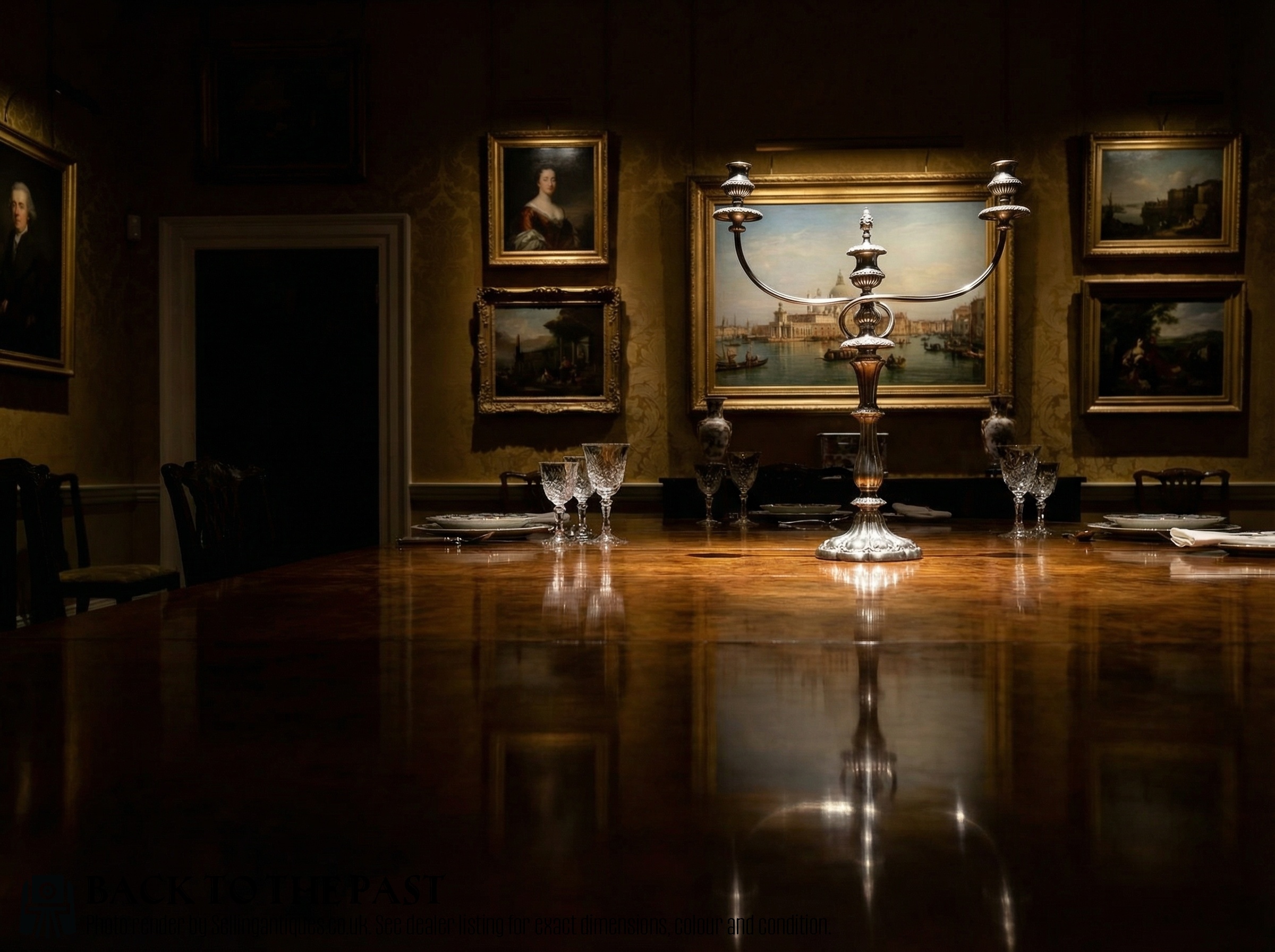
Silver Plated Dining Centrepiece
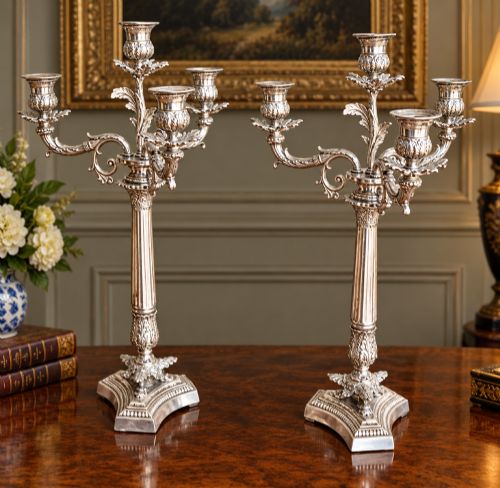
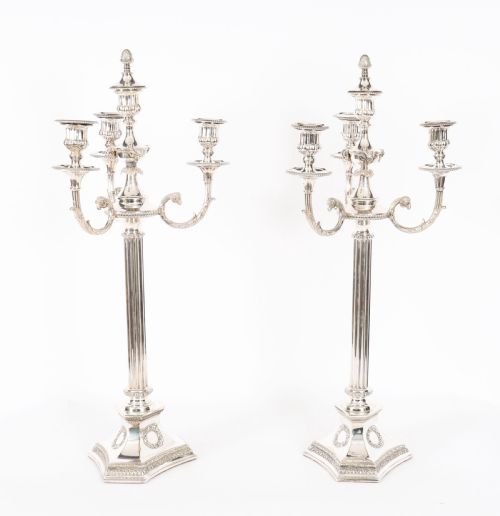
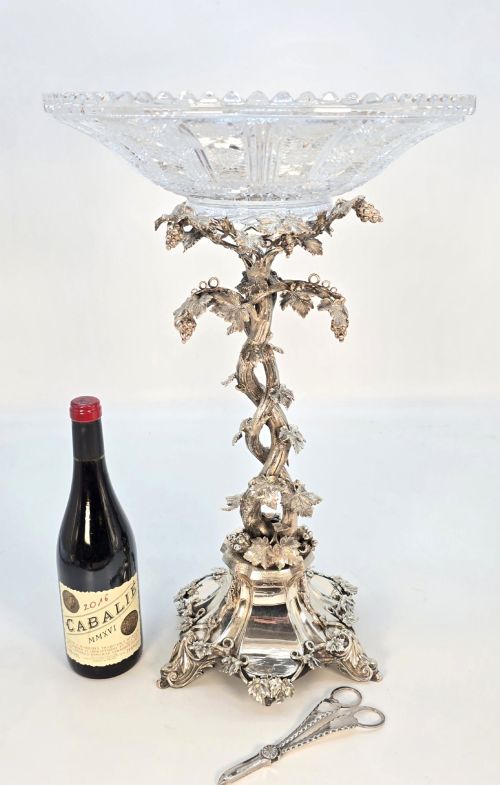
A silver plated dining centrepiece encompasses elaborate multi-light candelabras, grand cut glass épergnes, and sculptural table decorations designed to anchor a formal dining arrangement. These objects emerge most frequently from Victorian and Edwardian workshops, alongside earlier Georgian and Regency examples produced in Sheffield and London.
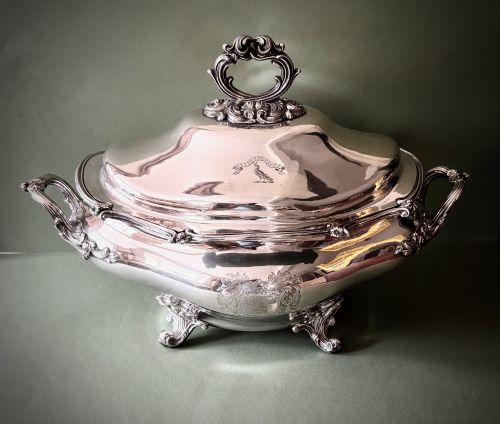
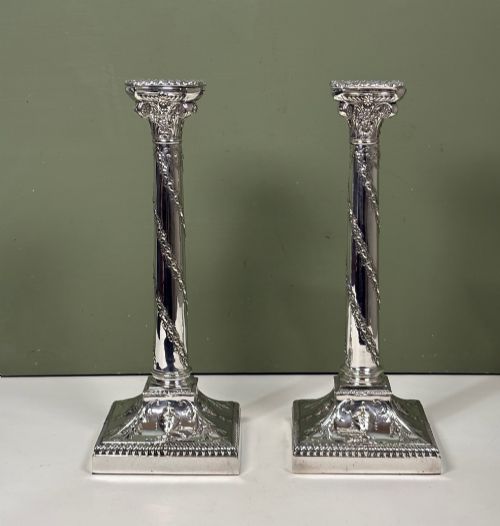
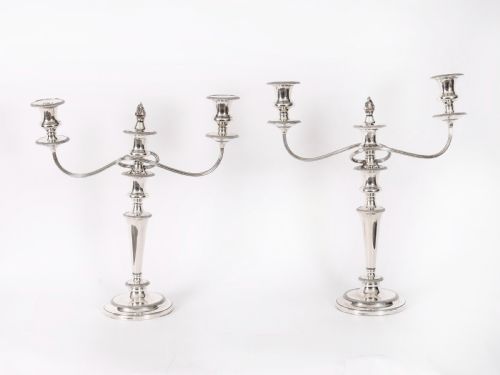
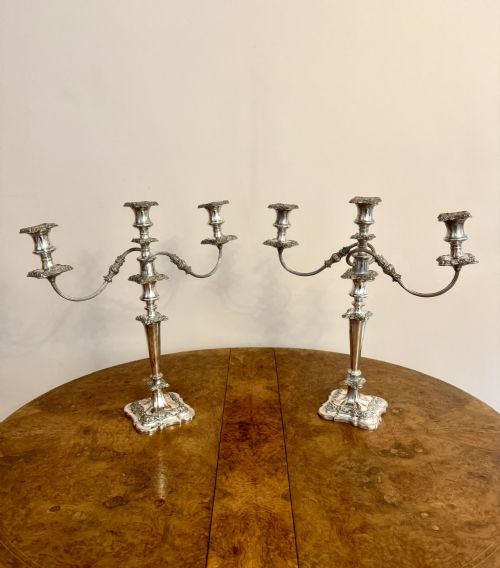
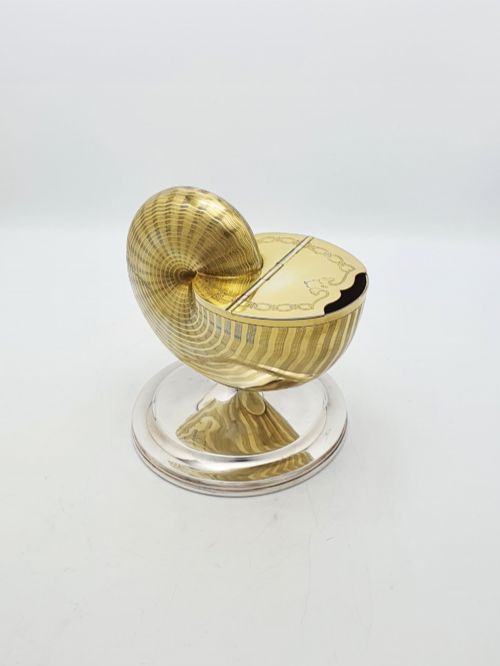
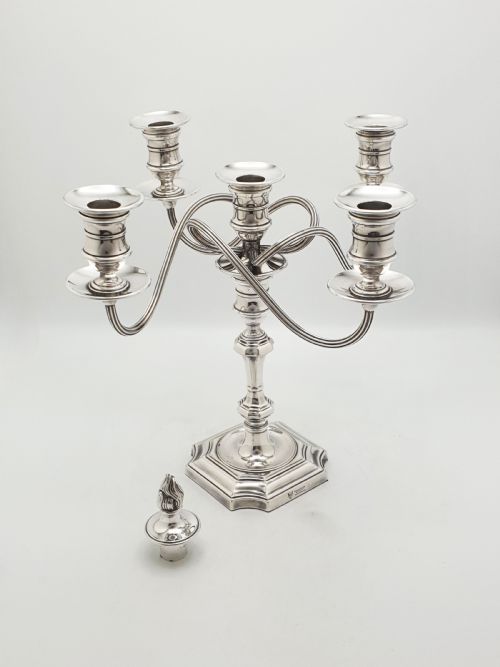
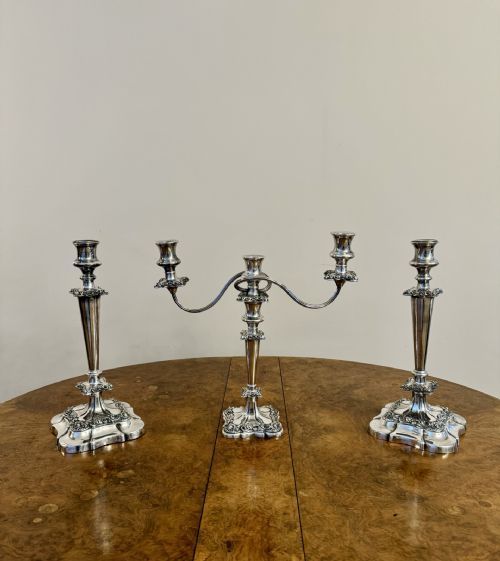
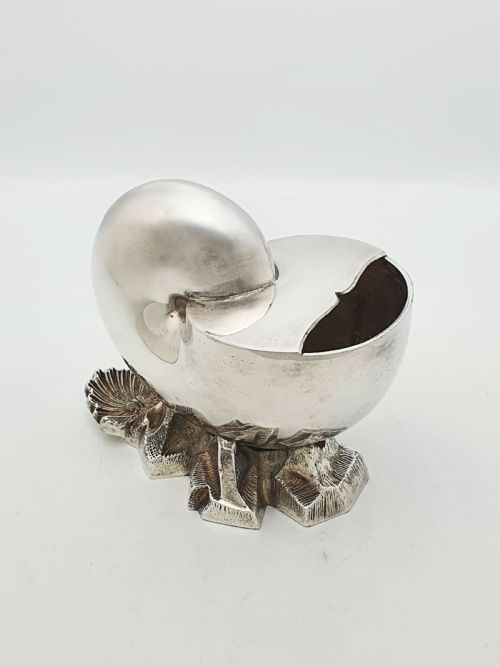
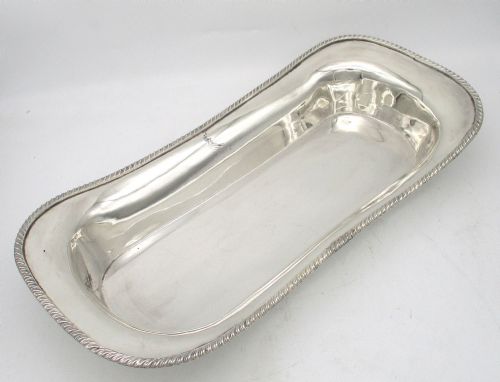
The selection on this page relies heavily on candelabras, often found in matching pairs, alongside serving dishes, cruet sets, and novelty spoon warmers modelled as nautilus shells. Materials range from traditional Sheffield plate and electroplated nickel silver to combinations of silver plate with cut glass and crystal.
Stylistic influences span traditional British country tastes, neoclassical revival forms, and Napoleon III designs, reflecting the changing interior fashions of the nineteenth century. Buyers encounter everything from simple wine bottle coasters to monumental five-light candelabra suites intended for large dining tables.
How they were made
Early pieces utilise Old Sheffield Plate, a method fusing a thin sheet of silver onto a thicker copper base by heat and pressure. Later items employ electroplating, where a layer of silver is deposited onto a base metal or electroplated nickel silver using an electrical current.
Candelabras and épergnes combine metalworking techniques with glass production, integrating hand-cut crystal bowls, etched glass inserts, and detachable sconces. Silversmiths cast ornate floral motifs, cherubs, and figural elements separately before soldering or assembling them onto the main body.
Gilding and silvering were frequently applied to highlight specific architectural or sculptural details, particularly on pieces influenced by French Napoleon III or neoclassical styles.
The listings on this page span the 19th century through the Edwardian period, featuring materials like cut glass, copper, and electroplated nickel silver.
What varies in quality
The distinction between standard production and top-tier items rests on the depth of the metalwork, the crispness of chased and cast ornamentation, and the integrity of the underlying plating. Superior pieces retain their original silver layer across high-relief acanthus leaves and figural details without excessive copper show-through.
Makers known for exceptional output, such as Elkington, Walker & Hall, or Garrard, invested in thicker plate and heavier base metals that prevented structural warping in large candelabras. The quality of associated cut glass - its weight, depth of cutting, and absence of modern replacement parts - dictates the overall standing of épergnes and centrepiece bowls.
Garrard & Co·Walker & Hall·Elkington·James Deakin·Mappin and Webb
The Silver Plated Dining Centrepiece Glossary
- EPNS
- Electroplated Nickel Silver. This designates a base metal alloy of copper, nickel, and zinc coated with a layer of pure silver through an electrolytic process.
- Épergne
- An ornamental centrepiece featuring a central basket or bowl surrounded by smaller hanging baskets, typically used for fruit, flowers, or sweetmeats.
- Old Sheffield Plate
- An early form of silver plating created by fusing sheet silver to a copper ingot before rolling them into workable plates.
- Sconce
- The nozzle or cup at the top of a candlestick or candelabra branch designed to hold the base of a candle.
- Spoon Warmer
- A Victorian vessel, often shaped like a nautilus shell or urn, filled with hot water to warm table spoons before serving soup.
Silver Plated Dining Centrepiece: Frequently Asked Questions
What is a silver plated dining centrepiece used for?
These pieces serve as the visual centre of a dining table, combining decorative presence with functional utility such as holding candles, fruit, or condiments.
Larger candelabras provide ambient lighting during formal meals, while specialised vessels like cruet sets and spoon warmers assist in serving courses.
How do I date an antique candelabra?
Dating relies on stylistic clues, manufacturing marks, and the plating technique visible on the piece. Older items from the early nineteenth century often utilise Sheffield plate construction, whereas later Victorian and Edwardian examples frequently employ electroplating.
Maker stamps and registry marks found on the base help narrow the decade of production.
Are silver plated centrepieces difficult to maintain?
Regular dusting and occasional gentle cleaning with a specialised silver polish keep the surface bright without wearing through the thin plating. Storing pieces in dry environments prevents accelerated tarnish and protects any integrated cut glass components.
Detachable parts such as sconces simplify the cleaning process considerably.
What is the difference between Old Sheffield Plate and EPNS?
Old Sheffield Plate involves physically fusing a layer of silver to a copper core through heat and rolling, which often reveals a fine copper line at exposed edges. EPNS relies on an electrical current to bond silver onto a nickel-brass alloy base.
This later electroplating method became standard practice from the mid-nineteenth century onward.