

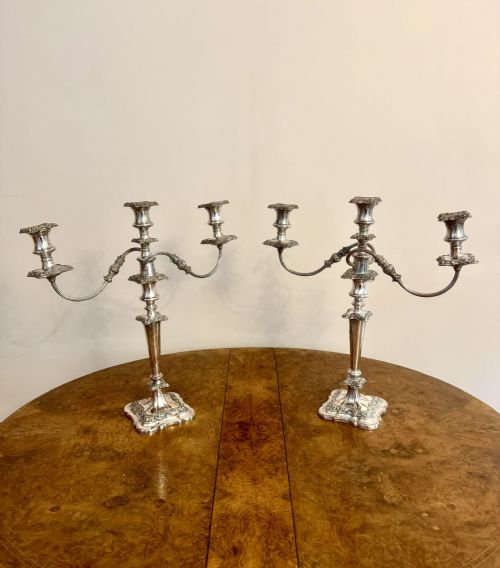


Victorian Silver Plated Candelabrum
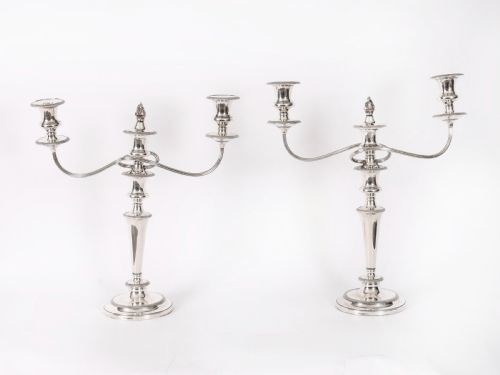
These Victorian silver plated candelabrum pieces bring heavy nineteenth-century lighting onto the dining table with branching arms and Sheffield plate technique.
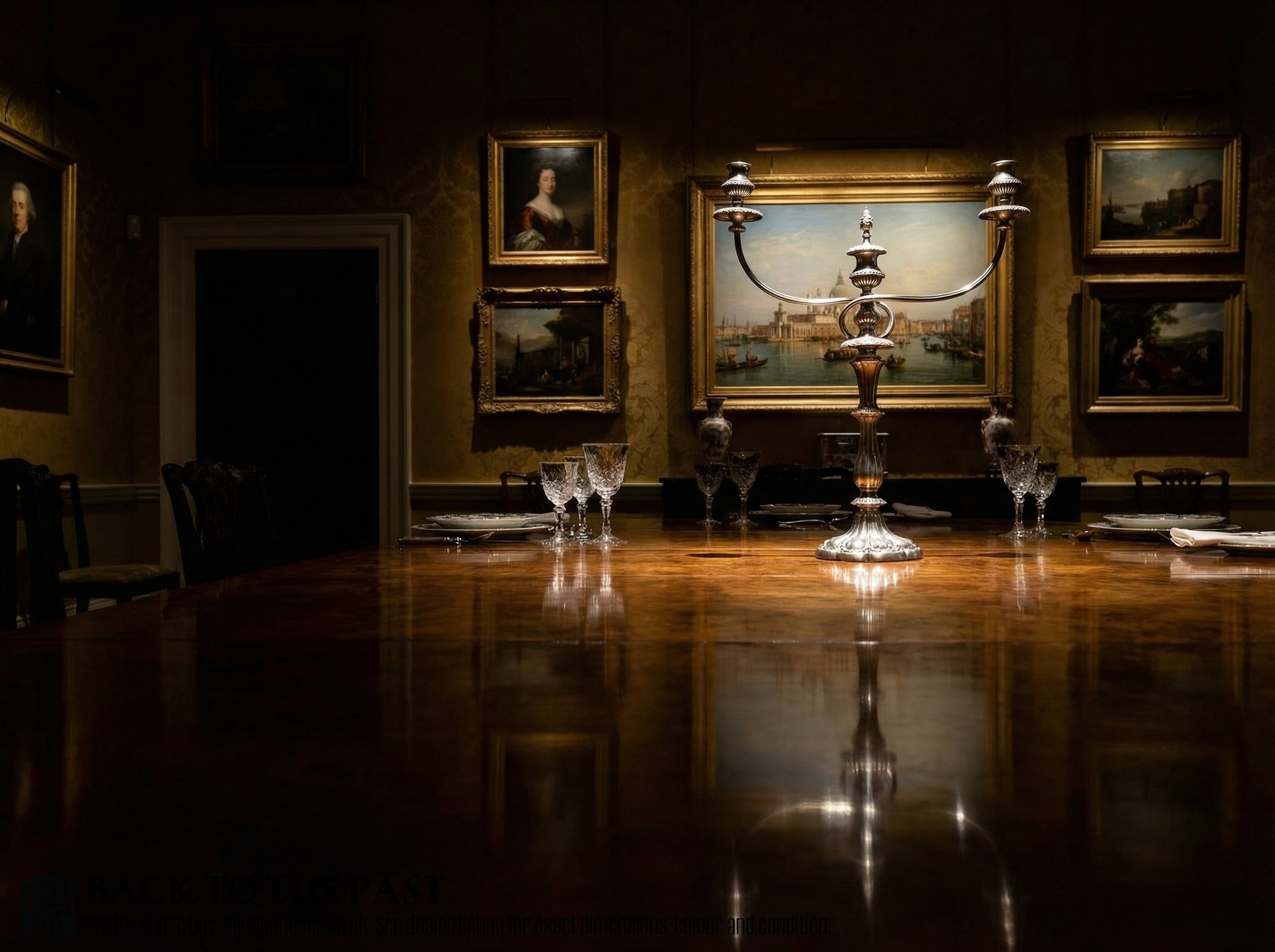
Victorian Silver Plated Candelabrum
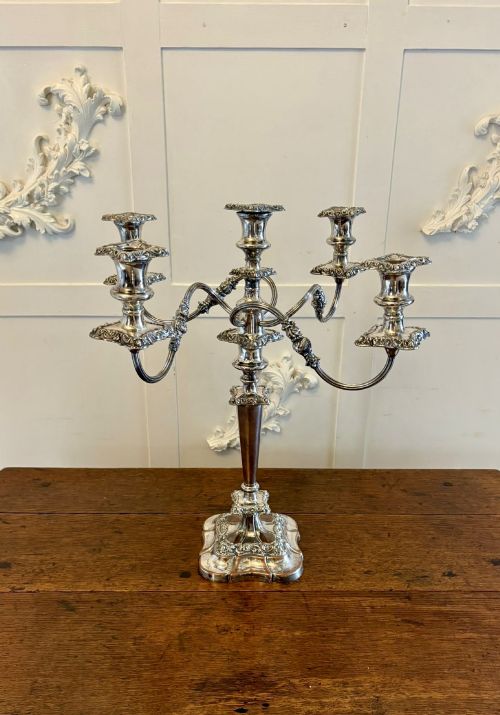
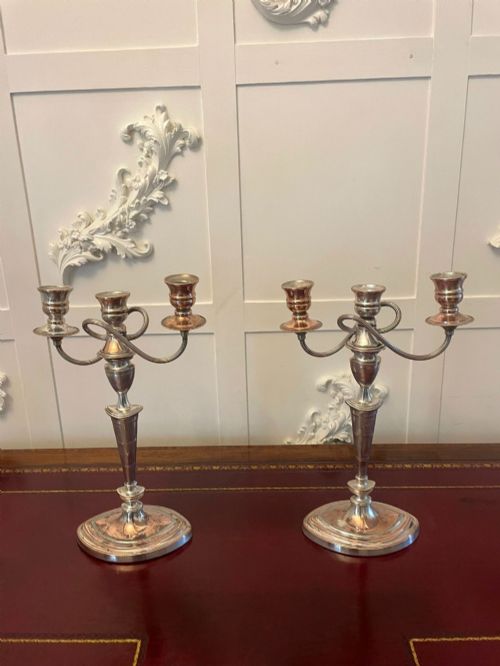
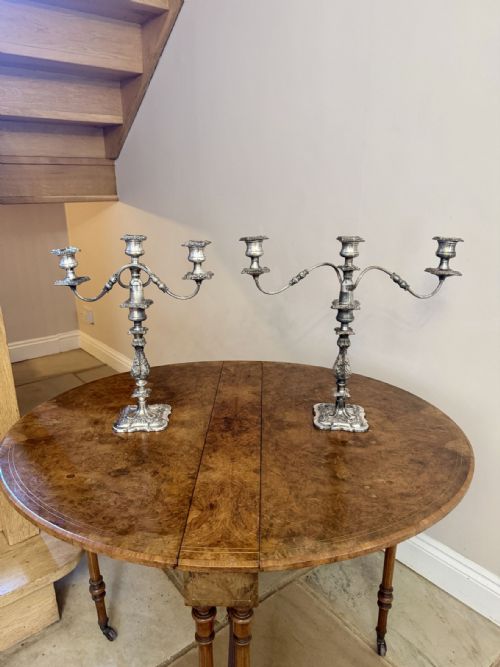
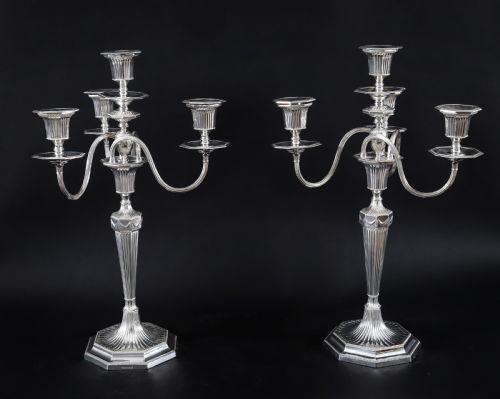
A victorian silver plated candelabrum is a dining table centrepiece or sideboard lighting fixture designed to hold multiple candles across three, four, five, or six branches. Buyers seeking this phrase encounter large pairs and single monumental pieces spanning the mid to late nineteenth century, predominantly from the decades between eighteen fifty and eighteen ninety.
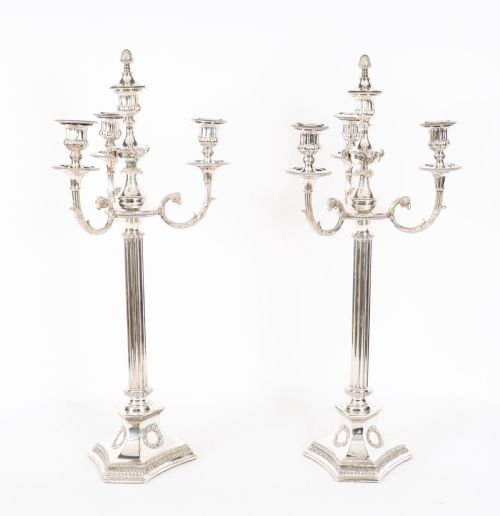
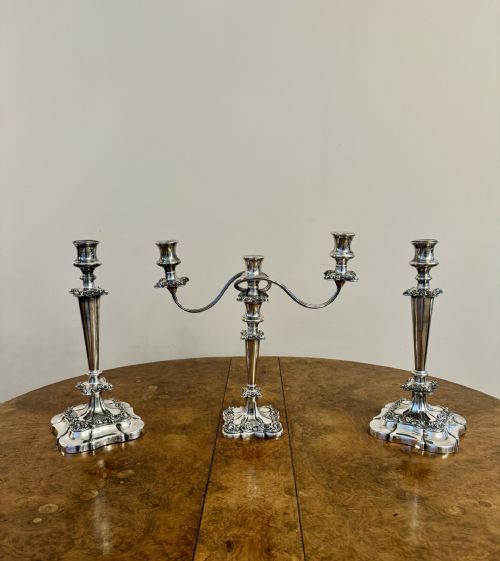
The form appears as standing candelabras, convertible candelabras that function also as candlesticks, and elaborate centrepieces incorporating dishes and figural elements. Styles span Victorian Rococo Revival, Neoclassical, Classical Revival, and Victorian Naturalism, often featuring detachable sconces for cleaning and candle replacement.
How they were made
Silversmiths utilised electroplated nickel silver, EPNS, and traditional Sheffield plate techniques over a base metal of copper, brass, or nickel silver. The application of silver to a base metal allowed workshops to produce substantial, ornate items with the visual weight of solid silver.
Decoration was achieved through casting and chasing, yielding heavy floral motifs, lyre shapes, palm tree details, and figural cherubs. Sconces, branches, and central shafts were constructed in sections to permit disassembly for polishing and maintenance.
Victorian Silver Plated Candelabrum Retail Price Guide 2026
Typical asking prices for victorian silver plated candelabrum among the pieces listed under this phrase on Sellingantiques today, from the lower quarter to the upper quarter. They describe what is for sale here now, not the wider market.
Materials range from simple copper and brass bases to advanced electroplated nickel silver and Sheffield plate.
What varies in quality
The distinction between standard production and top tier work rests on the crispness of the cast ornamentation and the thickness of the silver deposit over the base metal. Pieces by notable firms display deeper relief in scrollwork and figures, alongside substantial metal gauge that prevents bending under the weight of multiple branches.
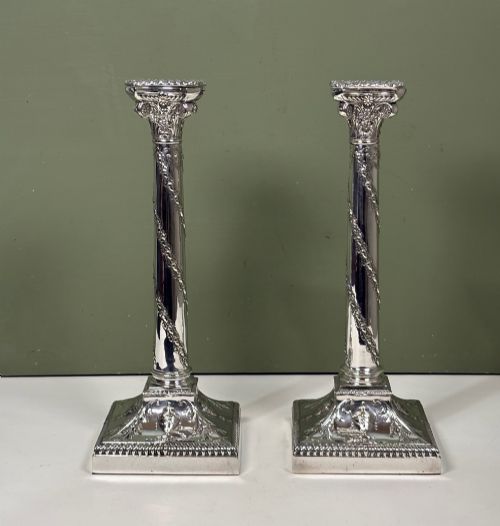
Proportion and engineering dictate everyday utility, specifically how securely branches lock into the main socket and whether the weighted base balances the arm span. Superior examples retain their original detachable sconces and show harmonious integration between base designs, such as Corinthian columns or cherub figures, and the branch work above.
Hawksworth Eyre·Garrard & Co·Smith & Sissons & Co·Clarke·Elkington
The Victorian Silver Plated Candelabrum Glossary
- Electroplated nickel silver
- A base alloy of copper, nickel, and zinc coated with a layer of pure silver via an electrical current. This process superseded older Sheffield plating methods during the nineteenth century.
- Sheffield plate
- An older fusing technique where a sheet of silver was melted onto a thicker ingot of copper before rolling. Pieces produced this way display a characteristic copper bleed along edges where the silver layer has worn thin.
- Detachable sconce
- The small removable cup at the top of a candle nozzle designed to catch dripping wax. Their survival adds authenticity to a complete set.
- EPNS
- The standard trade stamp found on nineteenth-century silver plated wares indicating electroplated nickel silver construction. It helps identify the manufacturing method used by larger makers.
Victorian Silver Plated Candelabrum: Frequently Asked Questions
How do I clean silver plate safely?
Use a soft cloth and a gentle, non-abrasive silver polish formulated for plated items. Avoid heavy rubbing that exposes the base copper beneath.
Take extra care around cast ornamentation and engraved details where old polish can accumulate in the crevices.
Are all branches detachable on these?
Many multi-light designs feature screw-in or drop-in branch sections that lift away from the main candlestick base. This modular construction helped with transport and cleaning.
Check each join carefully before lifting heavy pieces to avoid dropping fragile cast arms.
What is a Cricklite candelabra?
This specialised form refers to a patented lighting system created by Clarke, utilising small candles enclosed in protective glass shades. They were popular for dining tables during the late Victorian period.
The glass shades diffused the flame to create a softer glow across the table setting.
How do I identify a Neoclassical style?
Neoclassical pieces draw inspiration from classical Greek and Roman architecture, featuring straight lines, urn motifs, and columns. Look for Corinthian capitals on the upright shafts.
This aesthetic contrasts with the heavier, more asymmetrical curves of the Rococo Revival style.