



Silver Plate Toast Rack
A silver plate toast rack brings crisp breakfast toast to the table with architectural wirework and clever folding actions.
Silver Plate Toast Rack
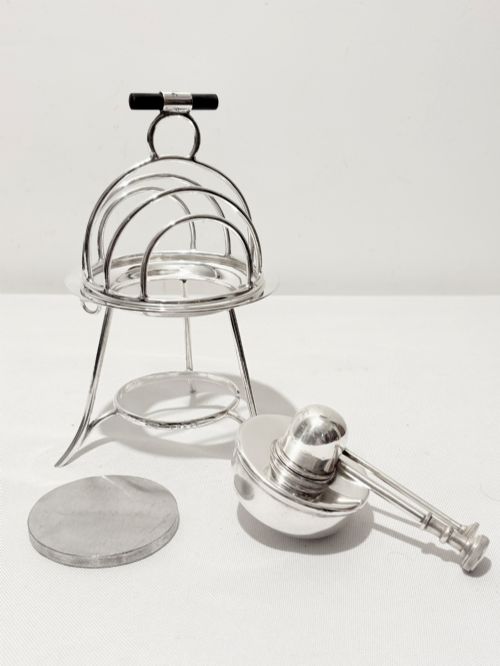
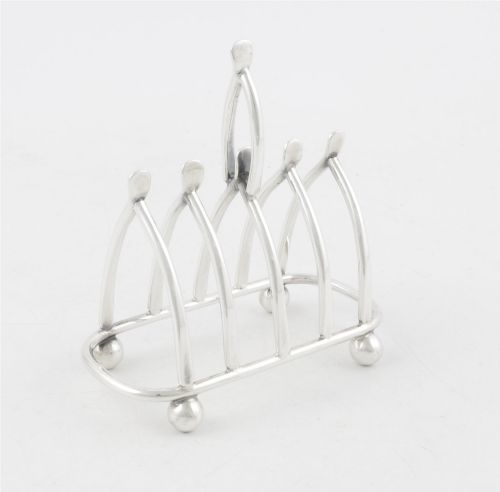
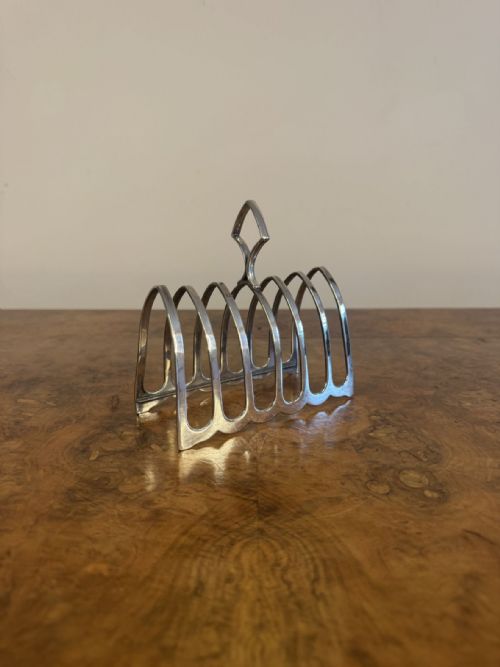
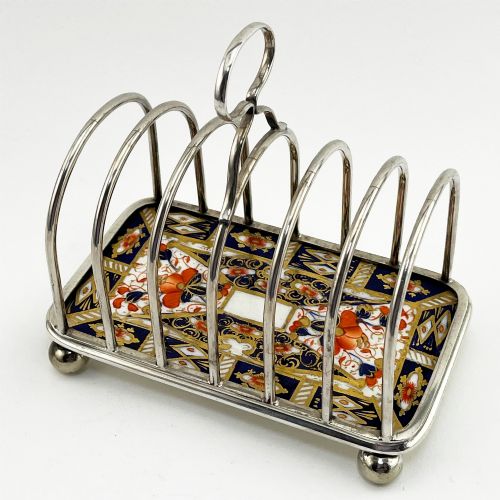
A silver plate toast rack is a breakfast table accessory designed to hold slices of toast upright so the crusts stay crisp. The selection spans standard arched loop dividers and clever mechanical expanding frames that open like concertinas.
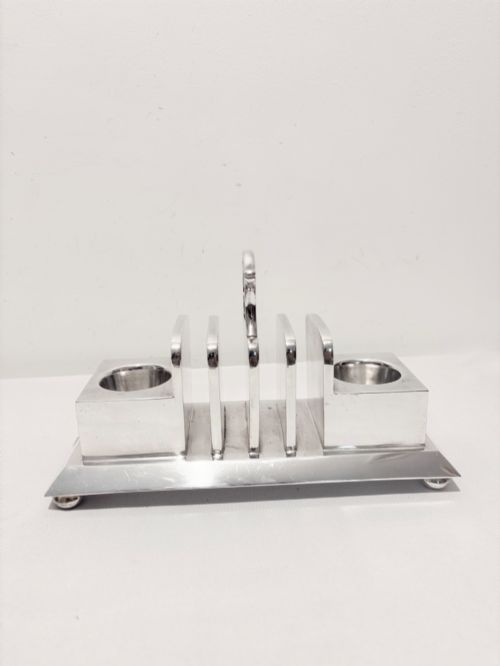
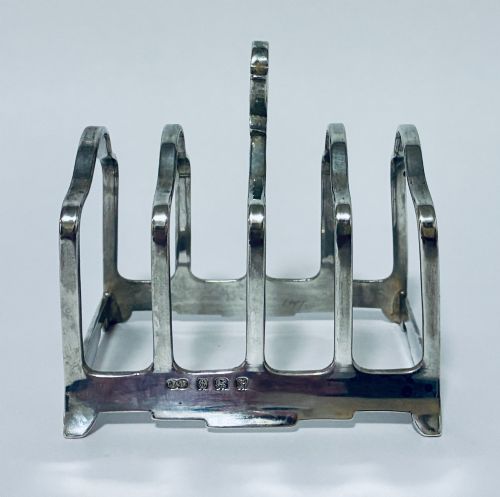
Most examples date from the Victorian and Edwardian eras, with occasional Georgian pieces and later Art Deco or Modernist designs appearing in silverplate and electroplated nickel silver. Forms range from simple trefoil wire shapes to elaborate novelty designs modelled as swans, wagons and sporting motifs.
How they were made
Silversmiths formed these racks using silver plate, electroplated nickel silver and base metals, often combining metal wirework with wooden bases in oak or mahogany. Mechanical versions relied on precision scissor hinges and sliding joints for the expanding action.
Decorative touches included cast metal novelty frames shaped like golf equipment, rifles and animals, soldered to matching trays or rests.
Silver Plate Toast Rack Retail Price Guide 2026
Typical asking prices for silver plate toast rack among the pieces listed under this phrase on Sellingantiques today, from the lower quarter to the upper quarter. They describe what is for sale here now, not the wider market.
The archive includes versatile expanding and concertina designs alongside novelty animal and sporting forms.
What varies in quality
Quality rests in the crispness of the wire soldering and the smoothness of the mechanism on expanding or concertina designs. Maker attribution to notable firms elevates a piece, as does originality in mixed materials like oak and silver plate.
Elkington·Hukin & Heath·Mappin & Webb·William Hutton·Asprey & Co·Thomas Campion & Sons·Pridham & Sons·Lockwood of Bond Street
The Silver Plate Toast Rack Glossary
- Electroplated nickel silver
- A base metal alloy of copper, nickel and zinc coated with a layer of pure silver using an electrical process.
- Expanding
- A concertina or collapsible mechanism that allows the toast divider bars to adjust their spacing.
- Trefoil
- A three-lobed decorative shape often seen in the profile of the wire dividers.
- Novelty
- A piece shaped to represent an animal, vehicle, sport or other recognizable object rather than following standard geometric forms.
Silver Plate Toast Rack: Frequently Asked Questions
How do expanding toast racks work?
Expanding toast racks use a scissor-action frame that stretches outward to create wider gaps between the metal bars. This clever mechanism allows the rack to hold varying quantities of toast while collapsing neatly for storage.
The hinged joints require careful cleaning to ensure the metal links move smoothly without straining the soldered wire dividers.
What periods do these pieces date from?
The evidence shows pieces originating from the Georgian era through the Victorian and Edwardian periods, extending into later Art Deco and Modernist designs. Victorian examples are particularly common and include the majority of novelty and expanding formats.
Design influences shifted from classical wire shapes to bold geometric lines and avant-garde Modernist silhouettes toward the end of the nineteenth century.
Were toast racks used only for toast?
While primarily built to keep breakfast toast crisp by preventing condensation between slices, some configurations doubled as combined tableware. Certain examples incorporate integrated trays or egg cruets for a complete morning dining setup.
Novelty models often celebrated specific pastimes, holding letters or desk papers when not deployed at the breakfast table.
How do I identify a novelty toast rack?
Novelty models depart from standard arched wire dividers to depict recognizable subjects such as swans, golf bags, railway wagons, boots or sporting rifles. These figural elements were cast in metal and integrated directly into the frame or base tray.
Many of these whimsical designs carry registered design numbers stamped into the metal, pointing to a specific patent date from the Victorian era.