



Silver Plated Letter Rack
A silver plated letter rack organises correspondence with the bright, polished metalwork typical of Victorian and Edwardian desk accessories.
Silver Plated Letter Rack
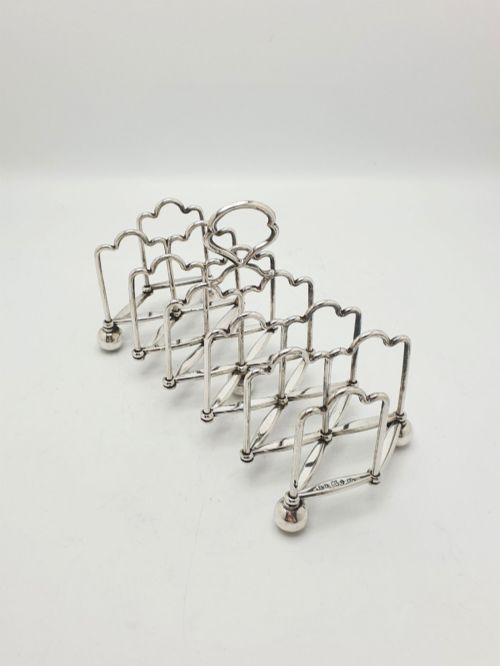
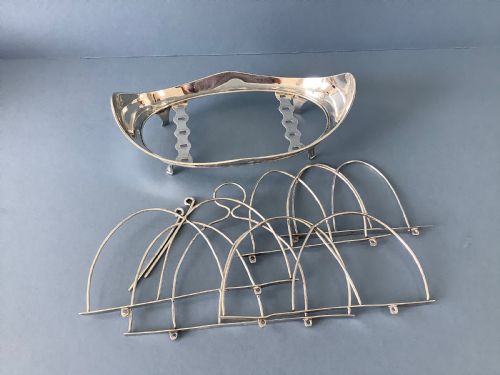
A silver plated letter rack combines the form of a desk organiser with the metalwork and wire dividers often shared by toast racks. The evidence shows these dual-purpose pieces spanning Victorian, Edwardian, and later periods, often appearing as combination toast and letter holders.
Makers frequently adapted standard wirework forms to hold envelopes alongside slices of toast. Pieces range from simple trefoil shapes to novelty designs and combination items incorporating solid oak bases.
The styles seen across these desk accessories stretch from Georgian and Victorian aesthetics through to the clean lines of Art Deco and Christopher Dresser's modernist designs for Hukin & Heath.
Materials and construction
These items rely on a base metal core, such as electroplated nickel silver or standard base metal, coated in a layer of silver. This technique allowed manufacturers to produce durable desk wares with the appearance of solid silver.
Some examples combine metal wirework with solid oak bases, creating sturdy desk accessories designed to hold heavier correspondence or multiple items securely.
The listings combine silver plate, electroplated nickel silver, and base metal constructions across Victorian, Edwardian, and Art Deco styles.
Assessing quality and design
Quality rests in the weight of the metal, the crispness of the wire framework, and the integrity of the silver plating over the base metal. Form also dictates distinction, with novelty shapes, heart motifs, and pieces attributed to known makers holding greater interest.
Design ambition separates standard desk accessories from exceptional pieces. Standard Victorian wirework differs markedly from marked designer work by figures such as Christopher Dresser or established firms like Elkington.
Elkington·Hukin & Heath·Padley, Parkin & Staniforth
The Silver Plated Letter Rack Glossary
- Electroplated nickel silver
- A copper-nickel-zinc alloy coated with a layer of pure silver through an electrical process. This method became widely utilised in the nineteenth century for producing affordable metalware.
- Trefoil
- A three-lobed decorative shape often seen in the configuration of wire dividers on these racks. The form echoes Gothic architectural ornamentation.
- Novelty
- An object made in a whimsical or specific representational shape, such as a wishbone or a swan. These imaginative forms were particularly popular during the Victorian period.
- Base metal
- Any metal other than a precious metal, used as the underlying core for silver plating. Common examples include brass, copper, and nickel alloys.
Silver Plated Letter Rack: Frequently Asked Questions
What is a silver plated letter rack?
A silver plated letter rack is a metal desk accessory designed to hold correspondence upright for easy sorting. Many historical examples double as toast racks.
These pieces utilise a base metal coated in silver, featuring wire dividers arranged in various decorative configurations.
Were these racks used for letters or toast?
Historical examples frequently served both purposes interchangeably. Makers often produced dual-purpose pieces intended for the breakfast table or the writing desk.
The spacing of the wire dividers determines whether a specific piece is better suited for holding paper or toast.
How do I date a silver plated letter rack?
Dating relies on stylistic clues, manufacturing techniques, and maker marks stamped into the metal. Victorian and Edwardian pieces often display distinct decorative motifs.
Art Deco and modernist designs from later decades feature cleaner geometric lines rather than ornate Victorian wirework.
How do I care for silver plate?
Silver plate requires gentle cleaning with a soft cloth and specialist metal polish to preserve the thin silver layer over the base metal. Avoid harsh abrasives that can wear away the plating.
Regular, light dusting keeps the polished surface bright without risking damage to older soldered joints.