



Silver Plate Glass Decanter
When searching for a silver plate glass decanter, collectors find vessels uniting metal mounts with blown and cut glass from the Victorian and Edwardian periods.
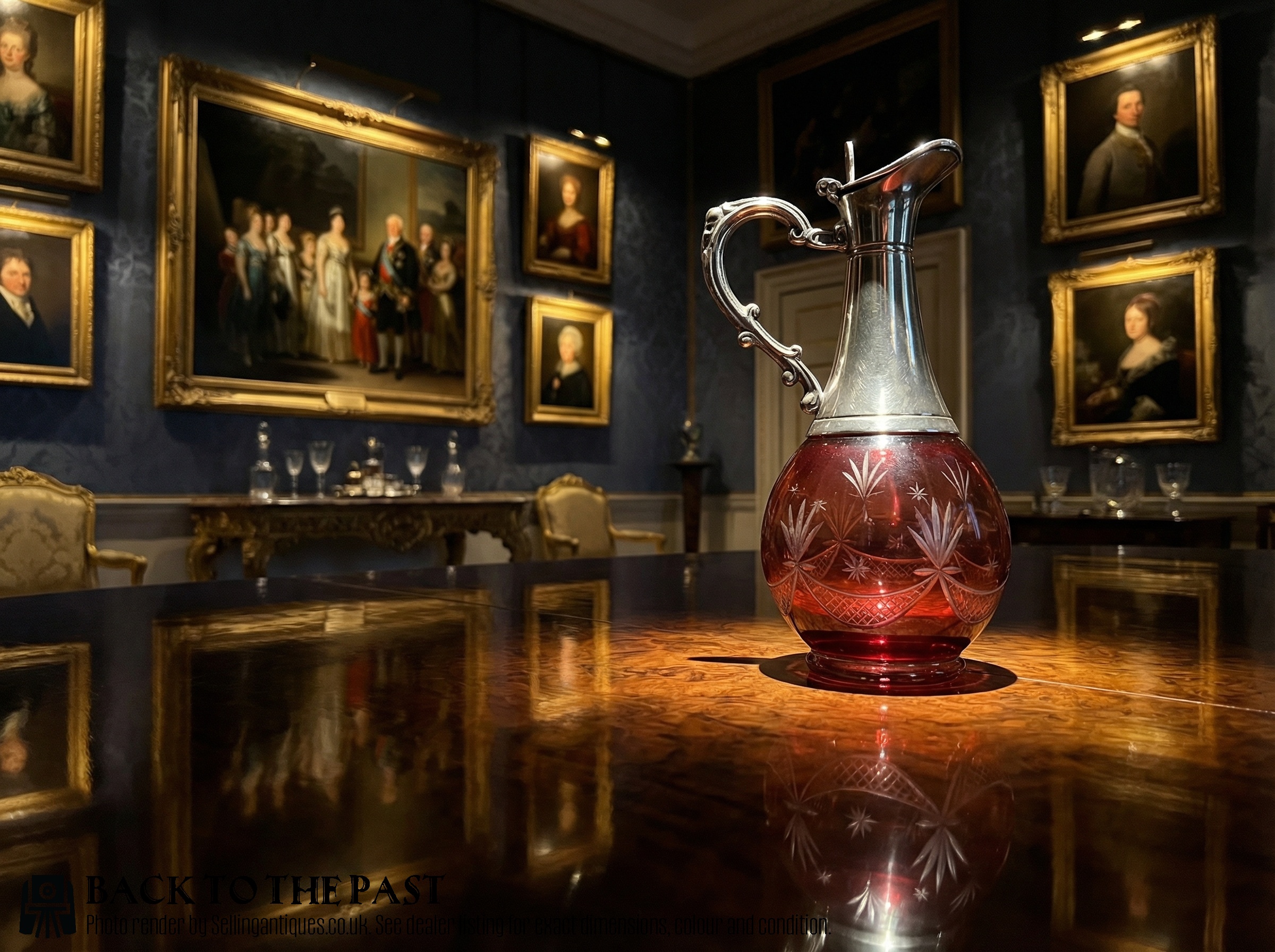
Silver Plate Glass Decanter
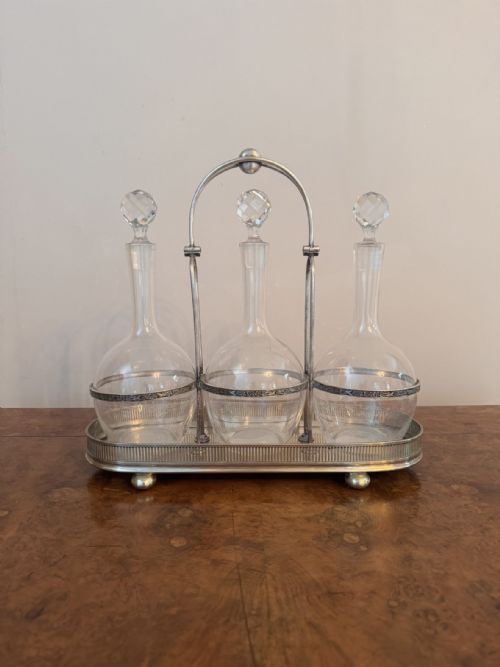
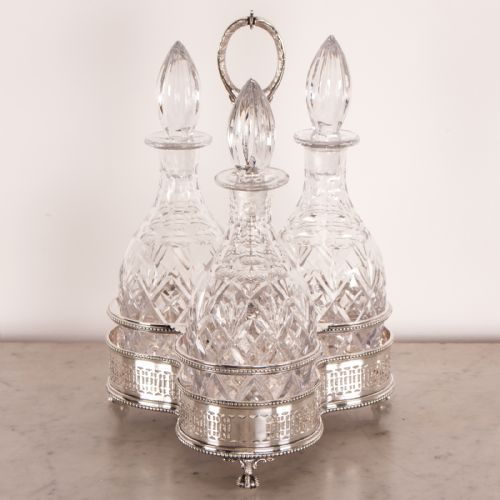
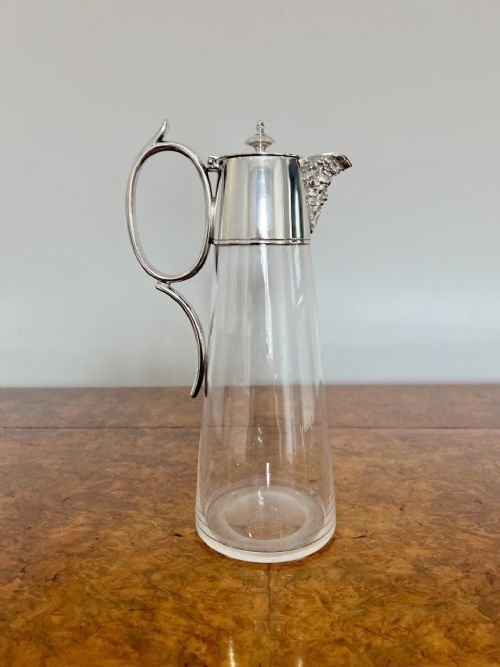
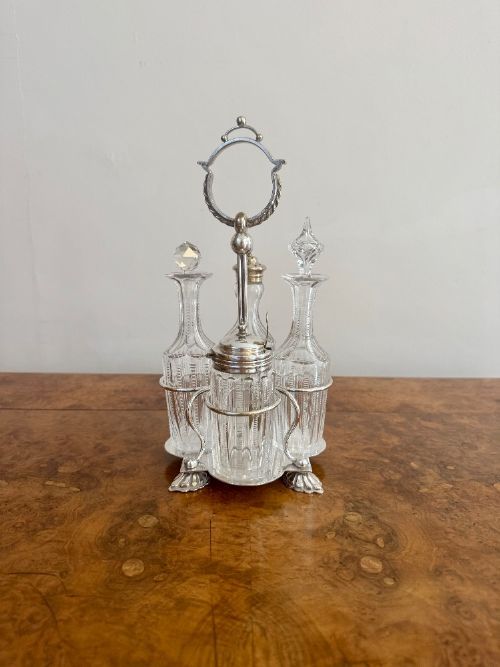
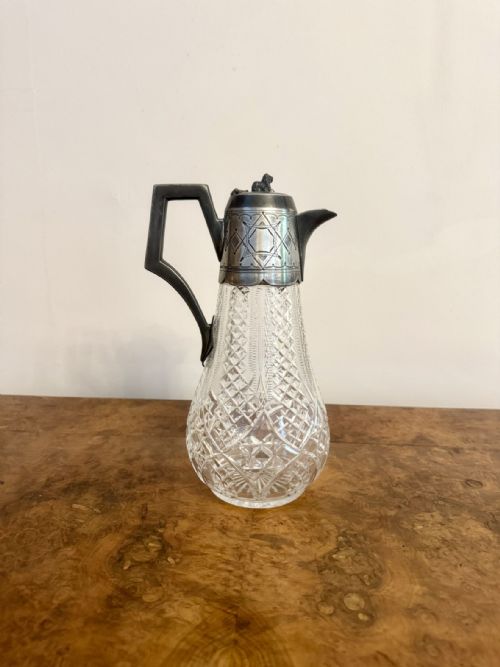
The silver plate glass decanter category encompasses claret jugs, tantalus sets, and framed spirit bottles designed for formal dining and entertaining. Most examples date from the Victorian and Edwardian eras, combining metal mounts with transparent, coloured, or etched vessels.
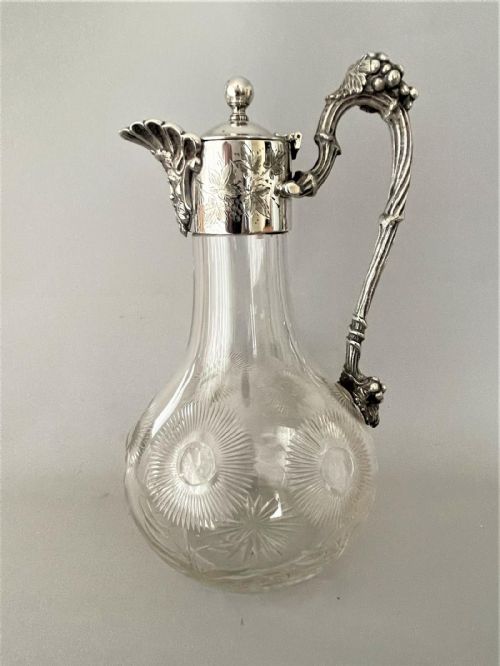
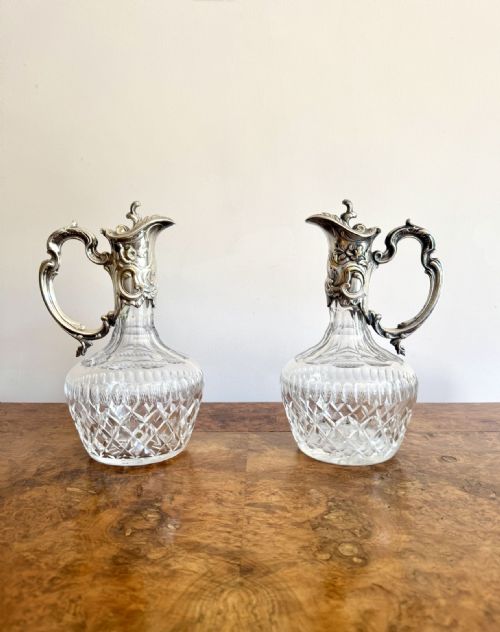
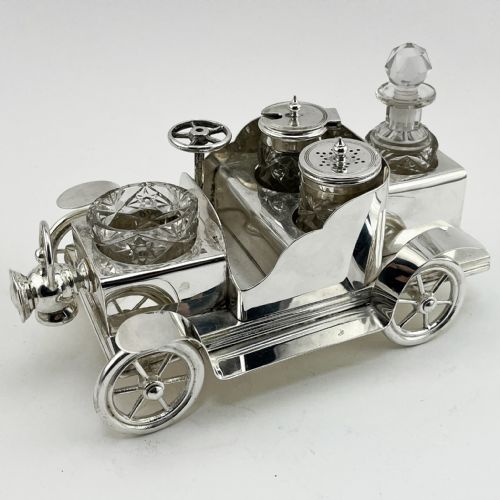
Claret jugs represent a prominent form within this group, often featuring hinged silver plated lids and mounts fitted to cut crystal or coloured glass bodies. Cruet sets and multi-bottle stands also appear frequently, holding several matching decanters in a single frame.
How they were made
Vessels were produced using lead crystal, blown glass, or moulded glass, frequently subjected to deep cutting, etching, or flash colouring in shades of cranberry, green, and amber. Metal components relied on silver plating over base metals or Old Sheffield Plate, shaped into pouring spouts, hinged lids, and supportive frames.
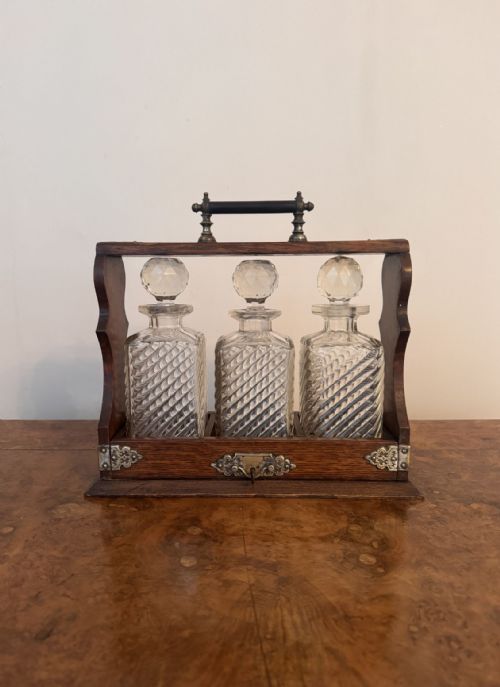
Mounts and handles were soldered or mechanically secured to the glass bodies, sometimes incorporating locking mechanisms as seen in security tantalus sets. Detail work involved engraving foliage, heraldic motifs, or geometric patterns directly onto the glass surface and the surrounding metal collars.
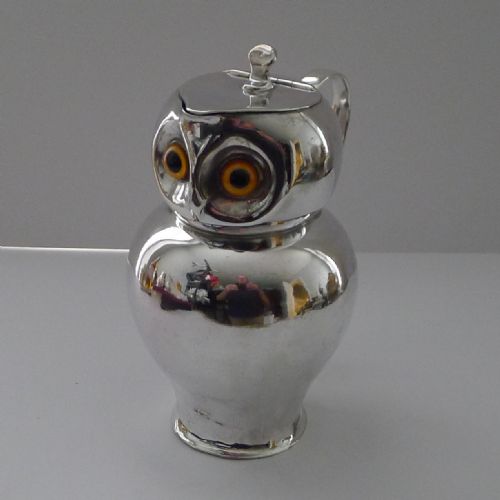
Some Victorian dining companions took the form of a silver plated owl with glass eyes, pouring drinks from its feathered head.
What varies in quality
Quality rests upon the weight and clarity of the glass, the depth of its cutting, and the crispness of the cast silver plated mounts. Pieces by established silversmithing firms display superior balance, thicker plating, and more intricate engraving on both metal and glass.
The integrity of the ensemble affects value, particularly when original stoppers, matching bottle sets, or fitted wooden stands remain intact. Proportion and design ambition separate standard utility items from elaborate novelty jugs and architectural tantalus frames.
Walker & Hall·Mappin & Webb·Elkington·Martin Hall & Co·Henry Wilkinson & Co
The Silver Plate Glass Decanter Glossary
- Claret jug
- A pouring vessel specifically intended for serving red wine, typically fitted with a hinged metal lid and a handle attached to a glass body.
- Tantalus
- A locking wooden or metal stand that secures decanters within a frame to prevent unauthorized access to the spirits inside.
- Cruet set
- A matched collection of small bottles or decanters held in a metal frame, originally used for condiments, oils, or liqueurs.
- Old Sheffield plate
- An early form of composite metal created by fusing a thin sheet of silver to a thicker copper base before shaping.
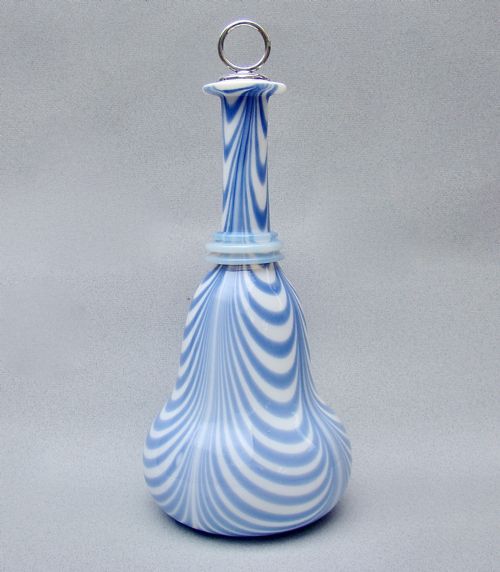
- Nailsea glass
- Glassware characterised by looped or threaded coloured glass ornamentation applied over a contrasting ground.
Silver Plate Glass Decanter: Frequently Asked Questions
How do I date a silver plate glass decanter?
Dating relies on stylistic clues such as the heavy geometric cutting of the Victorian period or the sleeker lines of Edwardian design. Maker marks stamped onto the silver plate mounts also help identify the manufacturing decade.
Certain glass colours and manufacturing techniques point directly to specific nineteenth century decades. Comparing the style of the handle and the mount to documented firm patterns narrows down the era.
What is a tantalus used for?
A tantalus holds spirit decanters securely within a locked metal bar to prevent servants or guests from helping themselves. The locking mechanism gives the device its name by teasing users with visible bottles they cannot open.
These locking stands usually sit on sideboards or in studies. The bottles must be unlocked by a key before any liquor can be poured into glasses.
Are claret jugs and decanters different?
Claret jugs feature an attached handle and a hinged spout designed for immediate pouring at the dining table. Standard decanters generally lack handles and rely on stoppers rather than hinged lids.
While both combine glass bodies with silver plate mounts, claret jugs prioritize ease of continuous pouring. Decanters focus more on storing and presenting wine before it is served.
How should I clean silver plated mounts?
Silver plate requires gentle cleaning with a soft cloth and a specialised polish formulated for plated items. Abrasive cleaners strip away the thin silver layer over the base metal.
Care must be taken to keep harsh chemical polishes away from the glass body, particularly around glued or cemented handle joints. Regular dusting prevents tarnish from accumulating in engraved crevices.