
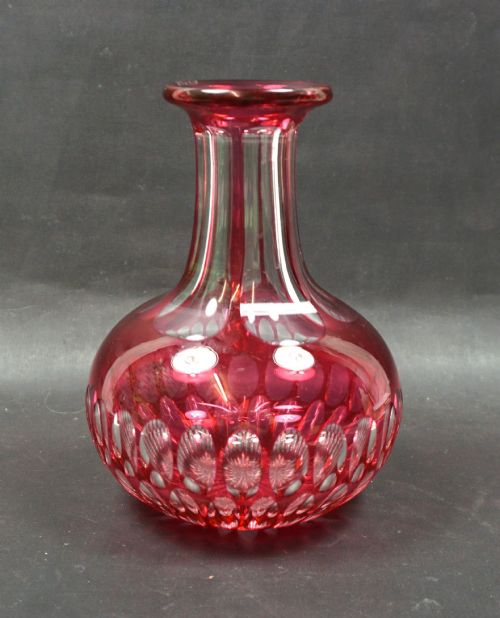
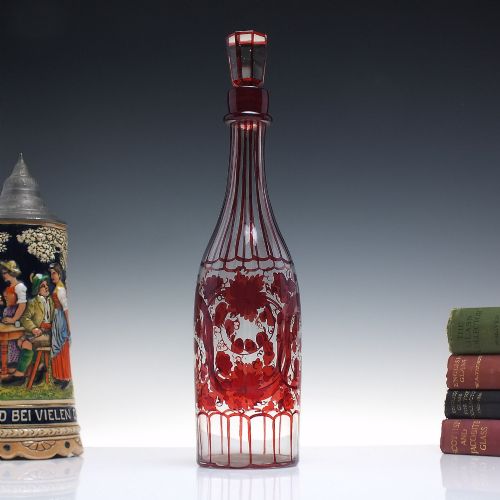


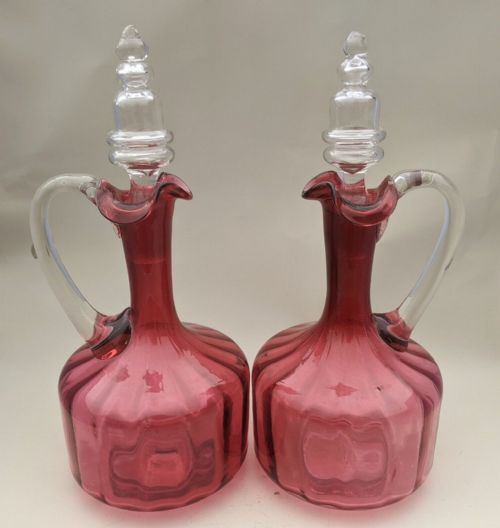


Vintage Ruby Glass Carafe
These vintage ruby glass carafe pieces catch the light with rich crimson tones, offering a striking table centrepiece for serving wine.
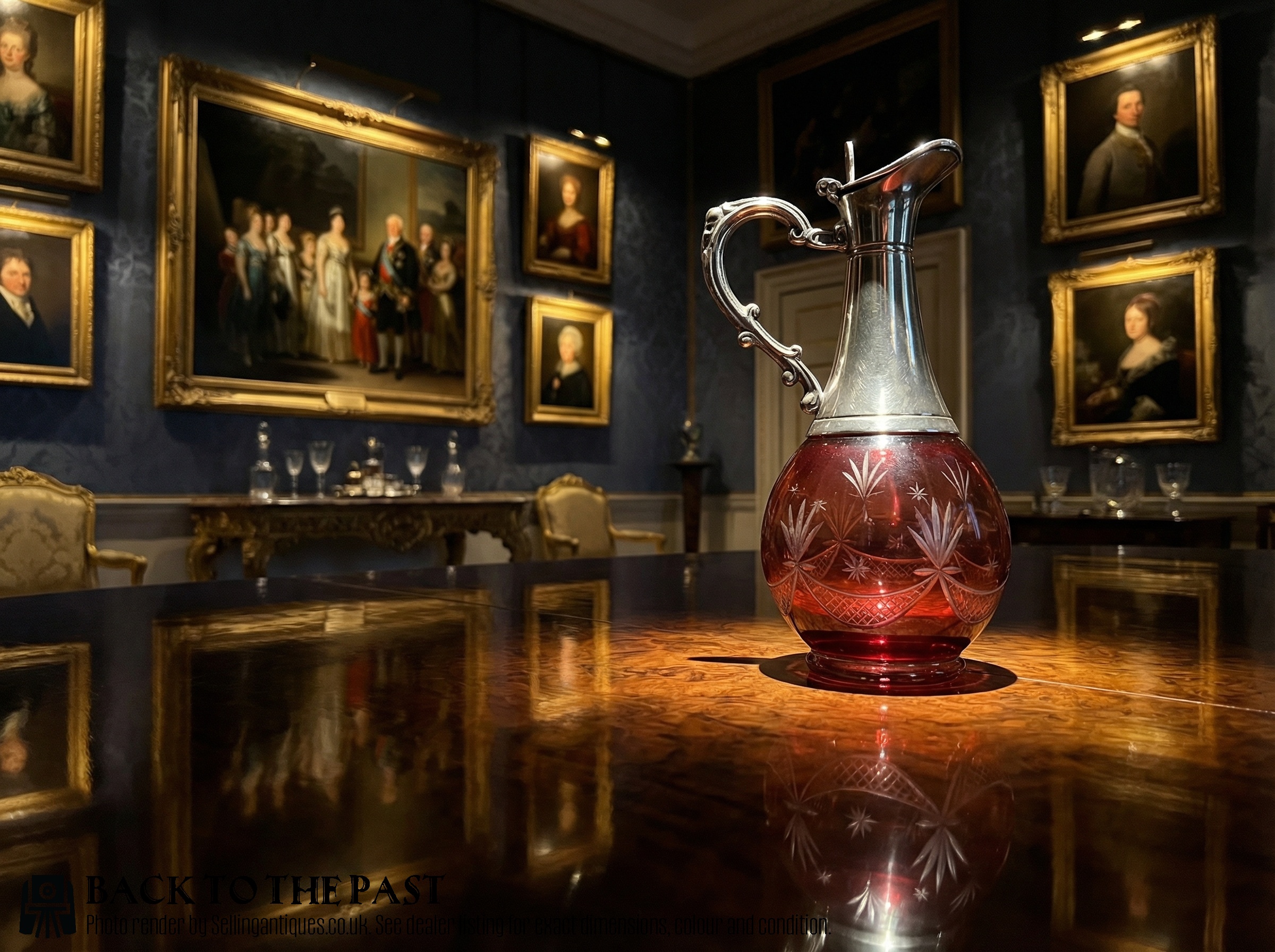
Vintage Ruby Glass Carafe
Forms range from pairs of Edwardian wine decanters to large English jugs engraved with fruiting vines. Many pieces incorporate clear glass elements, overlay techniques or silver plate and sterling silver mounts. These items bridge decorative display and functional dining ware.
How they were made
Maker techniques rely on glass manipulation incorporating ruby overlay or cranberry glass fused to clear crystal. Artisans achieved the deep red coloration through specialised chemical additions during the glass-blowing process. Cut crystal facets and hand-painted decoration frequently adorn the exterior surfaces.
Mounts utilise sterling silver or silver plate to form decorative collars and pouring lips around the glass necks. Engraving techniques add botanical motifs such as fruiting vines directly into the crystal body.
Materials recorded across current items include cranberry glass, clear crystal, enamel, and sterling silver mounts.
What varies in quality
Quality rests upon the depth and uniformity of the ruby coloration against the underlying clear crystal layer. Precision in the cut crystal facets and the crispness of engraved botanical details separate standard vessels from superior examples.
The integration of precious metal mounts, including hallmarked sterling silver collars, adds structural and decorative distinction. Pairs and matched sets command greater attention than solitary bottles.
The Vintage Ruby Glass Carafe Glossary
- Cranberry glass
- A transparent pinkish-red glass created by adding gold chloride to the molten batch. This distinctive colour defines the majority of nineteenth-century serving vessels.
- Ruby overlay
- A manufacturing method where a layer of dark red glass is fused over a clear crystal base. Artisans then cut through the exterior red layer to reveal the clear glass beneath.
- Sterling silver mount
- A fitted collar and pourer cast in silver and attached to the neck of the glass vessel. These mounts often bear hallmarks indicating the year of manufacture.
- Claret jug
- A specific pouring vessel designed for serving red wine at the dining table. They frequently feature handles and hinged metal lids.
Vintage Ruby Glass Carafe: Frequently Asked Questions
What is a vintage ruby glass carafe used for?
These vessels were originally manufactured to serve wine and claret at the dining table. Today, collectors utilise them both for functional dining service and as decorative display objects.
Their striking red coloration makes them prominent visual additions to sideboards and open shelving.
How do I date a ruby glass decanter?
Dating relies on examining the manufacturing style, cutting techniques and any associated metal mounts. Pieces from the Victorian era often display heavier hand-cutting and rich cranberry tones.
Edwardian examples sometimes feature hallmarked sterling silver collars that provide precise calendar years of production.
How do I clean a vintage decanter safely?
Careful hand washing with warm water preserves the delicate glass and any silver mounts. Harsh chemical cleaners and abrasive sponges should be avoided to protect the surface.
Allowing the vessel to air dry completely prevents moisture rings from forming inside the narrow neck.
What is the difference between cranberry and ruby glass?
Cranberry glass typically exhibits a brighter pinkish-red tone achieved specifically through gold oxide mixtures. Ruby glass often describes a deeper, heavier red shade utilised across various nineteenth-century decorative items.
Both terms appear frequently when describing antique table decanters.