



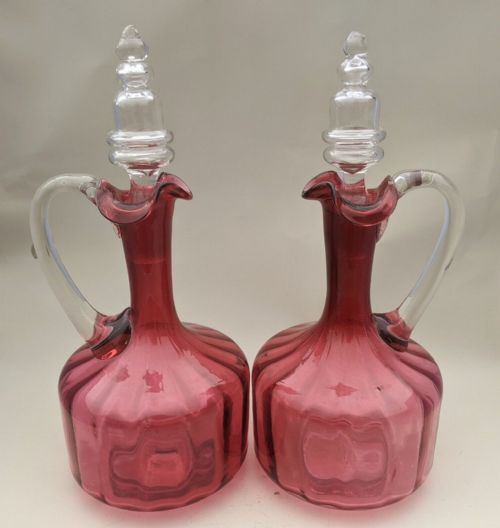

Red Glass Spirit Bottle
A red glass spirit bottle brings rich colour and nineteenth-century craftsmanship directly to your table or cabinet.
Red Glass Spirit Bottle
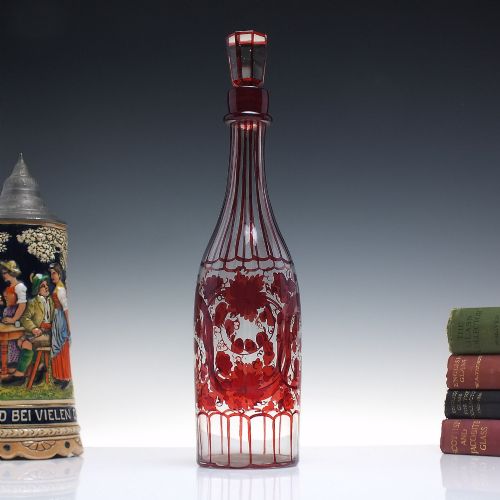
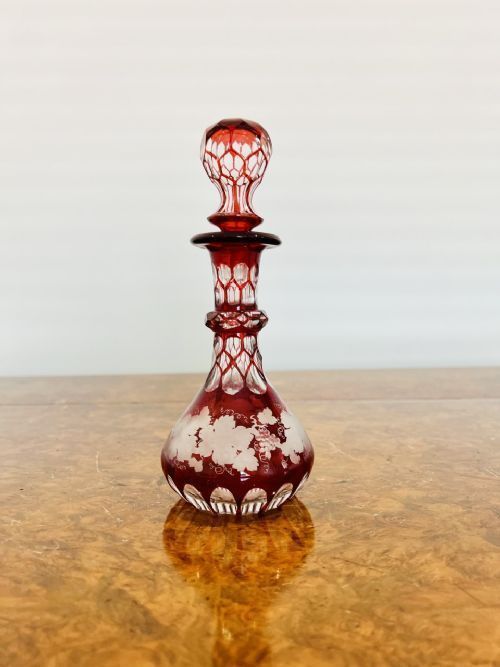
A red glass spirit bottle is a functional vessel designed for holding and serving liquor or preserving fragrance, typically encountered in Victorian and Edwardian iterations. These pieces span decanters, serving bottles, and scent bottles originating from the nineteenth century alongside earlier European examples. Buyers encounter rich ruby and cranberry tones often paired with matching stoppers or clear glass mounts.
The selections on this page centre heavily on Victorian and Edwardian forms, ranging from single cabinet pieces to matched pairs. Many examples feature cut glass detailing or hand-painted enamel decoration upon coloured glass bodies. Their primary appeal lies in combining utility with the deep chromatic brilliance characteristic of period glassware.
How they were made
Makers utilised rich coloured glass frit and overlay techniques to achieve the characteristic ruby and cranberry hues seen across these pieces. Glass was blown and shaped into decanters or flasks, then frequently finished with hand-painted enamel ornamentation or precise wheel-cutting.
Specialised techniques such as ruby overlay involved fusing a layer of red glass over a clear or milk glass base before cutting through the outer layer to expose the contrasting colour underneath.
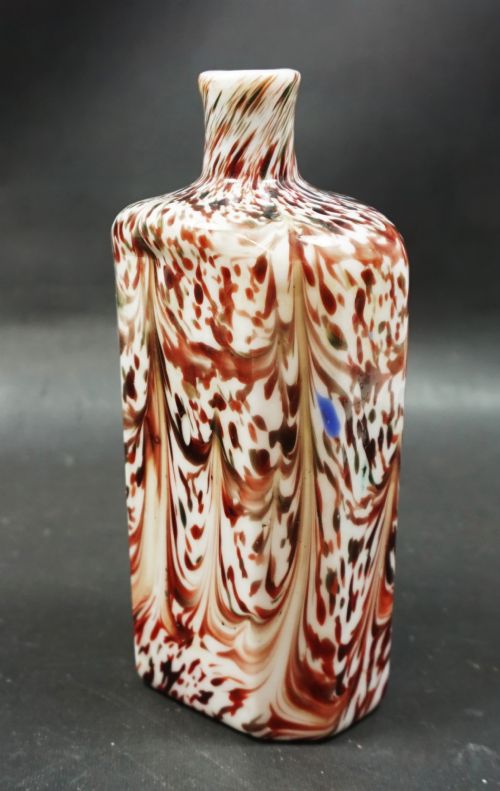
Swiss makers in 1750 decorated milk glass flasks with splattered glass frit, achieving a surprisingly modern speckled effect.
What varies in quality
Quality in a red glass spirit bottle rests upon the depth of the glass colour and the crispness of any cut or enamelled decoration. Finer pieces demonstrate precise facet cutting and well-balanced proportions that elevate them above standard utility wares.
The presence of an original matching stopper and the integrity of any hand-painted enamel work significantly influence the standing of an individual piece within its period.
The Red Glass Spirit Bottle Glossary
- Ruby glass
- A deep red coloured glass produced by adding gold chloride or copper to the molten batch during manufacturing. This rich shade defines many Victorian decanters.
- Cranberry glass
- A transparent pinkish-red glass created using gold in the glass mixture. It appears frequently in Edwardian barware and scent bottles.
- Overlay glass
- A technique involving two or more layers of contrasting glass fused together before cutting. This method creates striking geometric patterns by revealing the underlying colour.
- Coloured glass frit
- Finely crushed coloured glass fused to the surface of a vessel during melting. Swiss flasks from the mid-eighteenth century often display this decorative texture.
Red Glass Spirit Bottle: Frequently Asked Questions
What is a red glass spirit bottle used for?
These vessels served primarily for holding and serving spirits or fine liquors at the table or within a cabinet. They also functioned as decorative flasks and perfume or scent bottles.
Today, they remain popular for decorative display or for serving after-dinner drinks from a period-authentic container.
How do I date a red glass bottle?
Dating relies on identifying stylistic markers such as Victorian cut glass patterns, Edwardian forms, or eighteenth-century enamel work. Examining the base for pontil marks and wear also helps establish age.
Most pieces on this page originate from the Victorian and Edwardian eras, identifiable by their distinct heft and colour saturation.
Are ruby glass and cranberry glass the same?
Ruby glass and cranberry glass both feature red tones, but they differ in chemical composition and visual depth. Ruby glass tends to be darker and richer, whilst cranberry glass presents a lighter, brighter pink-red shade.
Both varieties were achieved using metallic oxides during the blowing process.
How should I clean my antique decanter?
Gentle cleaning with warm water and mild soap preserves the delicate enamel and glass surfaces. Harsh chemicals and abrasive scourers must be avoided to protect the finish.
Allowing the bottle to air dry completely prevents moisture accumulation inside the vessel.