




Silver Plate Fruit Basket
When you handle a silver plate fruit basket, you hold decades of dining heritage crafted for display.
Silver Plate Fruit Basket
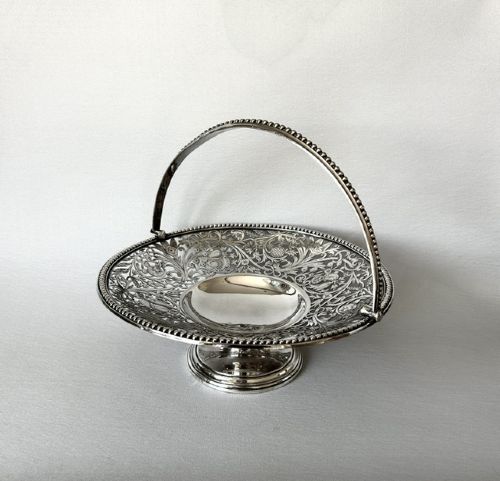
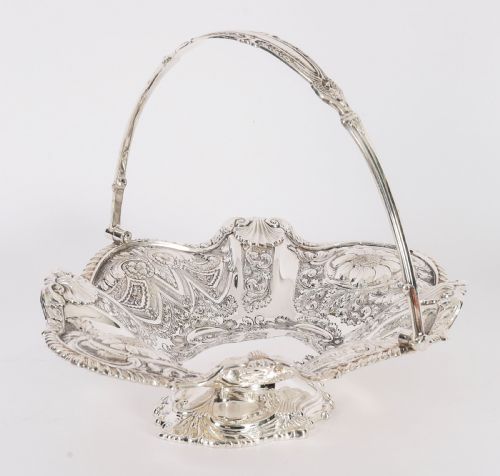
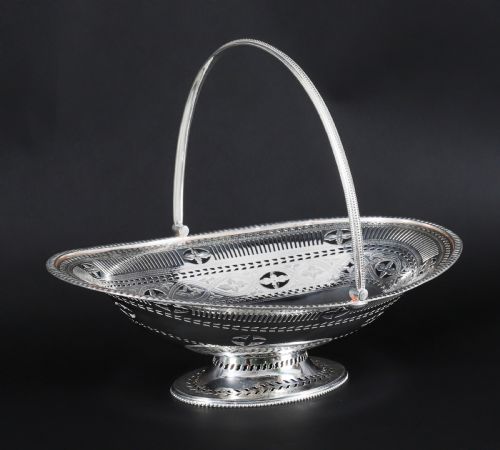
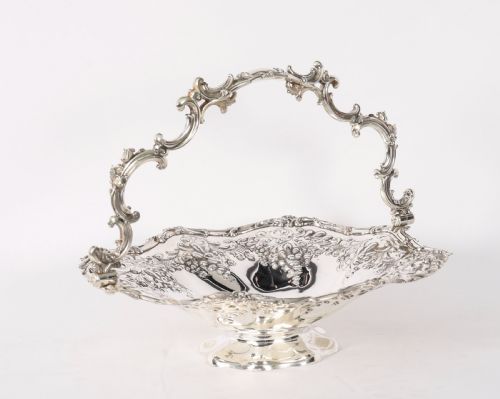
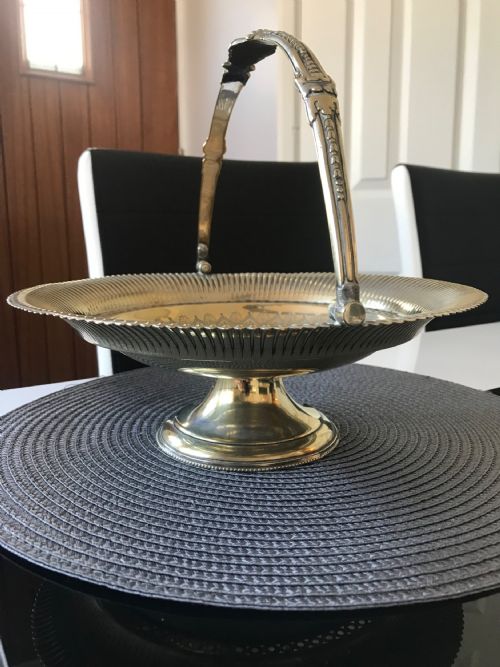
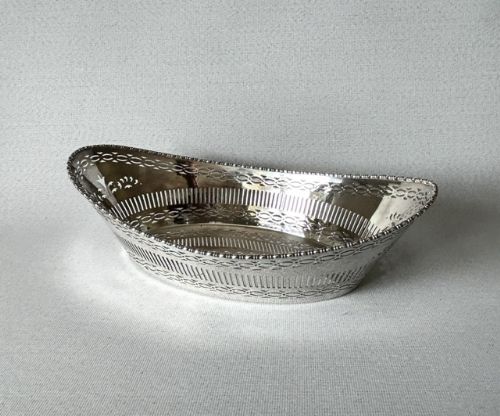
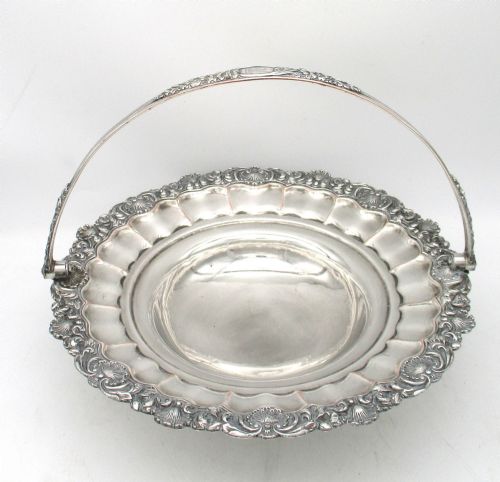
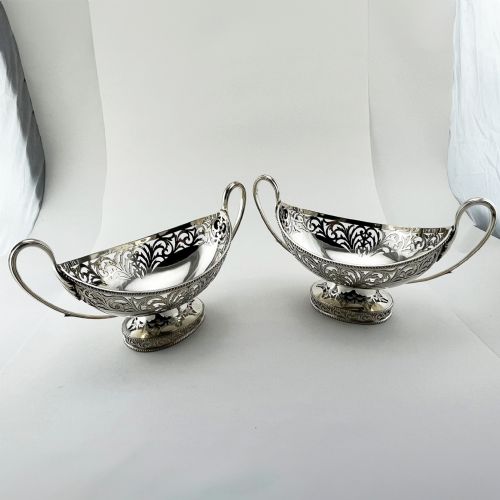
A silver plate fruit basket serves as a formal dining accessory designed to present fresh produce or baked goods with elegance. Buyers frequently encounter nineteenth century Victorian and Edwardian examples featuring decorative handles, pierced bodies, and elaborate rims.
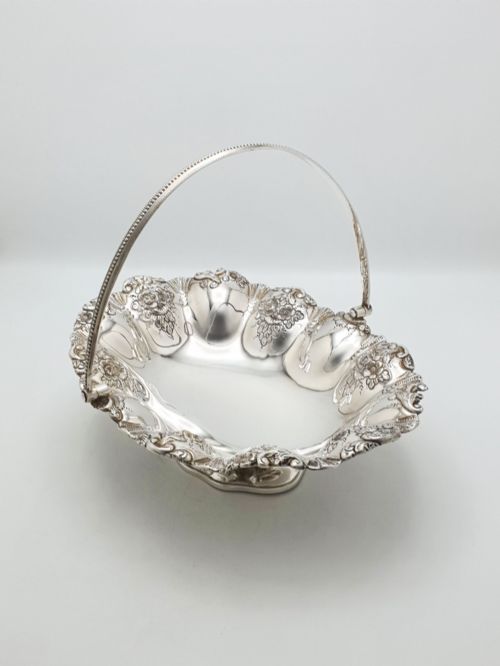
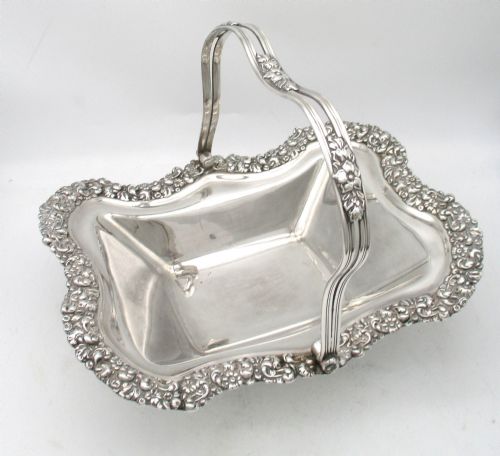
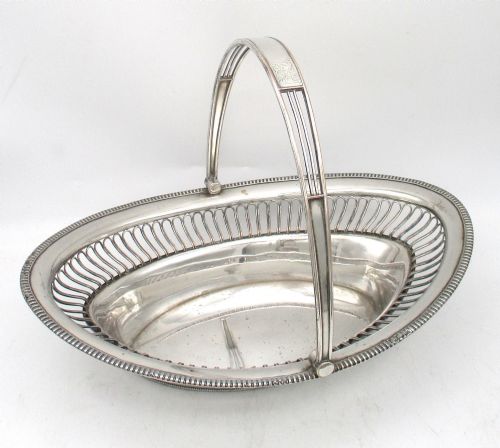
The forms range from circular bowls and wirework vessels to swing handle designs intended for easy passing at the table. Neoclassical and Rococo revival motifs appear alongside flowing Art Nouveau lines and geometric Art Deco shapes.
Originating largely from British workshops and European makers, these serveware items bridge utility and ornamental presentation. The selection spans early Old Sheffield Plate pieces through to later electroplated copper bases.
Materials and construction methods
Early examples utilise Old Sheffield Plate, a technique fusing a thin layer of silver onto a copper core by heat and pressure. This method often reveals subtle copper bleed along exposed edges and wirework seams.
Later nineteenth century production adopted electroplated nickel silver and standard silver plate over copper or base metal substrates. Artisans employed piercing, wirework manipulation, repoussé embossing, and floral engraving to texture the metal surfaces.
Design styles represented include Georgian wirework, Victorian Neoclassical, organic Art Nouveau, and geometric Art Deco.
Distinctions in quality and execution
Quality rests upon the crispness of the chased decoration, the structural integrity of pierced gallery work, and the original thickness of the silver layer. Superior examples retain their plating evenly across high-relief motifs without revealing the underlying base metal.
Maker attribution and balanced proportions elevate certain pieces, particularly those bearing the marks of prominent silversmiths and electroplaters. Heavier gauge metalwork and secure swing handles demonstrate superior craftsmanship during manufacture.
George W. Scott & Sons Ltd·Mappin & Webb·Elkington & Co·Walker & Hall·Thomas Bradbury·Martin Hall·Roberts & Belk·William Hutton & Son·Pinder Brothers
The Silver Plate Fruit Basket Glossary
- Old Sheffield Plate
- An early method of fusing silver to copper before the invention of electroplating. It is identified by sandwich construction visible at edges.
- Electroplated Nickel Silver
- A base alloy of copper, nickel, and zinc coated with a layer of silver via an electrical current. This material became standard for late nineteenth century manufacturing.
- Wirework
- A construction technique using interwoven metal wires to create open, lattice-like baskets. It requires skilled soldering and shaping.
- Repoussé
- A metalworking technique where the design is hammered into relief from the reverse side. This creates tactile floral and scroll patterns on the rim.
- Swing Handle
- A movable handle attached to pivots on the rim of the basket. It allows the vessel to fold flat for storage or presentation.
Silver Plate Fruit Basket: Frequently Asked Questions
How do I date a silver plate fruit basket?
Examine the manufacturing technique and decorative style visible on the piece. Old Sheffield Plate points toward the eighteenth and early nineteenth centuries, while electroplate and specific aesthetic movements indicate Victorian or Edwardian origins.
Maker marks stamped into the base provide further chronological clues. Cross-referencing these hallmarks with known operating dates narrows the period of creation.
What is the difference between Old Sheffield Plate and silver plate?
Old Sheffield Plate involves mechanically fusing a sheet of sterling silver to a copper ingot before rolling them together into sheets. This technique produces a distinct edge where the copper core shows.
Standard silver plate utilises an electrochemical process to deposit silver over a base metal such as nickel silver or copper. This later method lacks the characteristic sandwich edge of Old Sheffield pieces.
Can I use these baskets for serving food?
These pieces serve well for displaying dry fruits, bread, or decorative items on a dining table. Direct contact with acidic foods should be minimised to protect the historic metal surface.
Gentle cleaning with appropriate silver care products maintains the finish without wearing away the remaining plating.
Why do some baskets have swing handles?
Swing handles allowed the baskets to sit compactly on formal dining tables and sideboards. They also facilitated passing the serveware easily among guests during a meal.
Artisans designed the pivot mechanisms to hold the handle upright or fold flat depending on the desired presentation.