


Silver Plate Condiment Stand
A silver plate condiment stand brings order to the dining table, holding bottles and jars in a tidy frame of plated metal.
Silver Plate Condiment Stand
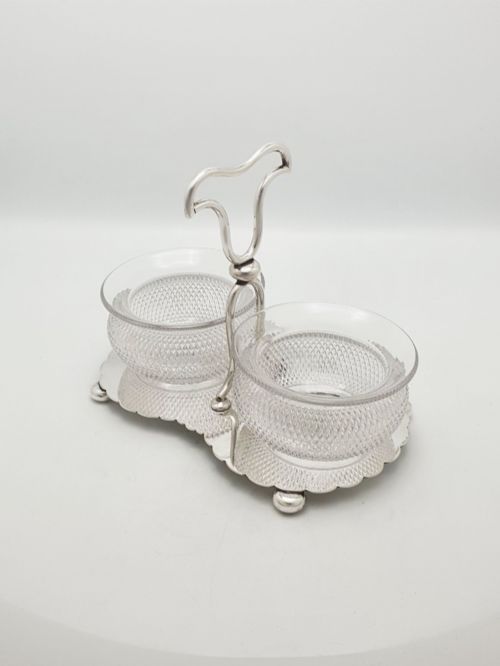
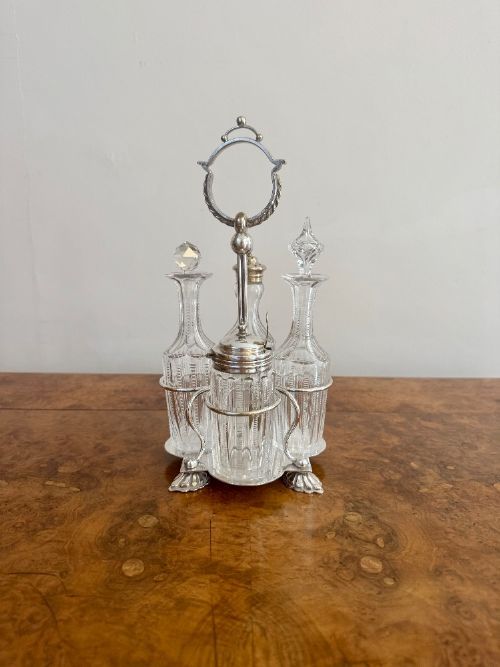
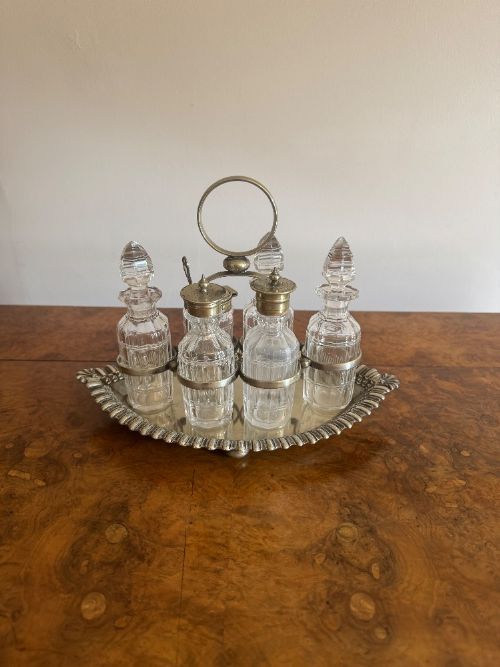
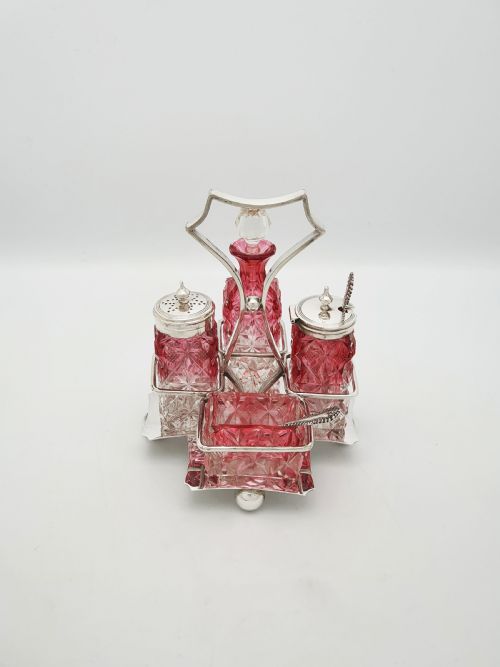
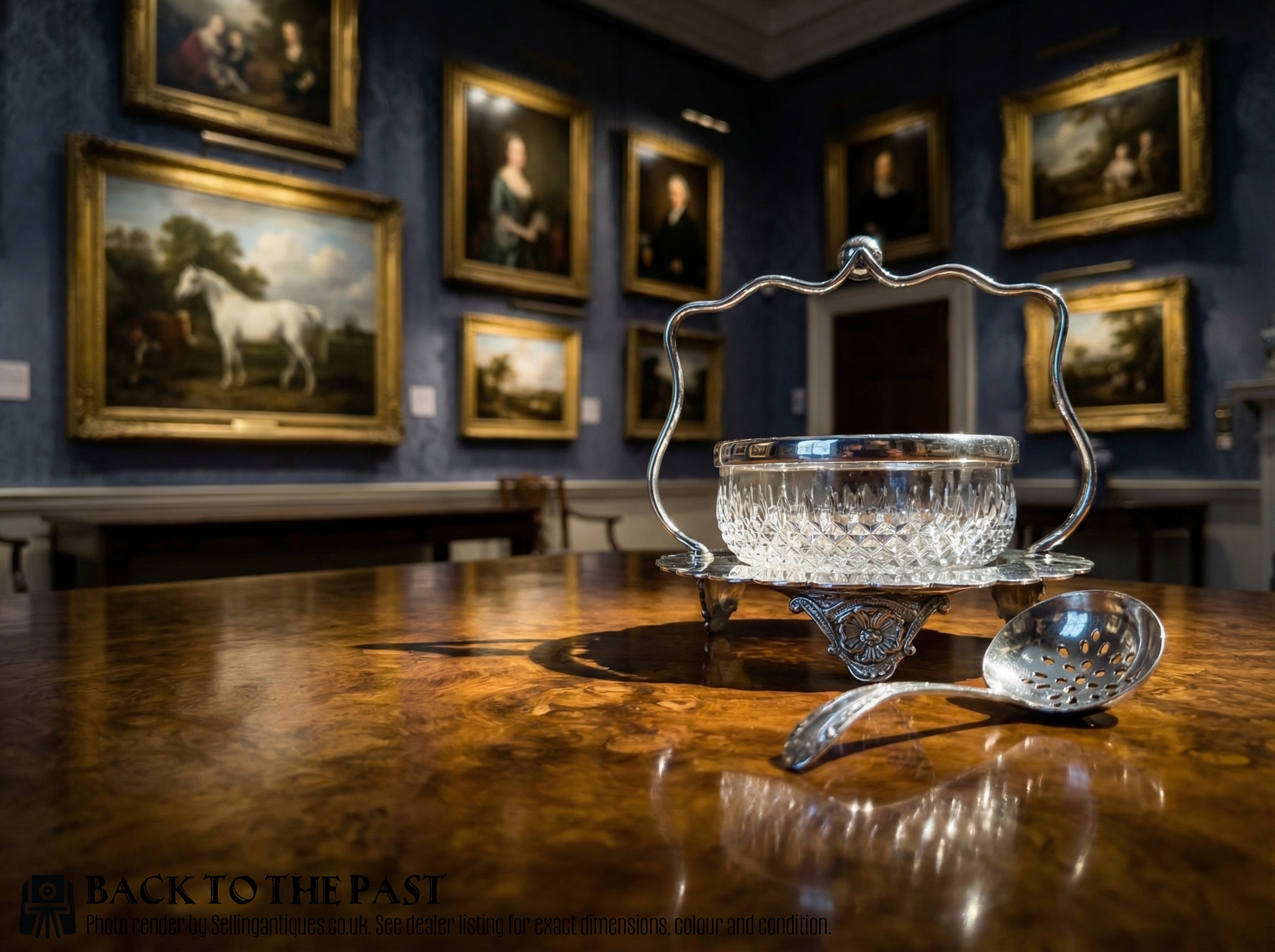
A silver plate condiment stand is an assemblage designed to hold cruets, bottles, and jars for sauces, vinegars, and seasonings during a meal. The pieces on this page span from the Georgian period through the Victorian and Edwardian eras into the Art Deco years, taking the form of multi-bottle cruet sets, relish caddies, and preserve dish stands. The most frequent encounters on this page are Edwardian six-bottle cruet sets and Victorian silver-plated frames holding cut glass or cranberry glass vessels.
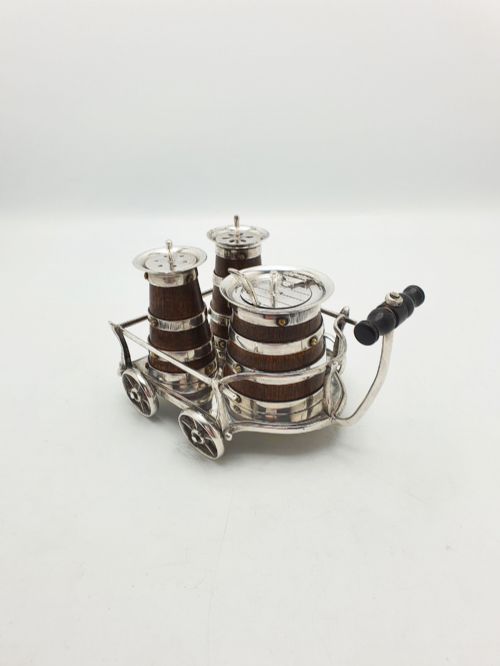
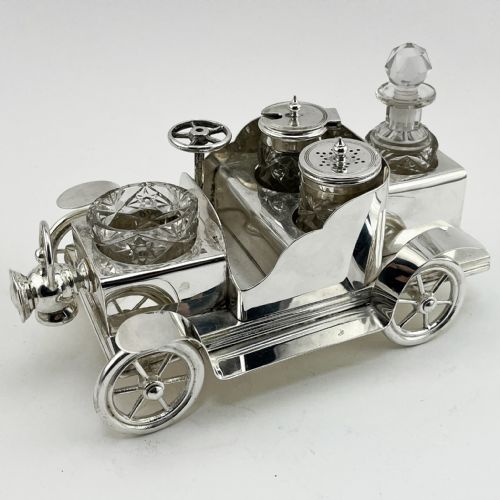
Makers and designers also produced novelty forms, including vintage cars, carriages, farmyards, and equestrian themes, which translate utilitarian dining ware into charming table sculptures. Alongside these stand bachelor sets designed for smaller households, as well as single or twin preserve dish stands paired with small spoons. The variety extends to oak barrels, walnut holders, and open salts, reflecting the changing tastes of dining room service across the nineteenth and early twentieth centuries.
Materials and Techniques
The primary material framework relies on silver plate over a base metal, frequently employing old Sheffield plate or electroplated nickel silver, combined with cut glass, cranberry glass, and clear glass vessels. Frames incorporate turned woods such as oak and walnut, alongside shaped wirework and cast mounts that secure the bottles in place. Cut glass bottles often feature faceted shoulders and star-cut bases to catch the candlelight on the dining table.
Manufacturing methods involve silversmithing techniques like silver plating, wire bending, and metal casting, paired with glass blowing and heavy cutting for the condiment bottles. Novelty items utilise detailed cast figures and moving wheels or handles, requiring careful assembly of mechanical parts alongside the standard framework of the stand.
Listings for silver plate condiment stands on this site span the Georgian, Victorian, and Edwardian periods up to the Art Deco era.
Judgments of Quality
Quality in a silver plate condiment stand rests on the crispness of the casting in the frame, the weight and clarity of the cut glass bottles, and the completeness of the matched set. Pieces with thick silver plating retain their bright finish and resist wear better than thinner coatings, while fully matched sets with original stoppers and mustard spoons demonstrate higher integrity than mismatched replacements.
The sophistication of the design dictates the upper tier of the range, distinguishing simple wire frames from heavily ornamented Victorian or Edwardian cast mountings with intricate handles and feet. Novelty examples depend on the detail and humour of their sculptural elements, such as the carriage wheels or equestrian figures, which elevate a standard table accessory into a conversation piece.
Mappin Brothers·Walker & Hall·Mappin & Webb·Wade Wingfield Wilkins
The Silver Plate Condiment Stand Glossary
- Cruet set
- A matched collection of bottles or jars held in a stand for condiments, vinegar, oil, and mustard. These sets formed an essential part of formal dining tables in the nineteenth century.
- Cranberry glass
- A rich red-pink transparent glass created by adding gold chloride to the molten batch. It appears frequently in Edwardian preserve bowls and cruet inserts.
- Old Sheffield plate
- An early method of fusing a thin sheet of silver onto a thicker copper base before rolling. This technique produces a distinctive warm tone distinct from later electroplate.
- Bachelor set
- A smaller scale cruet or condiment arrangement designed for single diners or intimate households. These compact stands usually hold two or three bottles.
- Relish caddy
- A specialised frame holding a glass jar and spoon for pickles, chutneys, or relishes. They are commonly found in Edwardian dining room inventories.
Silver Plate Condiment Stand: Frequently Asked Questions
How were these stands used?
These stands held the necessary liquids and relishes required to season food during a meal, placed centrally for guests to reach.
Different vessels within the stand accommodated oil, vinegar, mustard, pepper, and sometimes jams or preserves depending on the meal course.
How do I date a condiment stand?
Dating relies on the style of the metalwork, the manufacturing marks stamped on the base, and the cut of the glass inserts.
Victorian pieces often feature heavy ornamentation and elaborate casting, whereas Edwardian and later pieces lean towards cleaner lines or lighter wirework.
How do I clean silver plate?
Silver plate requires gentle cleaning with a specialised silver polish and a soft cloth to avoid wearing through the thin metal layer to the base.
Glass inserts can be washed separately in warm soapy water, ensuring all metal components remain dry to prevent tarnish.