


Silver Plate Coffee Service
A silver plate coffee service brings formal hospitality to the table, uniting gleaming metalwork with practical daily use.
Silver Plate Coffee Service
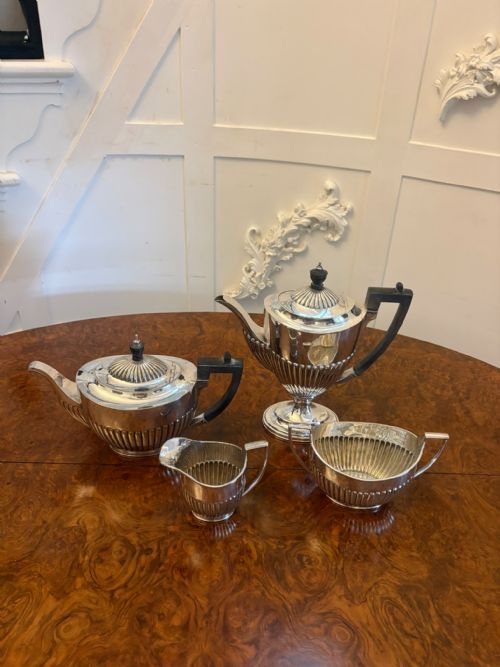
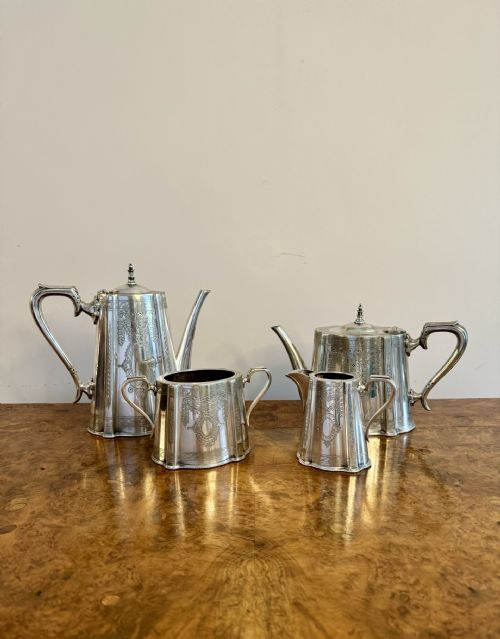
A silver plate coffee service comprises matching vessels for serving coffee alongside related pieces such as teapots, cream jugs, and sugar basins.
Most examples found on this page date from the Edwardian era and the Victorian period, reflecting the Victorian and Edwardian passion for elaborate domestic hospitality.
Forms range from compact three-piece sets to extensive six-piece services that include specialised pots for demitasse or café au lait.
Materials and construction
These services are produced using silver plate and electroplated nickel silver as the primary metallic base, often enhanced by copper elements in older pieces.
Insulating details such as handles and finials frequently utilise ebony, ebonised wood, or bone to protect users from heat.
Listings span from the nineteenth century through the Art Deco period of the 1930s, utilising silver plate, copper, ebony, and bone.
Assessing quality and craftsmanship
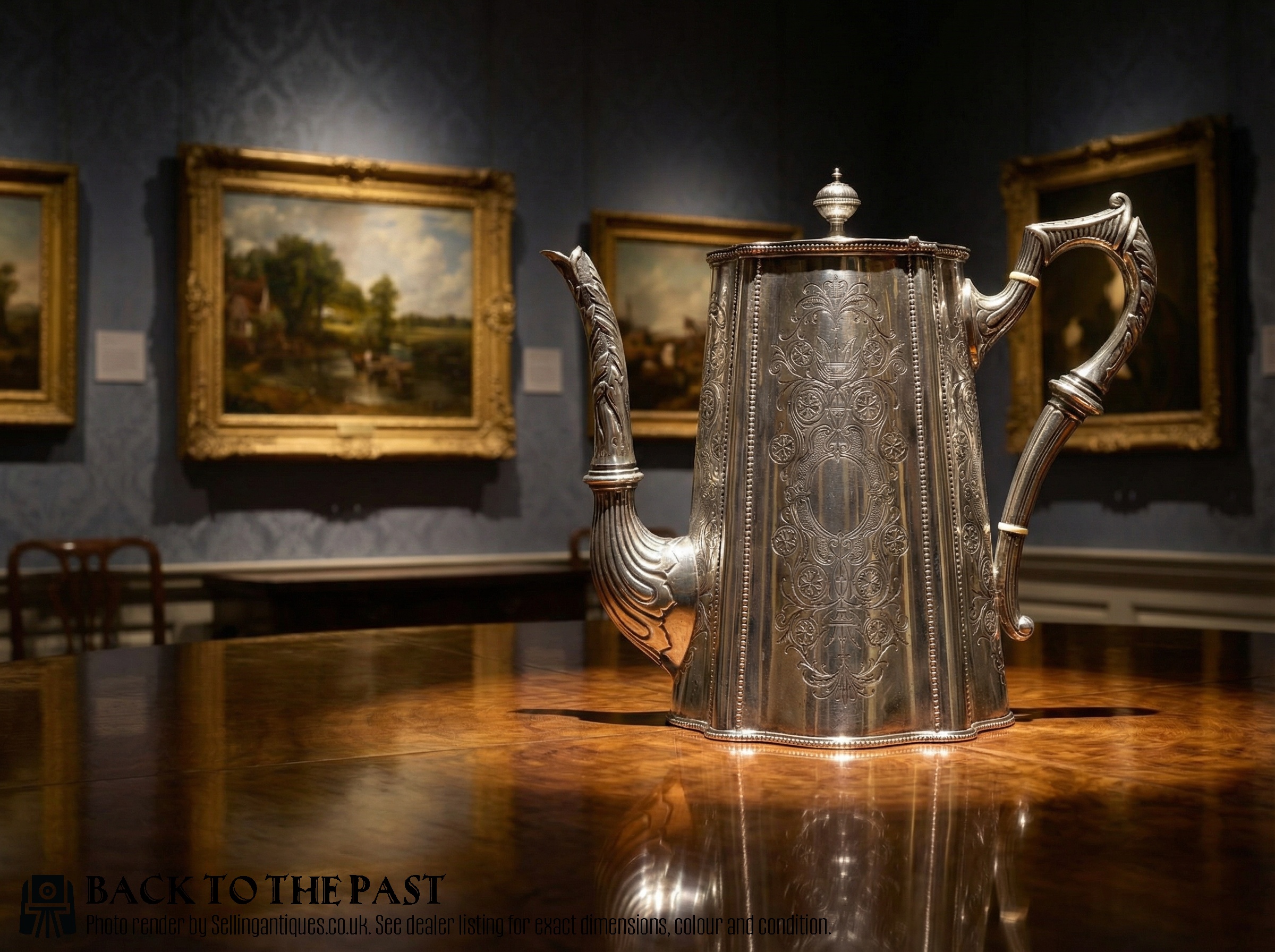
Quality shows in the weight of the metal and the crispness of decorative motifs like grapevine detailing or rococo revival scrolling.
Substantial handles securely joined to the body and well-fitted hinged lids separate high-grade workshop production from ordinary commercial wares.
Walker and Hall·Elkington·Frank Cobb and Co·Stower and Wragg·Garrards of London
The Silver Plate Coffee Service Glossary
- Silver plate
- A base metal coated with a thin layer of silver. This technique provided the visual appeal of solid silver at a lower cost.
- Electroplated nickel silver
- A strong alloy of copper, nickel, and zinc coated in silver through electrolysis. It became the standard industrial method for manufacturing durable tableware.
- Old Sheffield plate
- An earlier technique fusing a thin sheet of silver to a copper ingot before shaping. This method predates modern electroplating.
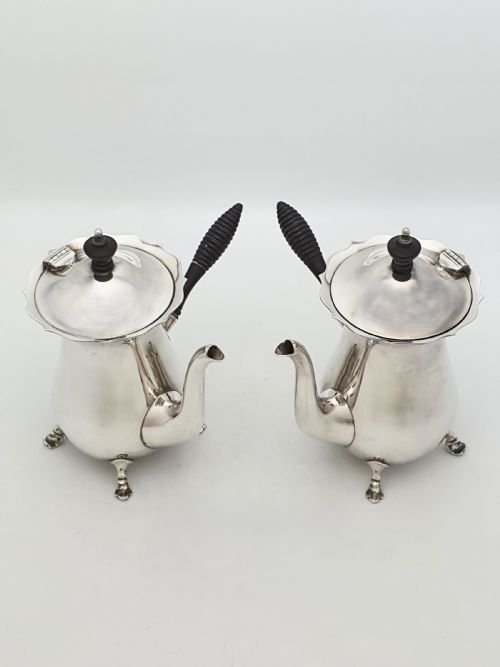
- Café au lait pots
- Paired pots designed to pour hot coffee and hot milk simultaneously into a cup. They appear in matching sets from the Edwardian period.
- Demitasse
- A small cup used for serving strong black coffee after a meal. Corresponding services include smaller pots tailored to these quantities.
Silver Plate Coffee Service: Frequently Asked Questions
How do I clean a silver plated service?
Use a specialised silver polish and a soft cloth to gently remove tarnish without scrubbing. Avoid harsh abrasives that can wear away the thin silver layer.
Wash pieces in warm soapy water and dry them thoroughly immediately after cleaning to prevent water spots.
Can I use these sets for daily coffee?
These sets are structurally sound for serving hot beverages, provided you handle them with reasonable care. Wash them by hand rather than placing them in a mechanical dishwasher.
Check that insulating handle spacers remain tight before pouring hot liquids.
How do I date a service?
Examine the overall style, such as the geometric lines of Art Deco pieces or the ornate curves of Victorian and Edwardian revival designs. Maker marks and manufacturing techniques also provide clues to the decade of production.
Electroplated marks became widespread after the mid-nineteenth century, while Old Sheffield plate points to earlier periods.
What pieces belong in a full service?
A complete service typically includes a coffee pot, teapot, creamer, and sugar basin, sometimes accompanied by a matching tray or hot water kettle. Larger configurations may add specialised vessels for demitasse or café au lait.
Not every surviving set retains every original component.