

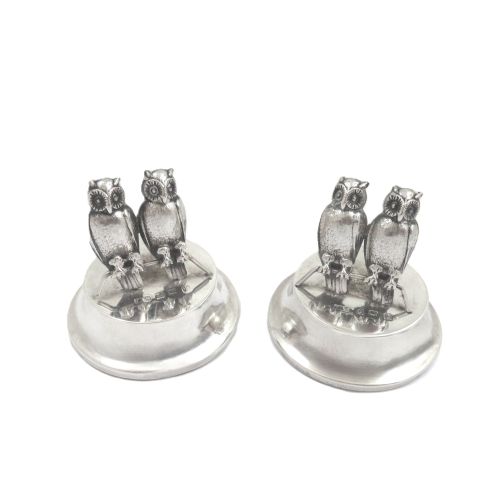
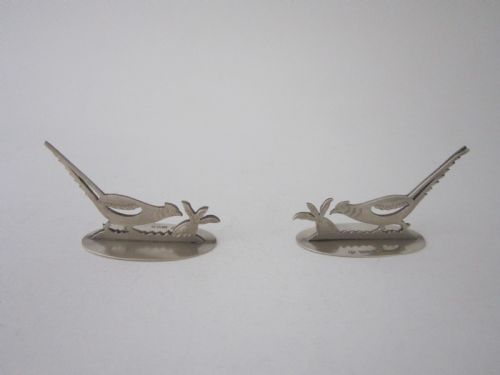

Silver Place Card Holder
These silver place card holder designs bring order to formal dining with miniature sculpture and crests.
Silver Place Card Holder
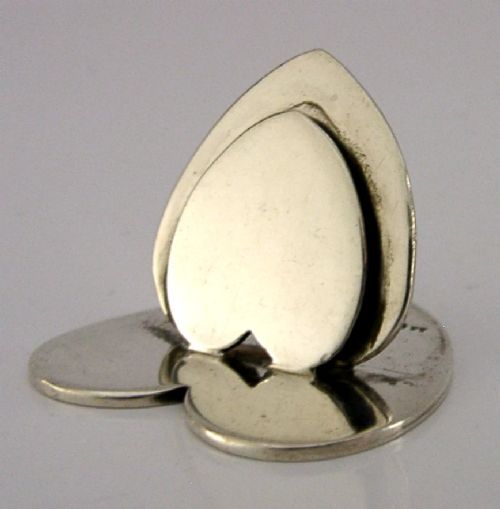
A silver place card holder sits on the dining table to indicate guest seating arrangements during formal meals. The archive shows these pieces combined with menu holders, serving a dual purpose at each setting.
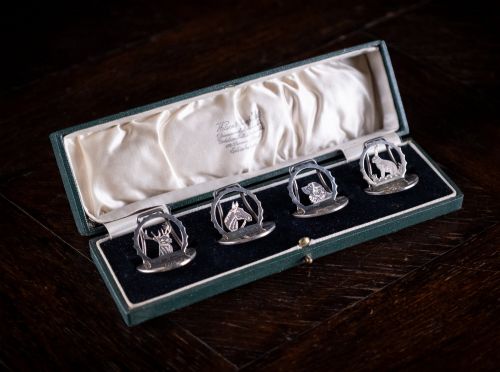
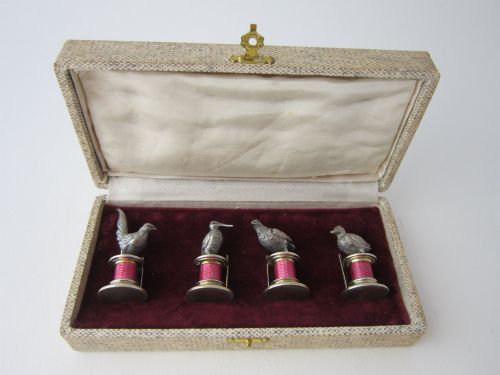
The recorded pieces date from the Victorian, Edwardian, George V, and Elizabeth II periods. Buyers encounter single items, pairs, cased sets of four, sets of six, eight, or twelve, alongside novelty forms.
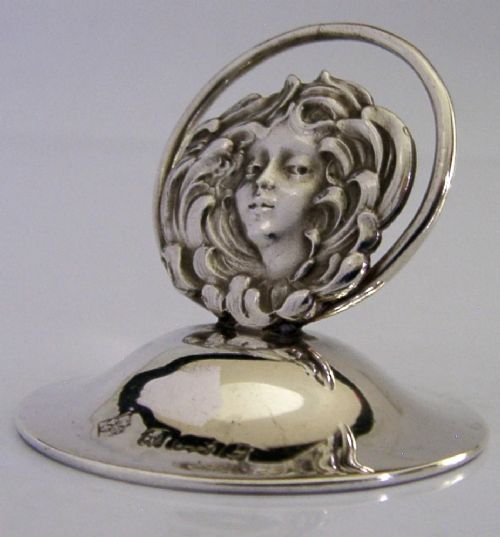
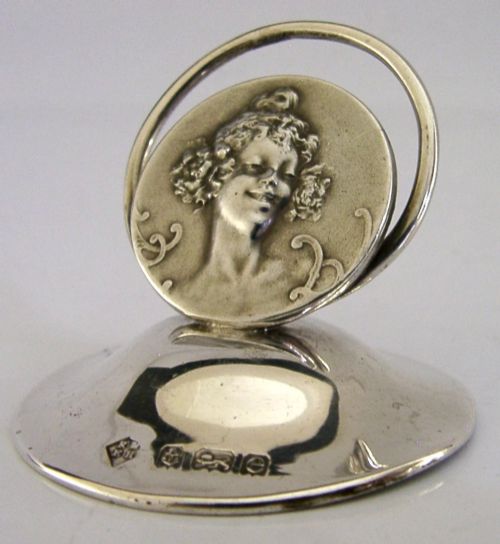
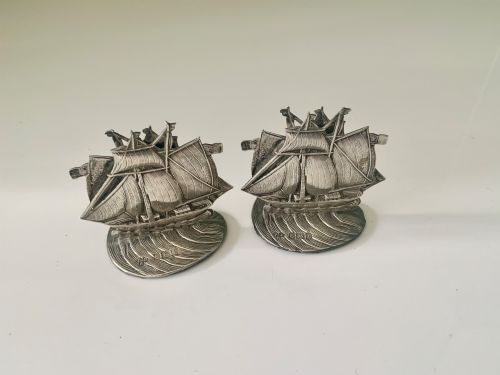
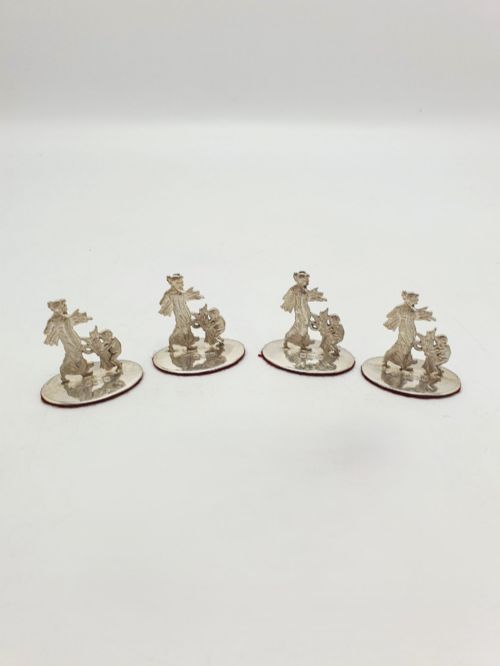
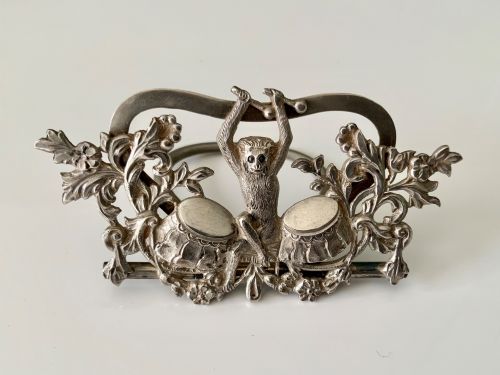
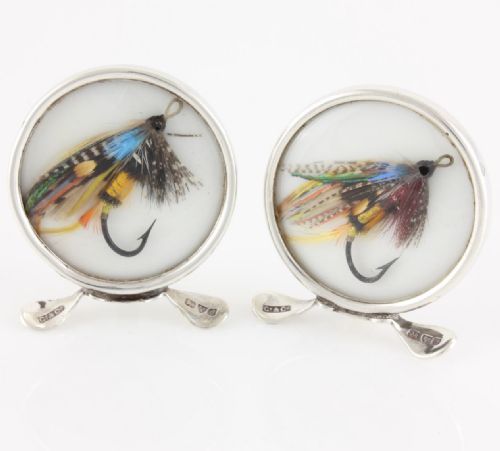
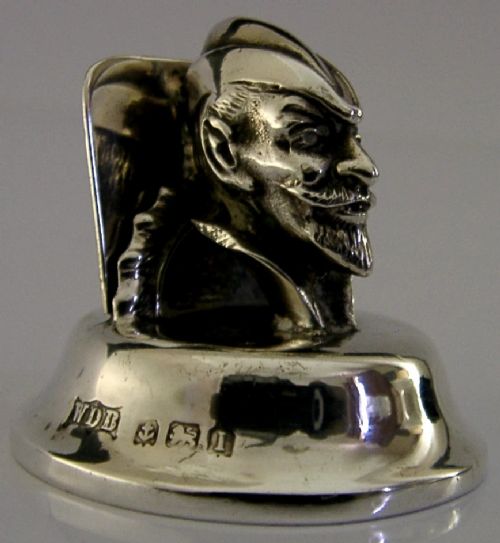
Subjects range from plain shields and custom monograms to figural representations. Animals, nautical themes, horseshoe motifs, and botanical leaf designs appear frequently across the archived inventory.
Materials and construction methods
Makers utilised sterling silver, Dutch silver, and silver-plated metal, occasionally incorporating enamel work and gemstone settings. Construction involved casting, stamping, and hinged components to support cards securely.
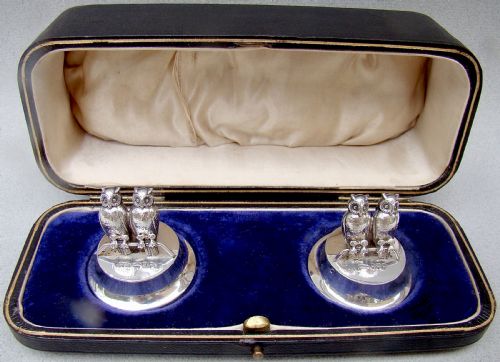
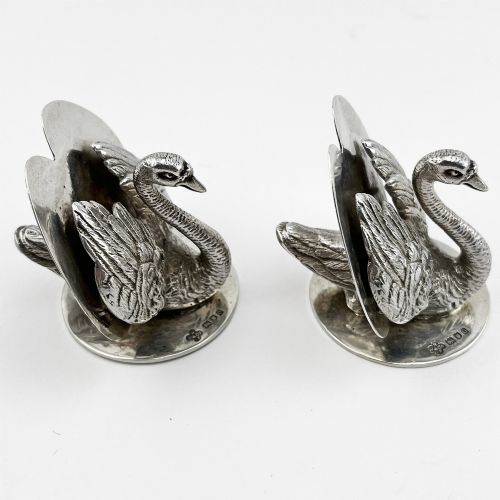
Many items bear hallmarks indicating assay offices such as Chester alongside specific assay dates. Detailed figural work relied on skilled chasing and casting to define subjects like owls, foxes, pheasants, and sailing ships.
Recorded materials span sterling silver, Dutch silver, enamel, and gemstones.
Judging quality and execution
Quality rests in the crispness of the casting and the weight of the silver used in the base and figural elements. Finer examples display sharp detail in animal feathers, fur, and engraved monograms.
Completeness within cased sets and matched pairs elevates the desirability of the grouping. Maker marks from established firms add documented provenance to the physical execution.
Sampson Mordan·Christofle·A Wilcox·Asprey
The Silver Place Card Holder Glossary
- Sterling silver
- A silver alloy containing 92.5 percent pure silver and 7.5 percent other metals, usually copper, to increase durability. This standard is marked by the lion passant on British pieces.
- Hallmark
- A series of official marks stamped on items to indicate the standard of silver purity, the assay office, the maker, and the year of production. These stamps provide dates for Edwardian and George V pieces.
- Menu holder
- A table accessory designed to hold paper menus upright alongside place cards. Many archived examples combine both functions in one heavy silver base.
- Novelty
- An object shaped in a whimsical or unusual form, such as a galleon ship, artist palette, or horseshoe. These pieces diverge from standard geometric shields to amuse diners.
- Cased set
- A matching group of items housed in a fitted presentation box lined with velvet or silk. Such sets often preserve the pieces in pristine condition.
Silver Place Card Holder: Frequently Asked Questions
What are silver place card holders?
These small decorative objects anchor paper name cards to dining tables. They keep seating arrangements clear during large dinner parties.
Most archived examples also hold printed menus alongside the guest names. They range from simple shields to detailed animal sculptures.
How were place card holders used?
Hosts placed them beside each table setting to direct guests to their assigned seats. They remained on the linen throughout the meal.
Matching sets ensured a uniform appearance across large dining tables. Cased sets were often given as wedding or anniversary gifts.
How do I date an Edwardian silver holder?
You check the hallmarks stamped into the silver, which include the assay office mark and a date letter. Edwardian pieces date from the reign of King Edward VII.
Maker marks also help narrow down the production decade. Records show many examples stamped between 1905 and 1911.
Can I use antique holders today?
Modern place cards fit securely into the original slots or hinged clips of antique holders. They add traditional character to contemporary dinner tables.
Careful handling prevents damage to the delicate silver bases and figural details. Polishing should be done gently with appropriate silver cloths.