



Silver Guilloche Enamel Holder
A silver guilloche enamel holder brings machined geometric precision and bright translucent colour to your table or desk.
Silver Guilloche Enamel Holder
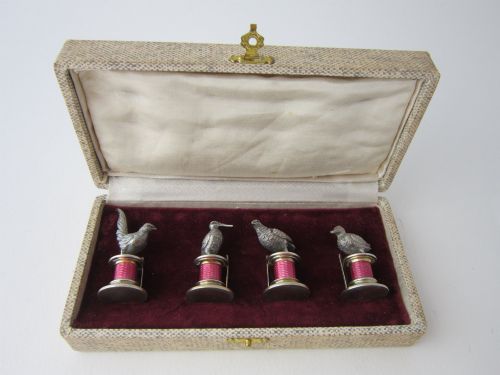
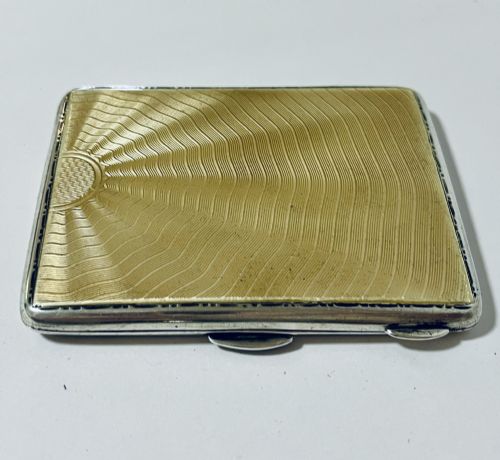
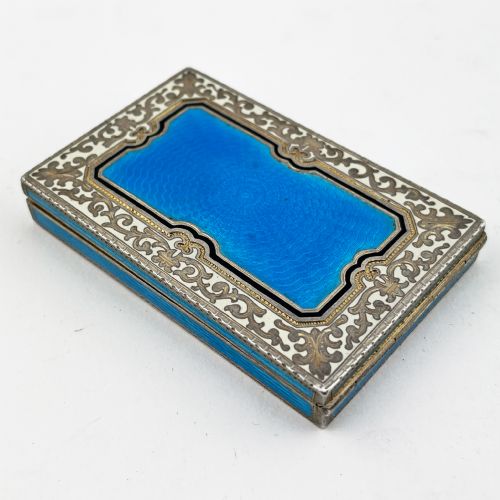
A silver guilloche enamel holder encompasses items designed to organise cards, menus, napkins, and cigarettes, using patterned metalwork beneath coloured glass. These objects range from Edwardian menu place card holders and 19th century card cases to Art Deco cigarette cases and mid-century British candlesticks.
You will most frequently encounter menu and place card holders alongside napkin rings and desk accessories, often displaying the characteristic engine-turned engraving that defines the style. Pieces span the nineteenth century through to the nineteen sixties, reflecting changing social habits across the decades.
Continental workshops and makers such as David Andersen produced varied utilitarian forms, applying vibrant vitreous enamel over textured sterling silver and gilt metal. Each item serves a domestic or social function, combining metal chassis with decorative translucent surfaces.
How they were made
Makers fashioned the structural components from sterling silver, silver, and gilt metal, forming cases, candlesticks, and racks to hold cards and cigarettes. Surfaces received mechanical engraving to create precise geometric patterns before the application of colour.
Vitreous enamel and guilloche enamel powders were fused to the metal ground through kiln firing, producing a smooth, glossy decorative layer. Silk and velvet occasionally lined the interior compartments of card cases and desk accessories.
Art Deco and Edwardian designs demanded meticulous alignment between the engine-turned metalwork and the translucent enamel coating, allowing light to reflect through the coloured layers.
Silver Guilloche Enamel Holder Retail Price Guide 2026
Typical asking prices for silver guilloche enamel holder among the pieces listed under this phrase on Sellingantiques today, from the lower quarter to the upper quarter. They describe what is for sale here now, not the wider market.
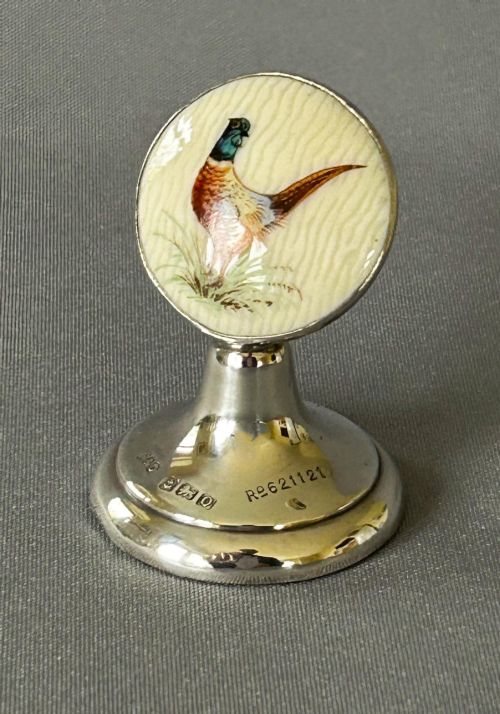
A solitary pheasant once held court over dinner menus, standing ready in silver and enamel to guide guests to their seats.
What varies in quality
The sophistication of the engine-turned pattern beneath the enamel dictates the visual depth of the piece, with complex geometric layouts creating superior light play. Crispness in the stamping and casting of the sterling silver frame separates standard production from finer workshop output.
The clarity and uniformity of the vitreous enamel coating determine the success of the surface, as uneven firing introduces cloudiness or bubbles. Maker marks, such as those from David Andersen or Continental silver standards, indicate the origin and reliability of the metal composition.
David Andersen
The Silver Guilloche Enamel Holder Glossary
- Guilloche enamel
- A decorative technique where a mechanical lathe engraves a precise, repetitive pattern into metal before translucent enamel is applied over the top. This lets the underlying geometric design show through the coloured glass layer.
- Sterling silver
- An alloy consisting of silver and other metals, usually copper, formulated to increase durability while maintaining a high purity standard. It forms the structural base for most high-grade holders.
- Vitreous enamel
- A material made by fusing powdered glass to a substrate by firing, usually between eight hundred and nine hundred degrees Celsius. The powder melts, flows, and hardens to a smooth, durable vitreous coating.
- Gilt metal
- Base metal or silver that has been coated with a thin layer of gold through fire gilding or electroplating. It provides a warm golden tone beneath transparent enamel layers.
- Engine turning
- A precision machining technique that uses a machine to transfer a geometric pattern of fine lines into a metal surface. It serves as the foundation for guilloche decoration.
Silver Guilloche Enamel Holder: Frequently Asked Questions
What is a silver guilloche enamel holder?
It is a functional decorative item made from silver featuring engine-turned engraving beneath translucent coloured enamel.
These pieces include menu card holders, napkin rings, and cigarette cases from the Edwardian and Art Deco eras.
How do I date my holder?
Dating relies on hallmarks stamped into the silver, stylistic cues like Art Deco geometry, and maker marks.
Twentieth century pieces often show distinct periods such as the Edwardian era or the nineteen sixties.
Were these items used daily?
Many pieces served specific social functions in dining rooms, writing desks, and smoking rooms during formal gatherings.
Menu holders, place cards, and card cases were standard accessories for middle and upper class domestic life.
How do I clean enamelled silver?
Cleaning requires a soft cloth and mild soapy water to protect the glass enamel surface from harsh abrasives.
Silver polish should stay strictly on the exposed metal parts to avoid scratching the vitreous coating.