
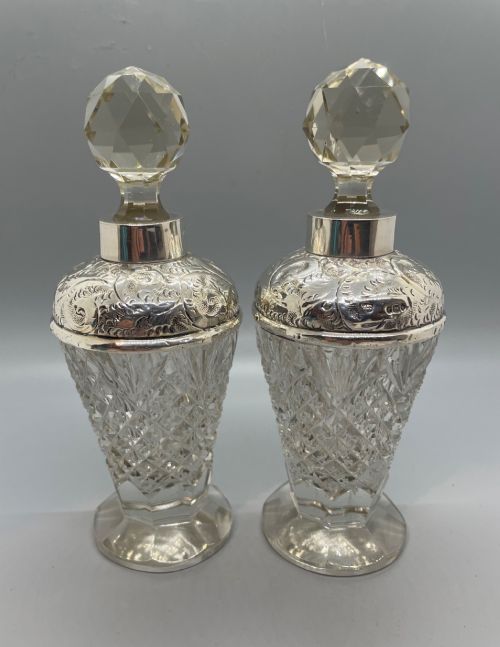
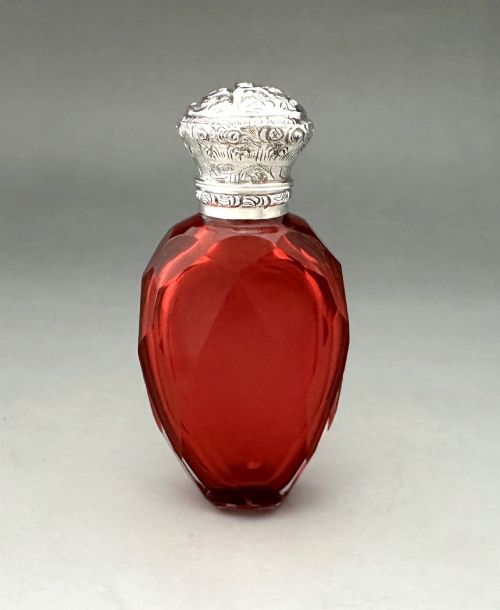
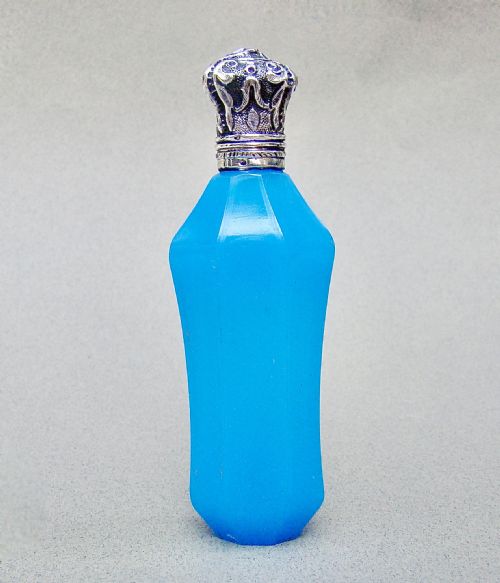
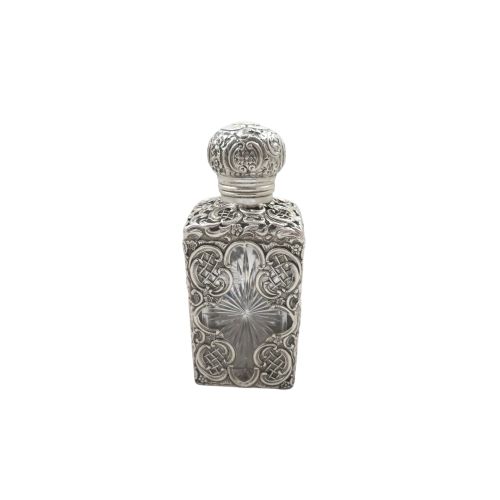
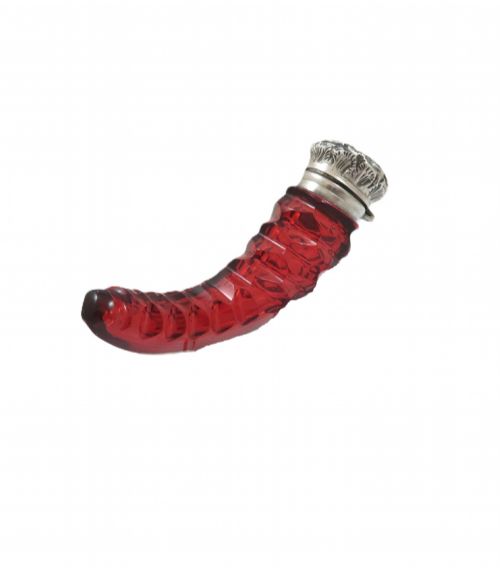
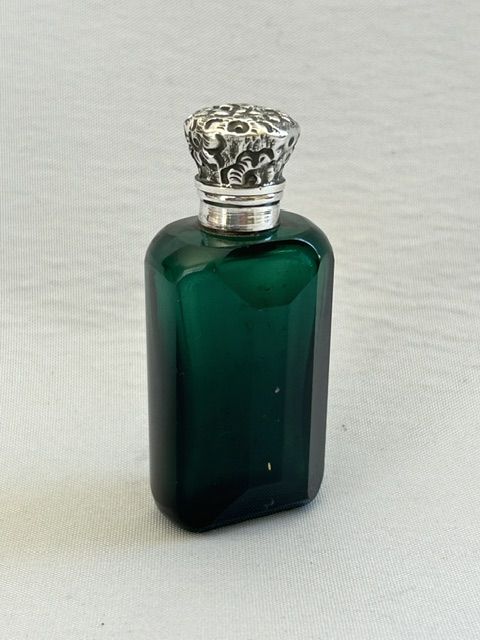
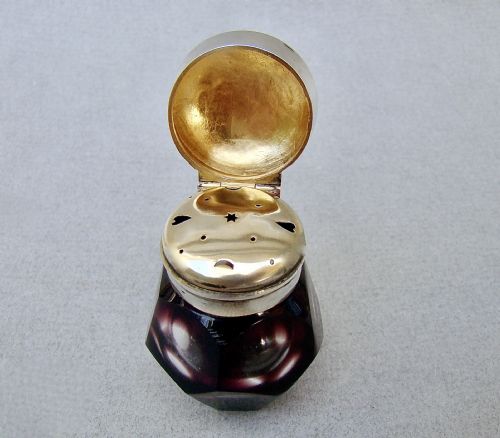
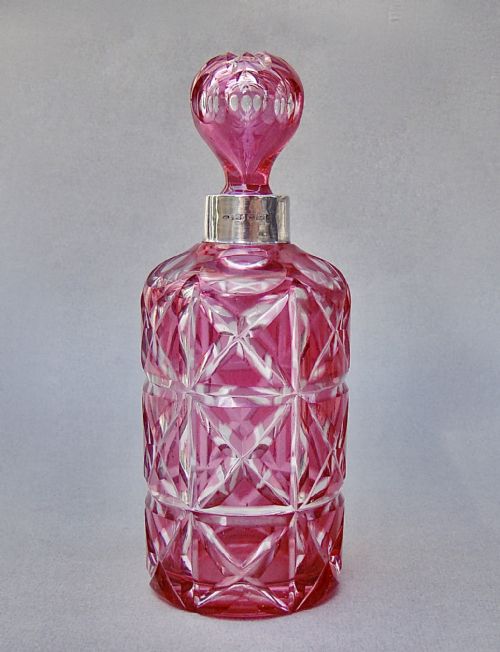

Silver Mounted Glass Flask
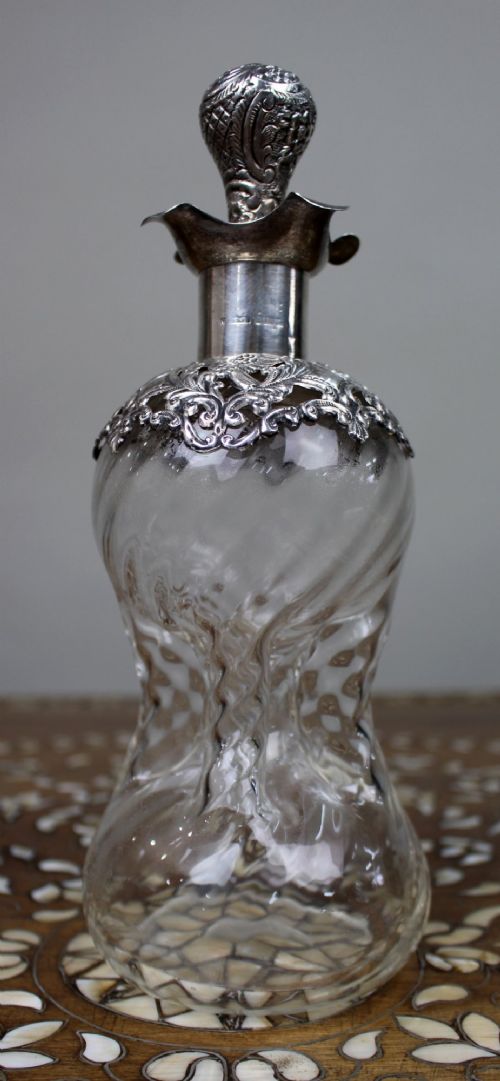
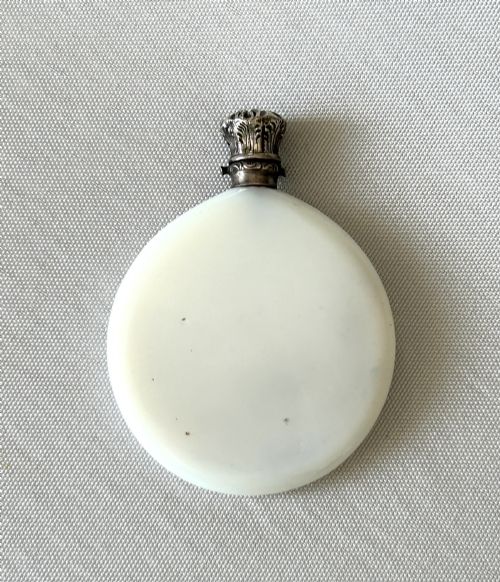
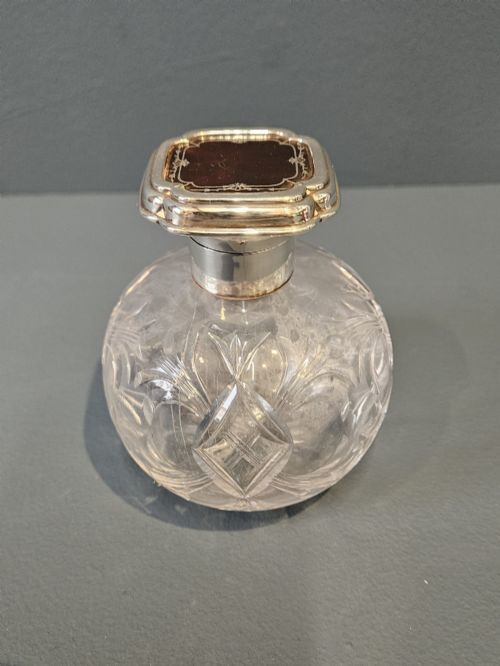
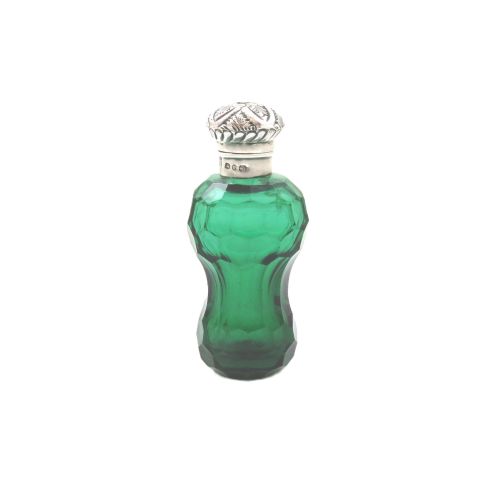
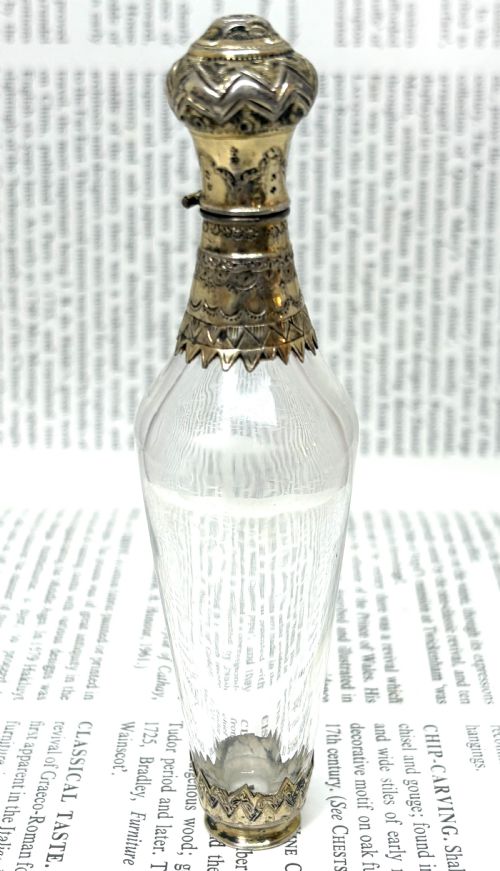
These pieces are a silver mounted glass flask, combining metalwork and glass to hold scent, spirit or wine.
Silver Mounted Glass Flask
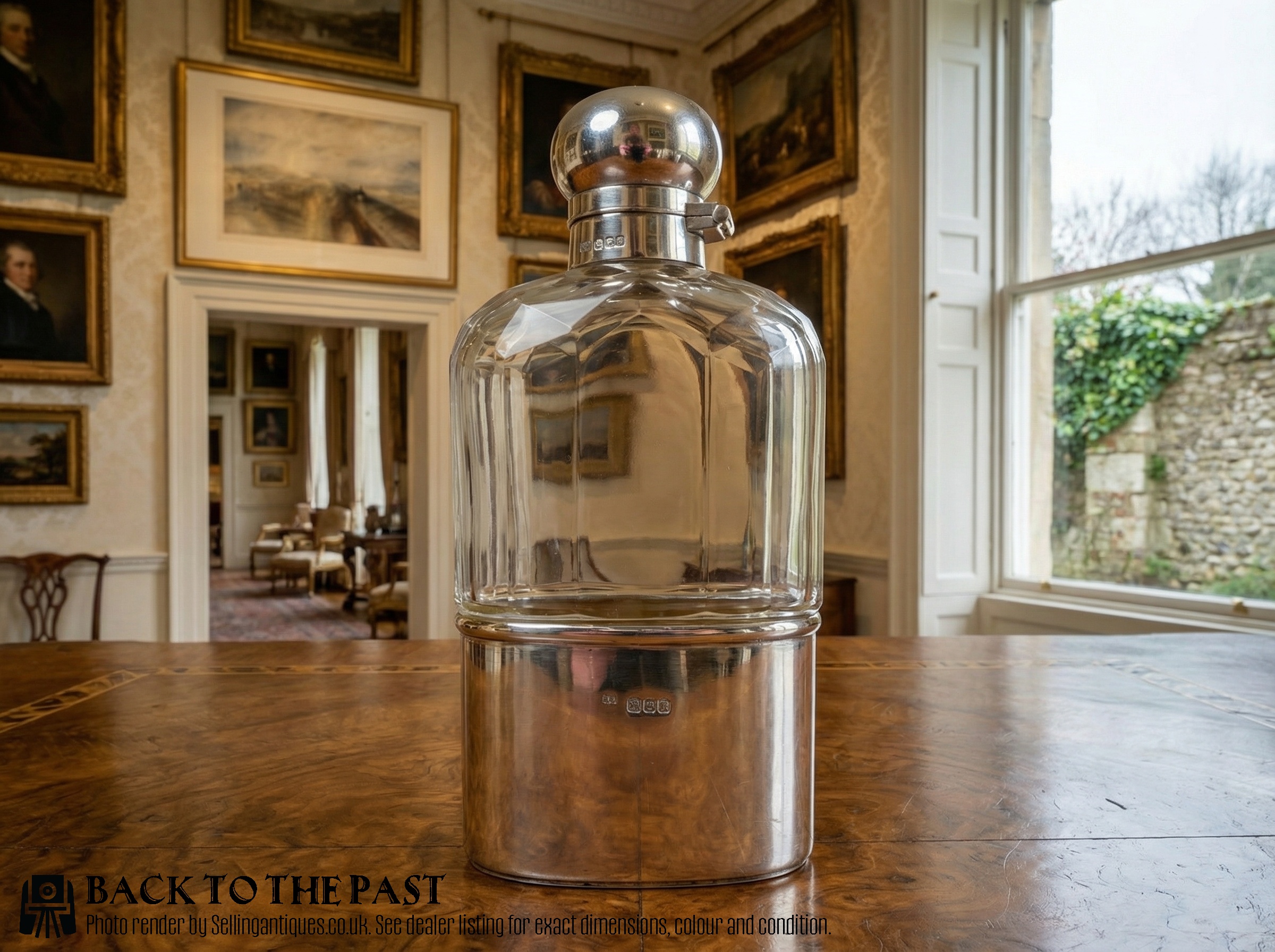
A silver mounted glass flask bridges the practical and the decorative, taking form as scent bottles, decanters, spirit flasks and hip flasks. The phrase encompasses items meant for personal carriage as well as those intended for the dining table or bar.
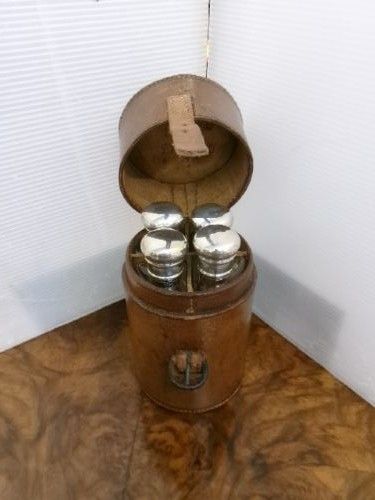
The most common examples on this page belong to the Victorian and Edwardian periods, frequently executed in sterling silver paired with cut glass, cranberry glass or green glass. Formats range from pocket-sized scent bottles with hinged lids to larger hunting flasks and spirit containers housed in leather cases.
How they were made
Glass bodies were produced through blowing, cutting, or moulding, often utilising rich colours like ruby, amethyst, amber and Bristol green alongside clear cut crystal and opaline glass. Overlay and etching techniques added surface pattern and texture to the glass.
Silversmiths shaped sterling silver, silver gilt and silver plate into mounts, collars, screw caps and hinged lids, frequently securing them directly to the glass neck or body. Hallmarks stamped into the metal record the assay office, year and maker.
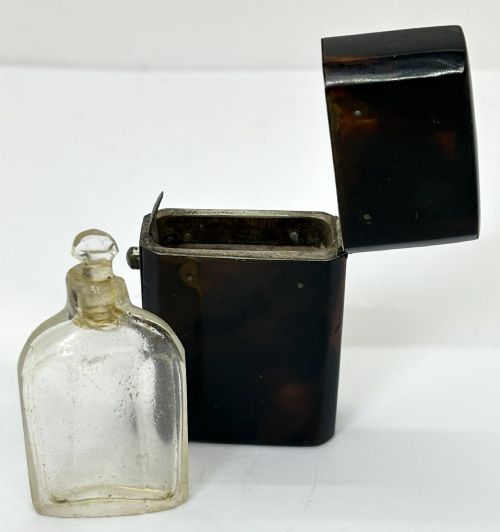
Additional materials such as leather, tortoiseshell and wicker appear as cases or outer jackets that protect the glass flask and provide a secure grip during travel.
Listings feature sterling silver paired with cut crystal, cranberry glass, tortoiseshell and leather across Victorian and Edwardian periods.
What varies in quality
The standard of cutting and the depth of colour in the glass body set the baseline, with crisp facets and rich hues indicating finer production. Heavy, clear crystal and saturated cranberry or amethyst glass elevate a piece above simple moulded alternatives.
The weight and detail of the silver mounts distinguish finer examples, particularly where silversmiths utilised chasing, engraving or gold gilding. The snugness of the fit between metal and glass, alongside the clean operation of hinged lids and screw caps, marks superior craftsmanship.
Harold Bushell and Co·Barnsley and Co·Elkington·Asprey·Brownett and Rose
The Silver Mounted Glass Flask Glossary
- Sterling silver
- A silver alloy containing 92.5 percent pure silver and 7.5 percent other metals, typically copper. This standard alloy provides the durability required for functional mounts and caps.
- Cranberry glass
- A transparent pinkish-red glass produced by adding gold chloride to the molten glass batch. It gained popularity during the Victorian era for decorative scent bottles and tableware.
- Double ended scent bottle
- A vessel featuring two compartments accessed from opposite ends, allowing the owner to carry two different perfumes simultaneously.
- Spirit flask
- A portable container designed to hold alcoholic beverages, often fitted with a removable cup at the base and enclosed in a leather case for travel.
- Hallmark
- A series of official marks stamped onto precious metal items in the United Kingdom to indicate the standard of purity, the assay office, and the year of manufacture.
- Vinaigrette
- A small ornamental box or bottle containing a sponge soaked in aromatic vinegar, used in the nineteenth century to counteract unpleasant odours.
Silver Mounted Glass Flask: Frequently Asked Questions
What is a silver mounted glass flask?
A silver mounted glass flask is a vessel that combines a glass body with protective or decorative silver mounts, collars and caps.
These pieces were made in various forms, including pocket scent bottles, spirit flasks for travel, and decanters for the home.
How were silver mounts attached to glass?
Silversmiths typically secured mounts directly to the neck or body of the glass vessel using specialised adhesives or tight mechanical fits.
The metal collar then held the hinged lid, screw cap or stopper in place to prevent leaks.
How do I date a silver mounted flask?
You date these pieces primarily by reading the hallmarks stamped onto the silver mounts, which indicate the exact year and assay office.
The style of the glass cutting and the overall form also offer strong clues to whether a piece is Victorian, Edwardian or earlier.
How do I care for antique glass and silver?
Clean the glass body gently with warm soapy water, avoiding harsh abrasives that might scratch coloured or overlaid surfaces.
Polish the silver mounts carefully with a soft cloth while ensuring metal polish does not seep into the interior or onto the glass.