


Silver Mounted Flask
A silver mounted flask brings together precious metal and glass or leather to form a portable vessel for scent or spirits.
Silver Mounted Flask
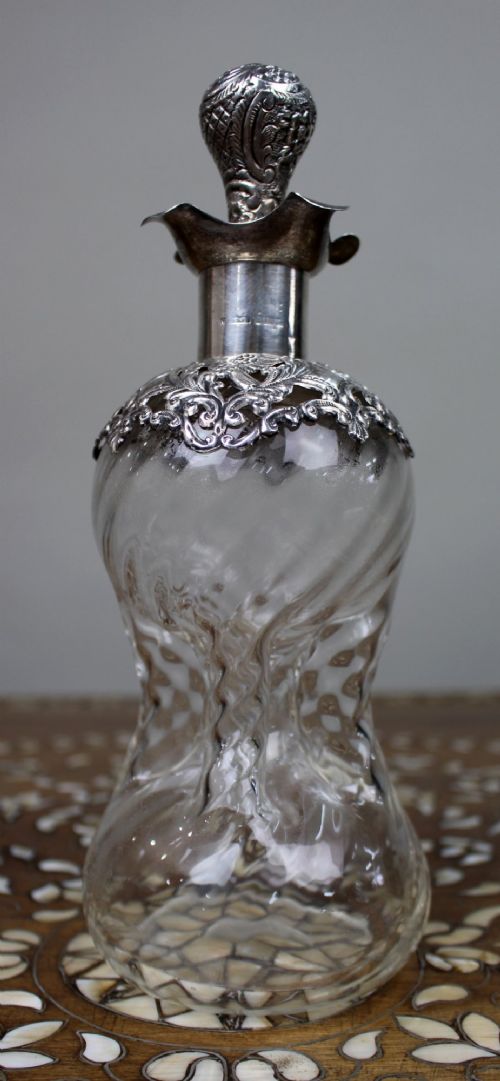
A silver mounted flask encompasses items designed to hold liquids securely while displaying decorative metalwork. When you search for this phrase, you encounter forms ranging from pocket perfume bottles to hunting flasks and spirit decanters.
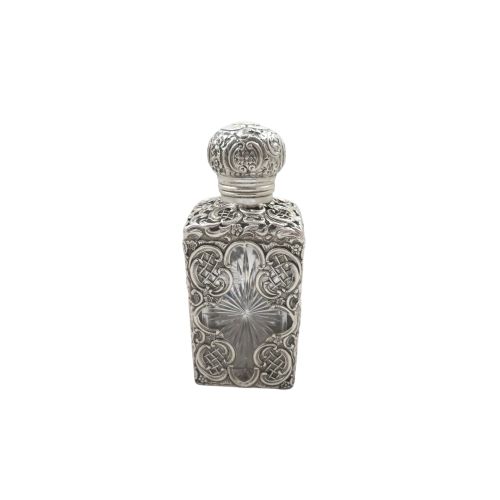
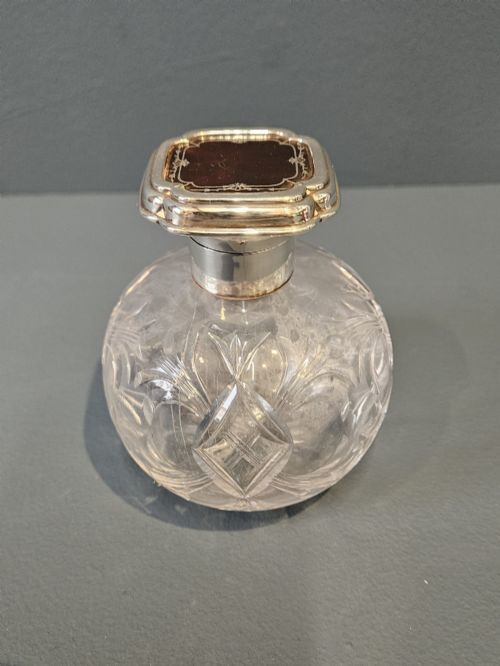
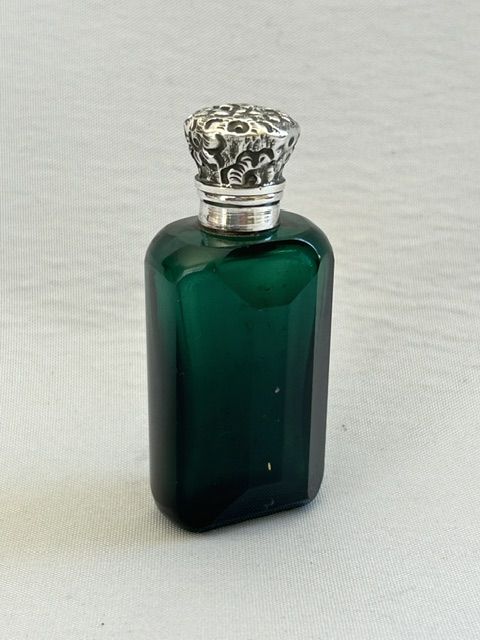
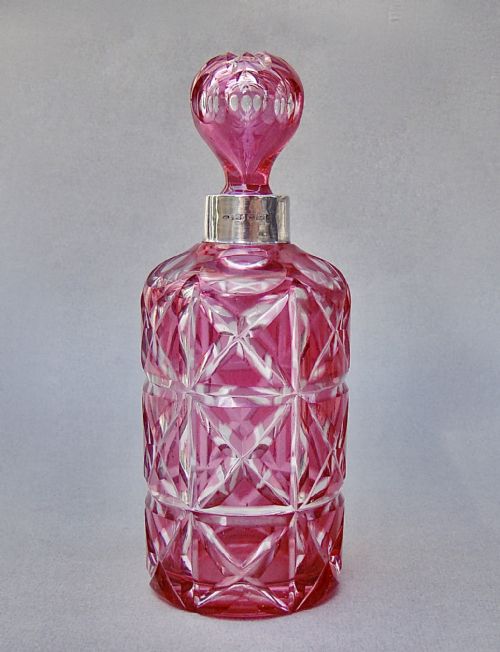
Victorian and Edwardian pieces dominate the selection, alongside earlier 19th-century examples. The most frequent versions on this page combine sterling silver collars or lids with cut glass, crystal, or coloured glass bodies.
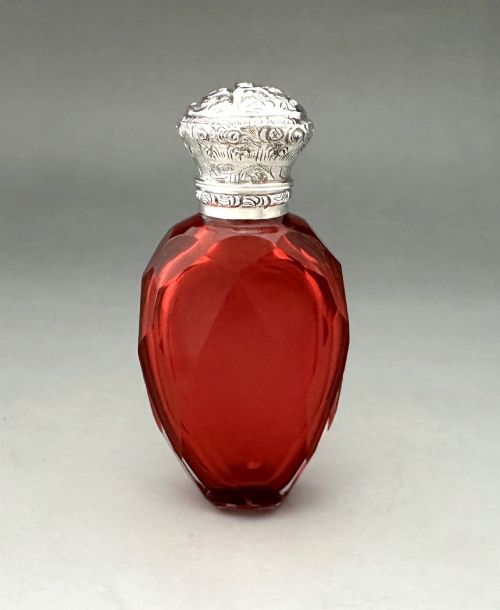
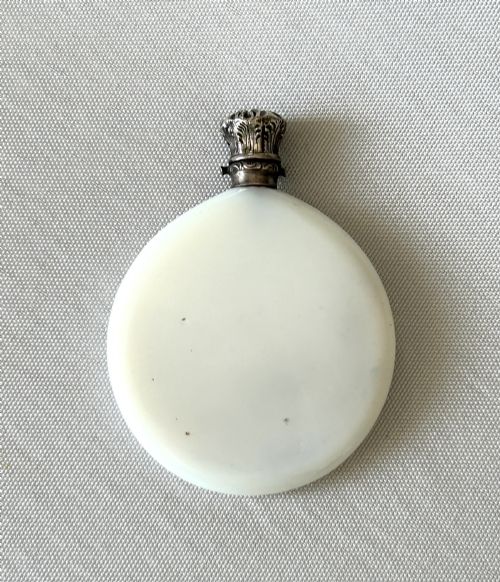
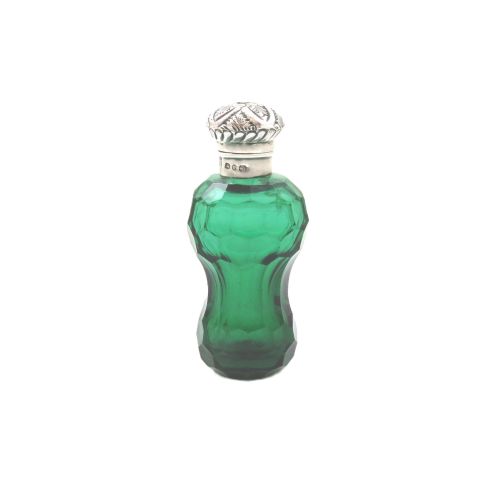
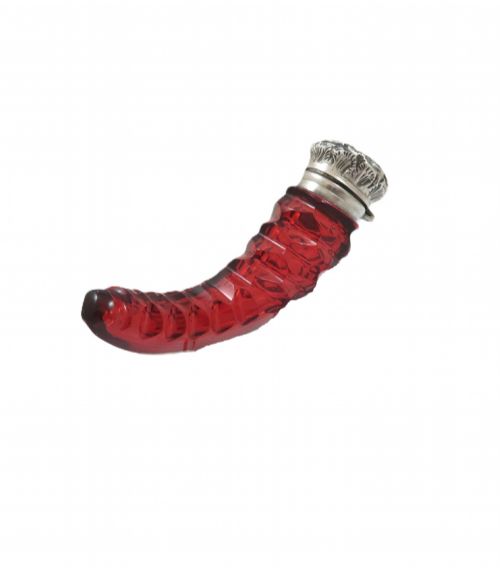
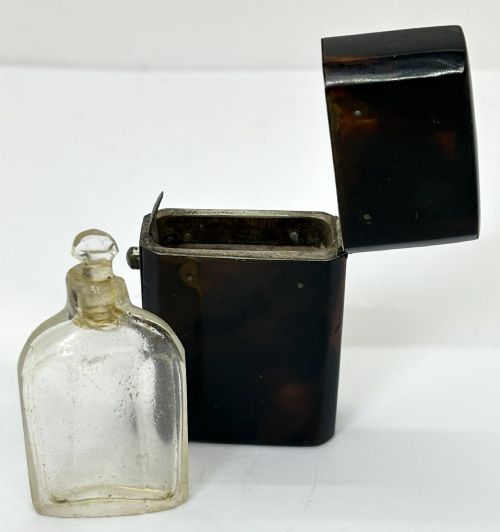
Makers produced these objects for personal toiletry use or for carrying liquor during travel and outdoor pursuits. Survivors include scent bottles in ruby, cranberry, or green glass, alongside leather-cased spirit flasks and whisky noggins.
Materials and construction
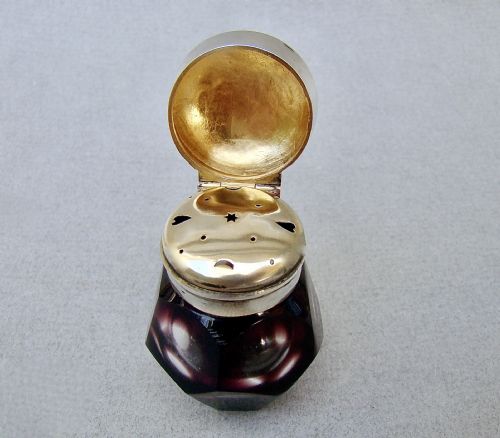
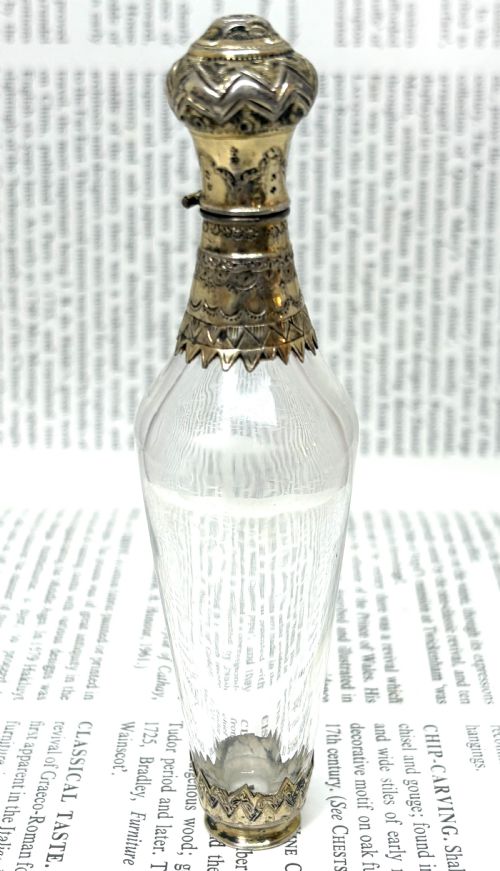
Silversmiths shaped sterling silver or silver-gilt into mounts, hinged caps, and collars, often marking them with hallmarks that indicate the assay office and year of production. These metal components secure tightly to glass bodies using cork or ground glass stoppers.
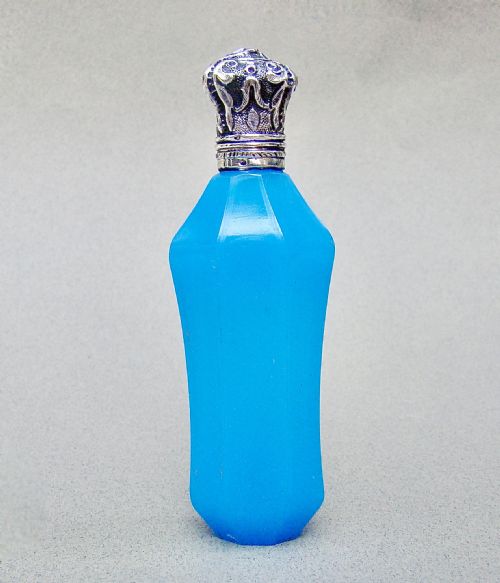
Glass bodies utilise techniques such as hand-cutting, moulding, and overlay, producing faceted crystal or richly coloured vessels in amethyst, green, and cranberry hues. Certain pieces integrate organic elements like tortoiseshell, leather casing, or carved powder horn.
Makers joined metal to glass through precise fitting and cement, ensuring liquid containment for perfumes and spirits. Engraved detail and chased ornamentation frequently adorn the silver caps of these vessels.
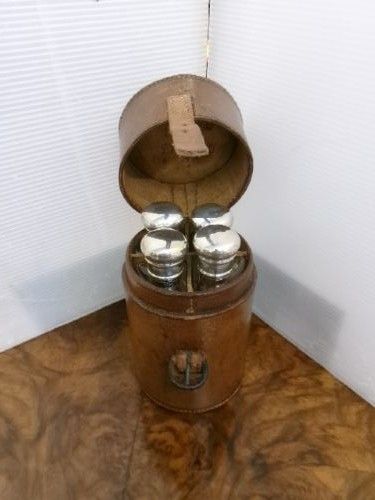
Several Victorian flasks arrived in original fitted leather cases designed to strap securely onto a horse saddle.
Qualities of distinction
The weight and gauge of the silver mount dictate much of the initial distinction, with thicker metal providing structural integrity and longevity. Finer examples display crisp, hand-engraved decoration rather than pressed or thin stamped sheet metal.
The clarity and depth of the glass body separate standard production from superior pieces. Hand-cut crystal and saturated coloured glass, such as ruby or cranberry, demand greater skill in manufacture than plain moulded alternatives.
Completeness contributes significantly to merit, particularly the presence of original stoppers, matching silver labels, fitted leather cases, and legible hallmarks that verify the maker and date.
Harold Bushell and Co·Barnsley and Co·Elkington·Asprey·Brownett and Rose
The Silver Mounted Flask Glossary
- Hallmark
- Official stamps applied to precious metals indicating the standard of purity, the assay office, and the year of manufacture. These marks help verify the age and origin of the silver mount.
- Vinaigrette
- A small ornamental container with a perforated inner grille, designed to hold a sponge soaked in aromatic vinegar. They frequently appear in silver alongside scent bottles.
- Cranberry glass
- A deep red transparent glass coloured with gold chloride during production. Makers utilised this material extensively for Victorian and Edwardian scent bottles.
- Tot
- A small drinking vessel or measure for spirits, often accompanied by a matching silver label. They form part of the barware group within these listings.
- Double ended scent bottle
- A vessel featuring compartments at both ends with separate silver caps, typically holding two different perfumes or smelling salts.
Silver Mounted Flask: Frequently Asked Questions
How do I identify the date of a silver mount?
British silver mounts usually feature a series of hallmarks stamped directly into the metal. These small symbols include a date letter indicating the exact year of assay and a city mark for the testing office.
Matching these punch marks against standard silversmith reference tables reveals when the mount was created. The glass body is generally contemporary with the metalwork.
How were these flasks used historically?
Personal scent flasks served upper-class Victorians and Edwardians who required refreshing perfumes or smelling salts during travel in stuffy carriages or public spaces. Small hinged caps allowed quick access while maintaining a secure seal.
Larger spirit flasks and hunting flasks accompanied riders and travellers on excursions, providing portable measures of whisky or brandy stored in fitted leather cases.
Are original stoppers important for these pieces?
Original stoppers maintain the functional integrity and completeness of the vessel. Cork or glass stoppers designed specifically for the neck ensure that liquids or perfumes do not leak during handling.
Replacement stoppers can alter the original state of the piece. Collectors prefer items retaining their factory-fitted internal closures.